
Airlines & Cabin Classes | 12 minute read
How to Get Cheaper Business Class Flights Without Sacrificing Comfort
Find cheaper business class flights by comparing dates, routes, seat products and upgrade conditions while protecting the comfort you actually want.
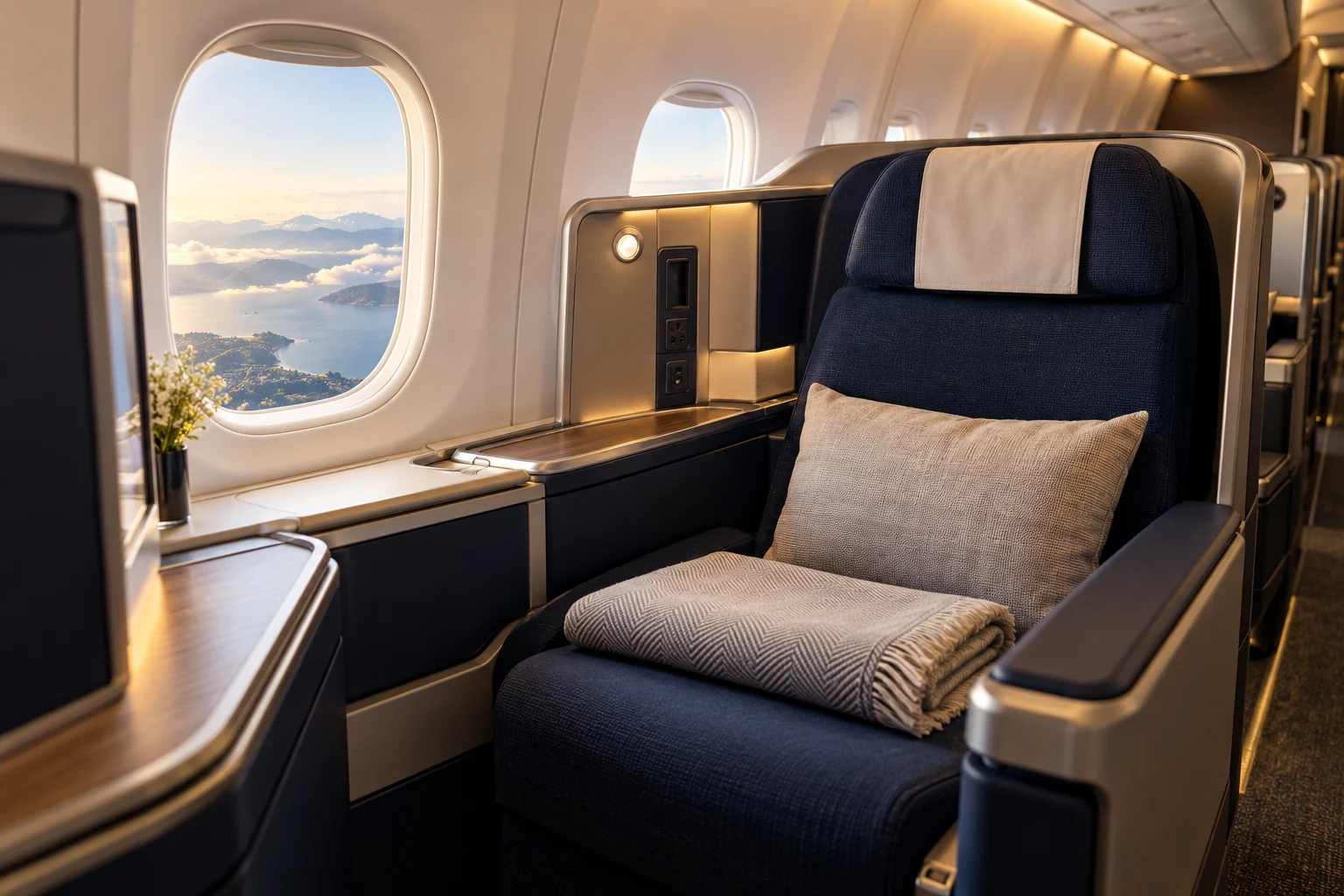
How can you get cheaper business class flights?
Search flexible dates and workable routes, compare the actual seat on each flight and consider confirmed points or upgrade options. Judge the final journey price against the comfort you want, rather than treating every business class fare as the same product.
A lower fare can be worthwhile when it preserves the useful part of the experience, such as a flat bed on an overnight flight. It can be poor value when the saving depends on a tiring detour or a short segment being the only one in business class.
Decide what you are buying before looking for the discount.
Define the comfort that matters to you
List the features that would justify the higher fare. You might want to sleep on a long overnight flight, have more personal space or avoid a long airport wait without lounge access.
Rank those features. A traveler who mainly wants a bed should compare the seat and flight timing carefully. Someone taking a short daytime flight may place more value on airport convenience and baggage.
Set a maximum total budget before browsing. This makes it easier to recognize a useful offer without gradually accepting a much larger spend because each next option looks slightly more comfortable.
Also identify the economy or premium economy alternative you would actually buy. The relevant comparison is the extra cost over that practical option, not an expensive reference fare you never intended to purchase.
Business class does not always mean a flat bed
Short-haul and long-haul business cabins can be very different. British Airways' Club Europe, for example, uses a short-haul seat arrangement with a blocked middle seat. It is not the same sleeping product as long-haul business. BA's Club World information describes fully flat beds, with different seat designs depending on the aircraft and route. Even within one airline, the precise product needs checking.
Read the airline's seat description and inspect the seat map for the proposed flight. Look for the features that matter to you, including bed length, direct aisle access or whether a companion can sit nearby.
Aircraft substitutions remain possible. Treat the published aircraft as planning information and read the airline's conditions rather than assuming a particular seat design is guaranteed indefinitely.
Compare the same useful benefits
| Feature | Question to ask |
|---|---|
| Seat | Does the specific flight provide the space or bed you want? |
| Timing | Is there enough useful time onboard to enjoy it? |
| Route | Does the saving require extra transfers or positioning? |
| Fare conditions | What happens if your plans change? |
| Extras | Are seat selection, baggage and lounge access included? |
| Payment | What is the complete cash cost, including any points charges? |
Use the same checklist for each candidate. A beautifully photographed cabin cannot explain the conditions attached to the cheapest fare.
Search a range of dates and trip lengths
If your schedule allows it, compare nearby departure and return dates. Search the complete return journey, since changing one side can alter the combined fare.
Try a few realistic trip lengths rather than a single fixed pattern. Keep the destination arrangements in view so that a cheaper flight does not require several unnecessary hotel nights.
Record a small shortlist with dates, flight numbers and total prices. This makes it easier to compare meaningful alternatives without relying on memory after opening a dozen search tabs.
Set alerts where available and review genuine changes. Avoid assuming a particular weekday always produces the lowest business fare. The useful evidence is the price offered for your route and travel dates.
Compare nearby airports with the ground journey included
A different departure airport can open another route or fare, but calculate the cost of reaching it. Include transport, parking and any overnight accommodation needed to arrive reliably. Our guide to traveling farther for a cheaper flight helps organize this comparison. Use the whole journey cost and the extra time required, especially when more than one traveler is involved.
Check the return arrangement as well. Arriving at a different airport can leave a car elsewhere or require an additional transfer after a long flight.
If the lower fare begins in another country, include the positioning journey explicitly. The business class ticket does not make a separately purchased flight to its starting point protected.
Treat positioning as a real additional trip
A positioning flight or train can sometimes make a business fare accessible at a lower total cost. It also introduces another booking, timetable and possible disruption.
Allow a substantial practical buffer appropriate to the route and consider an overnight stay when needed. Do not build the plan around the shortest theoretical connection between separate tickets.
Check baggage handling, airport changes and entry requirements. Price the hotel and transport before deciding that the headline saving is large enough. Start the business itinerary where the ticket says it starts. Do not plan to skip its first flight and join later. Read the fare's sequence requirements and ask the airline about any intended change.
Choose connections that preserve comfort
A connecting business fare may cost less than a direct option. Compare the extra journey time with the price difference and inspect the cabin on each segment.
Our guide to allowing enough time for a connection helps assess the route. A transfer can be acceptable when the schedule is practical and the long flight provides the comfort you want.
Check lounge access during the connection, especially when different airlines operate the flights. Do not assume that every lounge in the terminal is available with the ticket.
Look at arrival time too. Saving on the fare can be less attractive if the itinerary reaches the destination too late for practical transport or the first night's plans.
Inspect mixed-cabin results segment by segment
A result labeled business class may contain flights in different cabins. Open the full itinerary and check the cabin shown beside every segment. If your goal is to sleep on a long overnight flight, make sure that segment is in the intended cabin. A short feeder flight in business does not compensate for the main journey being in economy.
A mixed arrangement can still be good value when it matches your priorities. You might accept economy on a short daytime connection and pay for business on the overnight leg.
Write the cabin beside each flight in your comparison notes. This prevents an attractive total from hiding the part of the journey where the product differs.
Compare points bookings with their cash charges
Check award availability for the actual dates and passengers before making plans around a points price. A published starting rate does not establish that seats are available for your trip.
Include taxes, fees and carrier charges in the cash total. Points are also a resource you could use elsewhere, so compare the redemption with realistic alternatives.
If you are considering transferring points, read the transfer conditions and confirm the required availability as far as the program allows. Do not assume a transfer can be reversed if the seat disappears. For two travelers, search for both seats together. Finding one award seat does not establish that a companion can book the same flight on the same terms.
Buy an upgrade path only when the conditions work
Upgrades can provide another route to business class, but eligibility and availability matter. Check the original fare class and the program's rules before buying a lower-cabin ticket with an upgrade in mind.
BA's Avios upgrade guidance, for example, identifies fare restrictions and availability conditions. Some economy booking classes are not eligible for this route to an upgrade.
Our guide to comparing premium economy value provides another option if business is beyond your budget. Compare a confirmed cabin with the uncertainty of an upgrade later.
Only buy the underlying ticket if you are willing to travel in its booked cabin. An upgrade that never becomes available should not leave you with a journey you would otherwise have rejected.
Treat upgrade bids and airport offers as uncertain
If an airline offers bidding, read when the bid becomes binding, how acceptance is communicated and which benefits are included. Set a maximum based on the additional value to you. Compare the bid with a confirmed upgrade price where one is offered. A smaller uncertain bid may suit a traveler happy with economy, while someone who needs the business product may prefer certainty.
Do not budget on receiving a cheap airport offer. It may be unavailable, and the remaining price may exceed what you would have paid earlier.
Keep any accepted upgrade confirmation and review seating, baggage and fare conditions afterward. The cabin change does not necessarily rewrite every condition of the original ticket.
Check what the cheaper business fare leaves out
Read the fare's baggage, lounge and seat-selection conditions. Business fares can have different bundles, and a cabin label alone does not settle every inclusion.
BA's seat reservation guidance is one example of why advance seat selection needs checking separately. The cost and timing depend on the booking and applicable benefits.
If sitting together or selecting a particular position matters, include the necessary charge in the comparison. A lower fare can lose some of its advantage once the required seats are added. Check refund and change terms too. An inexpensive business ticket can still be restrictive, so do not treat the higher cabin as automatic flexibility.
A worked comparison with invented prices
Imagine a direct return business fare of GBP 2,400. A connecting option costs GBP 1,950 and adds four hours to the journey, with the long flight in the same type of cabin you want.
The connecting option saves GBP 450 before any additional expenses. If the schedule is manageable, that may be a useful tradeoff.
Now consider a GBP 1,800 fare from another city that needs GBP 180 of positioning transport, a GBP 120 hotel and GBP 60 of transfers. Its comparable total becomes GBP 2,160, saving GBP 240 against the direct fare.
These figures are invented. They show why the lowest search price is not always the strongest value. Compare the remaining saving with the time, risk and convenience of the whole itinerary.
Check the seller and ticket details carefully
Before paying, identify who issues the ticket and who handles changes. Read the seller's fees and support arrangements, particularly for a complex itinerary or an unfamiliar agency. Confirm the cabin and fare conditions on the final booking screen. Keep the receipt, itinerary and any written description of the purchased product.
If a price looks unusually low, check whether it is available through to payment and whether all required charges are included. A search result can be stale without being a bookable bargain.
Avoid making other restrictive purchases until the ticket status is clear. For a substantial airfare, accurate details and usable support are part of the value comparison.
Consider business in only one direction
If sleeping is your main priority, compare business on the overnight leg with a lower cabin on the daytime return. Search the combination as a complete journey and check the conditions, rather than assuming two separately purchased one-way fares will be cheaper.
The saving needs to be assessed against the actual schedule. A short overnight flight may offer limited time to sleep after takeoff and before landing, while a longer daytime flight might be where you value extra space most.
Think about what happens after arrival. If you have an important commitment immediately, the value you place on rest may differ from a holiday with an unhurried first day. Use your own plans to decide where the cabin upgrade earns its cost.
Search for the whole traveling party
A fare displayed for one passenger may not be available for everyone traveling together. Search for the actual number of people before building a budget around the first result.
If only some travelers want business, compare the booking arrangements and decide whether different cabins create practical problems. This matters for children, anyone needing assistance and companions who expect to provide support during the flight.
Separate reservations can also mean separate change processes. Ask the airline what can be linked and what that link actually does. A note connecting two bookings should not be assumed to give them identical fare conditions or guarantee the same rerouting.
Judge a discount against a real alternative
A fare advertised as heavily reduced may be compared with a flexible or rarely purchased reference price. Your decision should use the available journeys that meet your needs on the dates you can travel. Keep a record of the final price you would pay for each suitable option, including required extras. If the business fare is only slightly more than a practical premium economy alternative, the additional comfort may be appealing. If the difference is large, identify what you would actually gain.
Do not assign the full advertised value of every included benefit to your personal saving. Lounge access has less value if the schedule leaves little time to use it, and extra baggage adds little if you are taking one small case.
Price the benefits you will use.
Before booking a cheaper business fare
- Confirm the seat product on the flights that matter most.
- Check every segment's cabin and operating carrier.
- Add positioning, hotel and transport costs.
- Compare points charges and upgrade conditions honestly.
- Review seating, baggage, lounge and fare inclusions.
- Choose a route whose extra time you are willing to accept.
A good business class deal delivers the comfort you value at a total price you can justify. Keep that standard in view when the search results become tempting.
Your questions answered
Is a business class upgrade always cheaper than booking business?
No. Add the original ticket and upgrade cost, then compare with a confirmed business fare. Availability and eligibility can also make the upgrade route uncertain.
Should I choose the cheapest business class result?
Only after checking the actual cabins, route and inclusions. A mixed-cabin itinerary or expensive positioning journey can change the value substantially.
Can I guarantee a flat bed by selecting business class?
No. Business products vary, especially between short-haul and long-haul flights. Check the specific seat description and aircraft, while recognizing that operational substitutions can occur.