
Airlines & Cabin Classes | 13 minute read
Cheap Business Class Flights to Australia: How to Find Better-Value Options
Find better-value business class fares to Australia by comparing the complete route, the seat on each flight and the conditions attached to the price.
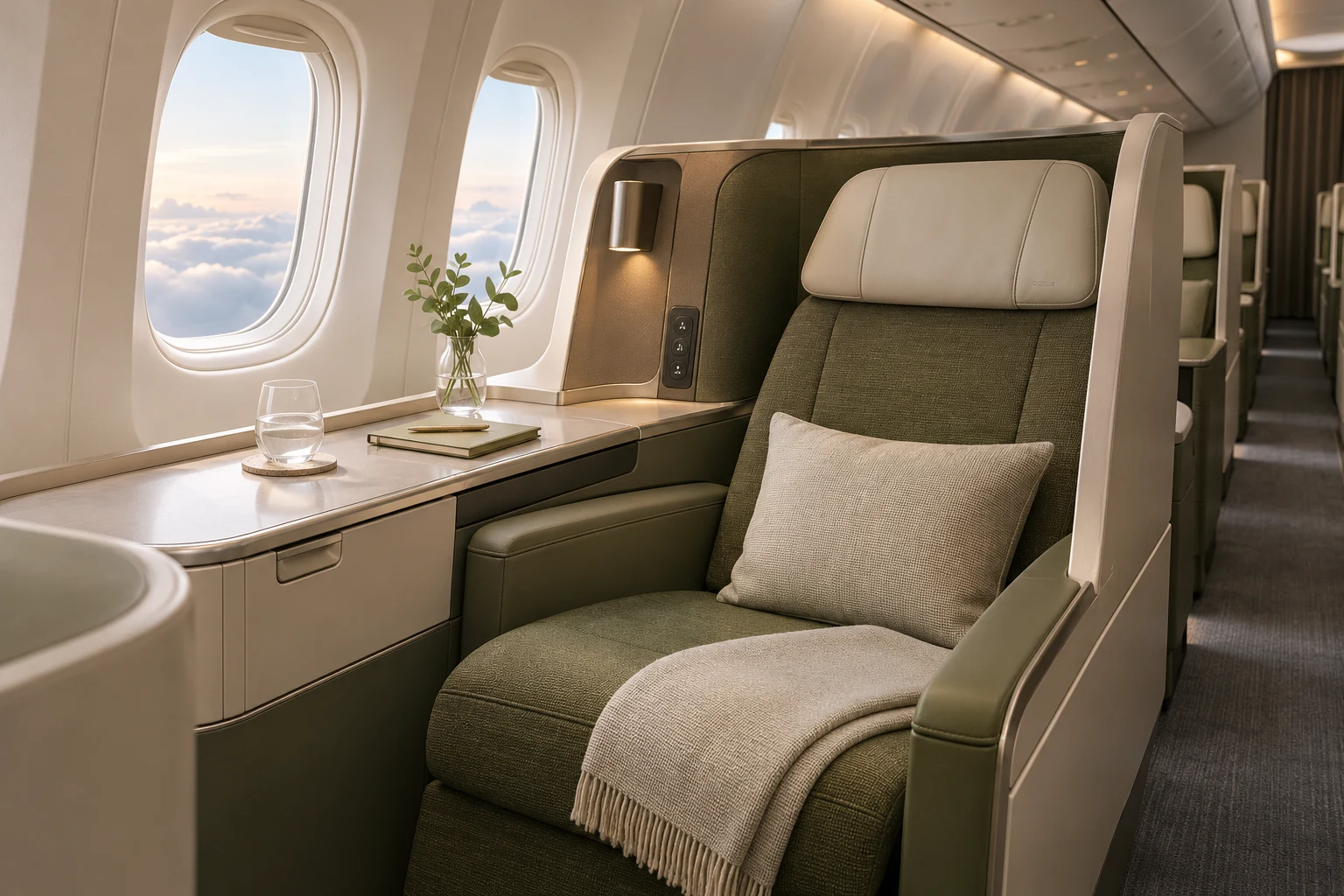
Finding cheap business class flights to Australia
Cheap business class flights to Australia usually come from flexibility across dates, departure airports and airlines, combined with careful checks of the actual cabin. Search the Australian city you need first, compare several workable routings and examine every flight sector before treating a fare as a bargain.
There is no dependable price that makes every Australia business class ticket cheap. Travel season, destination, availability and fare conditions all affect the comparison. A lower price can also conceal an economy sector, a long overnight connection or a seat quite different from the airline's headline product.
The useful question is whether the fare buys the comfort and schedule you want at a competitive total cost. This guide sets out a practical search method without invented sale prices or promises that an upgrade will appear at the airport.
Choose the right Australian arrival city
Australia is a large destination to treat as one airport. Start with the city where your trip begins, whether that is Sydney, Melbourne, Brisbane, Perth, Adelaide or somewhere requiring an onward connection. The cheapest international arrival is not automatically the cheapest way to reach your final stop.
If you are visiting several places, compare flying into one city and home from another. A multi-city booking may remove a domestic flight and an unnecessary return to your starting point. Compare that saving with any difference in the long-haul fare.
Flying into Perth to reach an east-coast destination adds another substantial journey. Conversely, a fare to Sydney may make little sense if your holiday is entirely in Western Australia. Check the full routing and domestic connection before being persuaded by the country name in the search result.
Keep domestic baggage rules visible. The allowance on a separate Australian ticket may differ from your international business class allowance. Include any extra baggage charge, terminal transfer and overnight stay in the comparison.
What makes a business class fare good value?
| Compare | What to establish | Why it matters |
|---|---|---|
| Cabin on each sector | Business throughout or a mixed-cabin itinerary | The longest flight may determine the value |
| Seat and aircraft | Bed type, aisle access and planned configuration | One airline can operate several products |
| Total journey | Flight time, connections and arrival date | A cheaper fare can consume another day |
| Fare rules | Changes, cancellation and no-show conditions | A premium cabin need not mean flexibility |
| Included services | Bags, seats and lounge eligibility | Benefits can differ between fare families |
| Extra travel | Positioning flights, hotels and transfers | A distant starting point has a real cost |
Decide which two or three features matter most before comparing airlines. If your priority is sleep, a flat bed and useful overnight timing may outweigh the lounge. If you need to work before departure, reliable airport arrangements and an efficient connection may carry more weight.
Check the seat on every long-haul sector
A business class label describes a cabin, not one universal seat. The same airline may operate different layouts across aircraft types and routes. Inspect the aircraft and seat map for each flight, particularly when the itinerary includes a shorter regional service.
Check whether the seat becomes fully flat, whether everyone has direct aisle access and whether the layout suits your party. A private window position may appeal to a solo traveler. Two people who want to talk might prefer a different arrangement.
Qatar Airways describes Qsuite as a product available on selected aircraft. Do not assume every Qatar business class flight includes it. The booked aircraft can also change, so a specific suite should not be the only reason a complicated itinerary works for you.
Singapore Airlines' business class information distinguishes several aircraft and regional products. That is a useful reminder to compare the exact services involved rather than applying one review to an airline's entire fleet.
Look at how much of the trip uses the preferred seat. Paying extra for a particular product on a shorter sector may have limited value if the longest overnight flight uses a less suitable configuration.
Read mixed-cabin results carefully
Some search results combine business and economy within one itinerary. This can be reasonable when a short feeder flight is in economy and the long-haul sectors are in business, provided the price reflects what you are buying.
The problem comes when the small business class portion makes the whole result look more generous than it is. Expand every flight and read the cabin beside it. Check the outbound and return separately, including any domestic Australian service.
Write down the hours spent in each cabin. This simple check can make two apparently similar fares look very different. A route with most of its flying in economy should be evaluated as such, however prominently the search page displays the word business.
When buying through an agent, ask for confirmation of the cabin on every sector before payment. Keep the written itinerary and verify the airline booking afterward. A vague description such as premium travel is not a substitute for the booked cabin.
Compare the connection as part of the product
Routes through hubs such as Doha or Singapore can offer different balances of flight length and connection time. Compare the actual dated itinerary. The best hub for your trip depends on the operating schedule, Australian destination and UK starting point.
A short connection can reduce elapsed travel time but leave less room for disruption. A very long connection may increase the fare saving while adding fatigue, meals or a hotel. Check whether the lounge is available during the wait and whether any overnight accommodation is included or separately payable.
Do not assume business class buys a hotel during every long layover. Transit accommodation programs have eligibility conditions, and a deliberately chosen cheaper connection may not qualify. Ask the airline or seller to confirm the arrangement in writing.
Our guide to the best airlines for flying to Australia helps compare route and product priorities. Use it to narrow the field, then price the specific flights that meet your needs.
Check total elapsed time, not just the sum of the flying hours. An itinerary that arrives a day later can have a cost in accommodation arrangements, annual leave or missed time with family.
Search flexible dates without losing the useful comparison
Begin with your preferred travel dates, then move departure and return by a few days if possible. Change one variable at a time so you can see why the price moves. A flexible calendar is useful for finding candidates, with the final price confirmed after opening the itinerary.
Holiday periods and major events can affect fares and accommodation. Check the Australian calendar as well as UK holidays. If your dates are fixed by a wedding, cruise or family event, focus on alternative airlines and airports rather than assuming a different weekday will solve the price.
Compare different trip lengths where possible. Fare rules can include conditions about how long you stay, but these vary. Read the conditions attached to the result instead of relying on a universal minimum-stay rule.
Set alerts for a small number of sensible routes and cabins. Record a few dated quotes with matching conditions to establish your own reference range. That gives you evidence for a purchase decision without pretending that a single historical fare predicts the next sale.
Try another UK departure before adding a European start
A regional UK departure may produce a useful through fare and remove the need to travel to London. Compare airports you can reach comfortably, including the cost of getting home after a long return journey.
Make sure the regional flight belongs to the same ticket when that protection matters to you. Buying a separate positioning flight can change both baggage handling and responsibility if a delay causes you to miss the long-haul departure.
A London fare may still win after adding rail travel or a hotel. The point is to calculate it. Use your whole party's total, since some transport costs are shared while each passenger needs an airline ticket.
Our guide to the full cost of a flight provides a useful structure for this comparison. Business class can include more services than economy, but it does not make airport parking or a positioning hotel disappear.
Treat a European departure as a separate travel decision
Starting a long-haul ticket in another European city can sometimes produce a lower fare. To use that ticket, you must reach its actual starting airport and take the booked flights in sequence. Do not plan to skip the first sector and join later in London.
Price the positioning flight, bags, hotel, meals and local transport. Consider the return arrangement too. If the long-haul ticket ends abroad, you still need a workable way home.
Separate tickets can leave you exposed when the first journey is disrupted. An overnight buffer may reduce the chance of a missed departure, but it does not turn independent bookings into one protected itinerary. Check the relevant entry requirements as well.
Here is an invented comparison. A UK departure costs £3,400. A European departure costs £2,900, but positioning costs £160, a hotel £130 and transfers £60. The remaining saving is £150 before meals or the value of the extra time. These figures illustrate the arithmetic and are not current fares.
A larger saving might justify the effort. A small one might not. Decide whether the extra journey is something you would willingly buy, rather than treating it as invisible because the headline ticket looks attractive.
Consider one direction in business or a different premium cabin
You may value business class more on one direction than the other. Compare an outbound business ticket with a premium economy return, or the reverse, where the booking system allows it. Check the complete mixed-cabin return price against separate one-way tickets.
Do not assume two one-way fares will add up to a competitive return. International fare pricing can make that approach expensive. Use the actual totals and read the conditions attached to each option.
Premium economy can be a useful alternative when the business class supplement is too large. It usually offers a different level of comfort from a flat bed, so compare the seat and schedule honestly. Our guide to finding cheap premium economy flights explains how to assess that middle option.
Airport upgrades and upgrade bids can be worth considering if offered, but availability is uncertain. Buy an original ticket you are willing to use. A hoped-for upgrade should not be the foundation of a journey where sleeping flat is essential.
Compare reward seats and upgrades on their own terms
If you have airline points, search reward availability alongside cash fares. Include taxes, fees and any cash component, then check availability for every person traveling. One reward seat is not a solution for a couple who need to stay together.
Confirm whether the reward includes all connecting flights in the desired cabin. A search can show availability to a hub without a suitable onward seat to Australia. The longest sector deserves the same scrutiny as on a cash booking.
Upgrade eligibility depends on the airline, fare class and availability. A cheap economy fare may not qualify for the upgrade you have in mind. Check the specific rules before purchasing a ticket mainly because you hope to upgrade it.
Points also have alternative uses. Compare the cash you would save with what else you might reasonably do with them. There is no need to assign a universal value to every point to recognize that a large fee can reduce the appeal of a reward.
Read the conditions before the expensive click
Business class does not automatically mean refundable or freely changeable. Check change fees, fare differences, cancellation rules and the consequences of missing a flight. If your travel dates may move, compare the price of a more flexible fare before paying.
Confirm lounge access, baggage allowance and seat-selection conditions for the fare family. Ask which airline operates each flight, especially on a codeshare. The airline selling the ticket and the airline providing the cabin may differ.
For an agent booking, establish who handles changes and disruption, what service fees apply and how you can contact them outside UK business hours. Save the itinerary, receipt and fare conditions with the airline booking reference.
Once you have a fare that meets your budget and requirements, check it one final time against a comparable alternative. A purchase based on clear priorities is more useful than waiting indefinitely for an unverified bargain someone once found.
Ask for a quote you can compare
When requesting a fare from an agent, specify the destination, acceptable departure airports, dates and cabin required on each long-haul sector. Ask for the total payable price and the operating flight numbers, not just an airline name and an attractive starting figure.
Check whether the quoted seat is available to book now and how long the quote remains valid. A price without confirmed availability is useful as an indication, but it is not a ticket you can rely on.
Compare the quote with a matching airline-direct itinerary where possible. Differences in conditions, service fees or included benefits may explain part of the price gap. Keep the written details so that a later change can be assessed against the booking you actually accepted.
If a quoted fare changes before payment, compare the revised total again. The original saving may no longer justify the same connection, departure airport or restrictions attached to the new price.
Your questions answered
What is a cheap price for business class to Australia?
There is no fixed threshold that works for every route and season. Compare current quotes for the same destination, cabin, dates and conditions. Include positioning costs and check that the long-haul sectors are actually in business.
Is a business class sale always the best deal?
No. Compare the sale fare with other airlines and nearby dates using matching inclusions. The label alone does not establish value, particularly if the itinerary has a long connection or restrictive conditions.
Will every Qatar business class flight have Qsuite?
No. Qsuite is offered on selected aircraft, and aircraft assignments can change. Check the specific flight and seat map. Choose an itinerary you can still accept if the planned product changes.
Should I start my ticket in Europe to save money?
Only when the complete saving justifies the extra journey and separate-ticket risk. Include positioning, accommodation and the return home. You must take the booked flights in sequence rather than skipping the first sector.
Can I book economy and rely on upgrading later?
An upgrade may be offered, but it is not guaranteed. Check eligibility and availability, then buy a ticket you would willingly use without an upgrade. This is especially important when a flat bed is central to your plans.