
Baggage & Sports Equipment | 12 minute read
Flying With a Bicycle: How to Compare Airline Fees and Restrictions
Compare bicycle carriage using the packed bike, every flight and the transfer at each end. A low bike fee is useful only when the complete journey works.
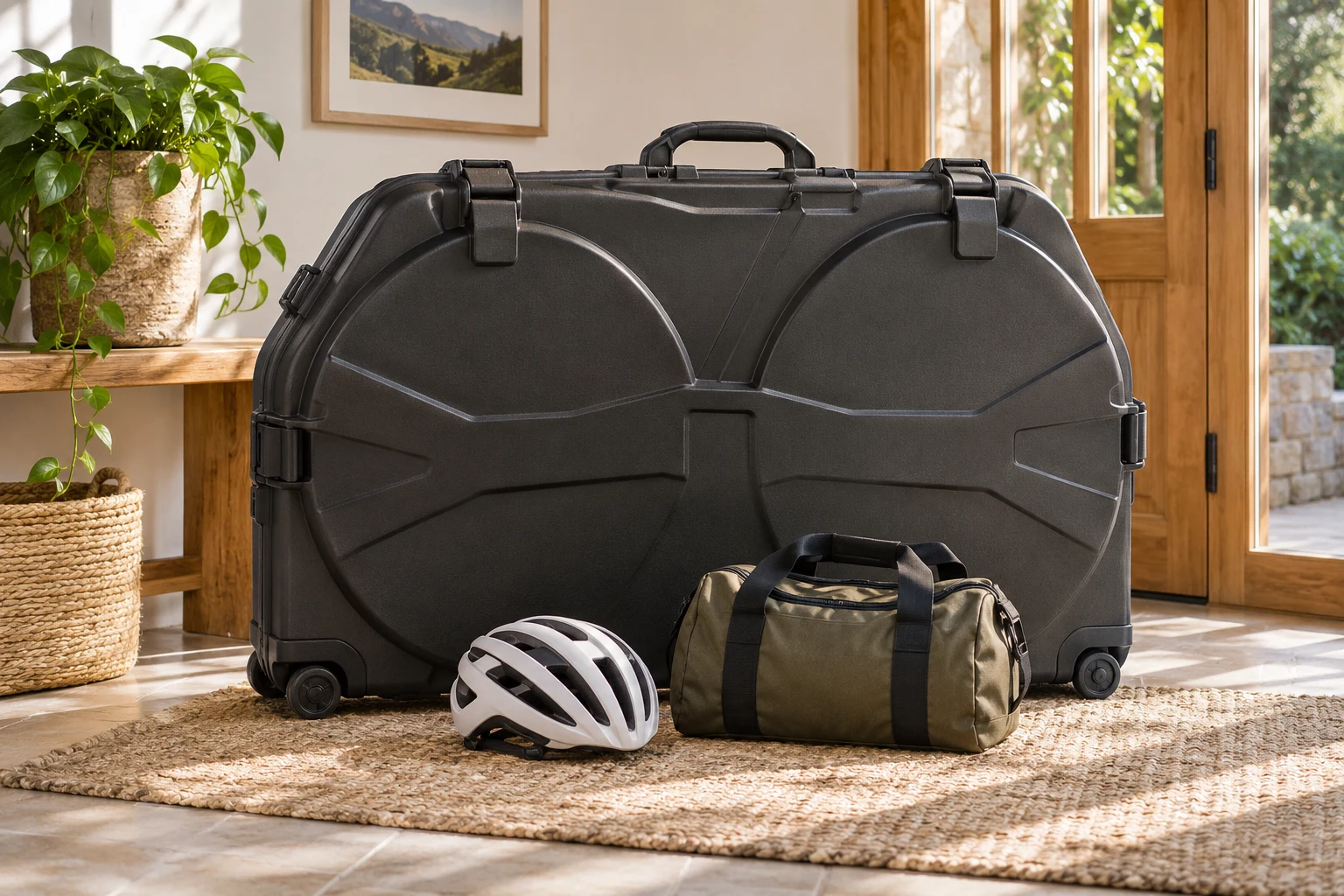
What matters most when flying with a bicycle?
Check whether the airline accepts your bicycle before comparing its carriage fee. Then price the flight, bike transport, ordinary luggage and ground transfers together.
The measurements that matter are those of the packed bike. A light bicycle in a heavy case can produce a very different baggage calculation from the bicycle's advertised weight.
For connecting trips, establish acceptance across the entire route. One suitable flight does not solve an incompatible onward leg.
Finally, compare taking your own bike with renting at the destination. Familiar equipment has value, especially for a demanding ride, but so does arriving without a container large enough to require its own travel plan.
Write down the bike and container details first
Record the bicycle type, packed dimensions and total weight. Include the box or bag, padding and every permitted accessory that will travel inside.
Identify unusual features that might affect acceptance, such as a tandem frame or an electric system. Do not assume removing one component converts an otherwise restricted bicycle into an accepted item.
If you have not chosen a case, compare suitable packaging before purchasing flights. The case's external measurements may matter as much as its protective design.
A trial pack can reveal practical problems while you still have time to solve them. Check whether the case closes properly, whether components move inside and whether you can carry or roll it comfortably.
Keep a written version of the measurements ready for airline and transfer inquiries. Accurate details are more useful than describing a bike bag as fairly normal.
Airlines can charge for bicycles in different ways
British Airways treats an accepted non-electric pedal bicycle as a checked item. Its sports-equipment policy lists a maximum bike container of 190 by 95 by 65cm and advance notification. Check the allowance attached to your fare before counting that item as included.
easyJet places bicycles in its large sports-equipment category, with a 32kg maximum. Its bicycle instructions require a bike box or bag, handlebars flush with the frame and pedals removed or flush. Electric bicycles are excluded, and other belongings cannot fill the bike container.
These examples show why a single headline fee cannot rank airlines for every cyclist. Compare the relevant product, permitted weight and packing conditions for your equipment.
Use current quotes for the flights you would actually book. A published starting charge or someone else's receipt may relate to another route, direction or purchase channel.
Build a useful comparison sheet
| Check | Record for each itinerary | Why it matters |
|---|---|---|
| Acceptance | Bike type, container and advance process | Payment alone may not resolve a restriction |
| Airline price | Fare plus bike and other bags | Included luggage changes the total |
| Route | Operators, connections and collection steps | Every leg must work with the equipment |
| Ground transport | Vehicle or public transport acceptance | A bike case needs suitable space |
| Destination | Assembly, storage and return packing | The container stays with the trip |
Remove unsuitable options before comparing prices. There is little value in carrying a cheap quote through the calculation when the airline cannot accept your packed bicycle.
Our guide to working out the complete flight cost helps organize the airfare side of the comparison.
Keep bike weight separate from ordinary luggage
List each item you expect to check, with its own packed weight. This makes it easier to see whether the selected fare covers your clothing as well as the bicycle.
Do not treat spare capacity in one allowance as permission to overload another item. Read the airline's rules before assuming weights can be combined or redistributed.
For example, a hypothetical 10kg bike in a 12kg case with 2kg of permitted protection weighs 24kg. Comparing only the frame's weight would miss more than half the load.
If the case is too heavy, investigate an accepted alternative or reduce permitted contents. Avoid removing protective material without considering whether the remaining packing still meets the carrier's requirements and the case manufacturer's instructions.
Weigh the final arrangement again before departure. A last-minute tool or spare part can change the result, particularly when the bag was already close to its limit.
Prepare the bike without guessing at technical instructions
Follow the airline's packing requirements alongside the bicycle and case manufacturers' guidance. The details can vary between carriers and equipment designs.
If disassembly is unfamiliar, ask a competent bike shop to prepare the bicycle or show you the process. Plan how it will be safely reassembled at the destination before choosing a packing method.
Keep track of removed components and the tools required for reassembly. Check where those tools may travel under the relevant security and baggage rules.
Inspect straps, closures and wheels on the container before the travel day. A broken case handle becomes less amusing with every terminal corridor.
Photograph the bicycle's condition and the finished packing arrangement for your own records. These pictures can help explain what was packed if you later need to discuss a problem.
Label the container clearly and keep identifying information inside as well. Avoid relying on a single loose label that can become detached.
Confirm carriage before committing the trip
Look for the airline's sports-equipment booking or notification process while evaluating the flight. If acceptance is unclear, resolve it before purchasing a restrictive ticket.
Give the airline the complete itinerary and packed measurements. Ask whether you need a separate request, purchase or confirmation for each direction.
For a group cycling trip, identify how many bicycles are traveling. A booking that works for one cyclist may require a different conversation when several large cases are involved.
Save the confirmation and make sure it corresponds to the correct passenger and flights. A general chat response about bicycles is less useful than a clear record of your own arrangement.
After a schedule change or rebooking, recheck the equipment reservation. An updated passenger ticket does not tell you everything about the bicycle's treatment.
Assess connections as a baggage journey
A nonstop option can simplify a bike trip by removing a transfer stage. Compare that convenience with the fare difference rather than assuming the cheapest connecting flight is automatically better value.
If the route uses different airlines, identify each operator and confirm acceptance throughout. Do not stop after reading the policy of the company selling the ticket.
Ask whether the bicycle will be checked through and whether any collection or rechecking is required. Include the handling time and airport layout in your assessment.
Separate tickets deserve a particularly careful plan because you may need to manage the bike between flights. Our guide to understanding self-transfer journeys explains the booking distinction.
If the itinerary changes airports, price a transfer that can carry the case. A normal passenger transfer quote may not cover the equipment or the vehicle size required.
Consider what happens if the first flight arrives late. Choose a connection arrangement you can realistically manage with a large container, rather than treating a passenger-only transfer estimate as sufficient.
Check the journey beyond the airport
Contact a transfer company with the number of passengers, ordinary bags and bicycle cases. Include the packed dimensions so the provider can assess the load.
For a rental car, compare usable luggage space rather than relying only on a broad vehicle category. Consider whether all passengers can sit normally with the case inside.
If using public transport, check the actual operator's luggage and bicycle rules. A boxed bike may be treated differently from an assembled bicycle, and a rule for one service may not apply to another.
Think through stairs, station changes and the distance from the stop to your accommodation. A route that is easy with a backpack may be awkward with a rigid box.
Ask the accommodation where you can store the empty case. If your trip finishes elsewhere, arrange the container's onward journey or a suitable return packing solution.
Compare bringing your bike with renting
Request a rental quote for equipment that actually meets your needs. Compare size, type and availability, then ask what is included in the price.
For a short leisure trip, renting may remove airline fees, packing time and bulky transfers. For a longer or highly specific riding trip, bringing familiar equipment may justify those costs.
Consider your planned riding days rather than the length of the holiday alone. Paying to transport a bicycle for one casual afternoon is a different decision from using it throughout a week.
Check pickup and return arrangements. A low rental rate can be less convenient if the shop is far from your accommodation or closed when your flight arrives.
Factor in any equipment you would still bring when renting. The comparison should reflect the actual bags and transport you would need under each option.
An invented cost comparison
Imagine Flight A costs £140 return, bike carriage adds £100 and ordinary checked luggage adds £50. A suitable airport transfer costs £60. The combined total is £350.
Flight B costs £220, with an accepted bike item covered by the selected allowance. An additional clothing bag costs £40 and the suitable transfer costs £45. The total is £305.
These are invented figures, not current airline quotes. Flight B is £45 cheaper in this example despite the higher starting airfare.
If the second option requires an extra hotel night costing £90, its total becomes £395. The first option then costs £45 less. Timing can reverse a baggage-based comparison.
Now price a rental alternative using the same flight dates and accommodation. Include the rental charge and any transport needed to collect it, then decide how much using your own bicycle matters to you.
Allow time for the equipment process
Read the airline's airport instructions for sports equipment, including any separate acceptance deadline. Plan to complete the required steps before that deadline.
Find out where the case should be handed over after check-in. Oversized baggage can involve a separate location, so leave room for moving through the terminal.
Keep booking confirmation and baggage receipts accessible. Check the destination shown on the tag before the bicycle leaves your possession.
At arrival, identify the appropriate collection point and inspect the container and equipment as soon as practical. Follow the airline's reporting process promptly if something appears wrong.
Before riding, check the reassembled bicycle properly. If you are uncertain about a component or the condition after transport, have it inspected by someone qualified.
Plan the return before the first ride
Keep the case, padding and removed fittings together during the trip. A small piece discarded during unpacking may be needed when protecting the bike for the flight home.
Set aside time to clean and repack the equipment appropriately. Check any relevant destination or border requirements for the bicycle and outdoor equipment.
Reconfirm the return transfer and airline arrangement if plans change. A different vehicle or flight can require a fresh acceptance check.
Our guide to checking a booking before travel provides a final review of the wider itinerary alongside the bicycle details.
Decide whether to buy or rent a travel case
If this is your first flight with a bicycle, compare buying a case with renting a suitable one. Include collection and return arrangements in the rental comparison.
Check compatibility with your bicycle before paying. A case's broad description may not answer questions about frame size, wheel arrangement or the disassembly required.
Ask for the empty weight and external dimensions. Those details let you compare the packed item with airline limits before the case arrives at your door.
If renting, inspect the condition when collecting it and follow the provider's instructions. Establish what fittings should be included and keep them together throughout the trip.
If buying, consider storage at home and how often you expect to use it. A purchase can make sense across several trips while being expensive for one short holiday.
Do not spread a purchase cost across imagined future trips when comparing the immediate budget. You can recognize longer-term value while still accounting for the money you must spend now.
Have a practical plan if the bike arrives late
Before a time-sensitive riding trip, identify what you would do if the bicycle did not arrive with you. That could mean contacting a local rental shop or changing the first day's plans.
Check availability for a suitable replacement without assuming it will be free or reimbursed. Read any relevant airline or insurance conditions separately.
If you are attending an organized event, consider arriving with enough time to unpack, assemble and check the bicycle. A cheaper last-minute arrival may leave little room to solve an equipment problem.
Keep accommodation details and contact information accessible for any baggage discussion. Update them if you move during the trip.
This is a planning exercise rather than a prediction that something will go wrong. Knowing your alternatives helps you decide whether a tight itinerary is worth its apparent saving.
For a rented case, confirm its return deadline against your flight arrival and journey home. Allow for the time needed to unpack and return all supplied fittings. If the deadline is tight, ask about an extension before booking rather than assuming a late return is included. Keep that cost in the comparison with buying your own.
Your questions answered
Is bicycle carriage always a separate fee?
No. Some arrangements use a checked-baggage entitlement while others sell a sports-equipment addition. Compare the fare and actual packed bike under the applicable rules.
Should I weigh the bike without its case?
Use the complete packed weight for the airline comparison. The container and protection can add a substantial amount to the bicycle's own weight.
Can I put clothing inside the bike bag?
Read the chosen airline's packing policy. Do not assume empty space can be used for personal belongings, even if the total weight remains below the limit.
Does removing an electric bike battery guarantee acceptance?
No. Ask the airline about the exact bicycle and its policy before booking. Do not assume a battery change overrides a restriction on the bicycle itself.
Is a connecting flight worth choosing to save money?
Compare the complete cost and handling requirements. Confirm every operator accepts the bike and understand any collection, rechecking or airport-transfer steps before deciding.