
Airlines & Cabin Classes | 12 minute read
Is Premium Economy Worth It on a Long-Haul Flight?
Premium economy can make a long flight more comfortable, but the value depends on the seat, the price difference and which parts of the journey receive the upgrade.
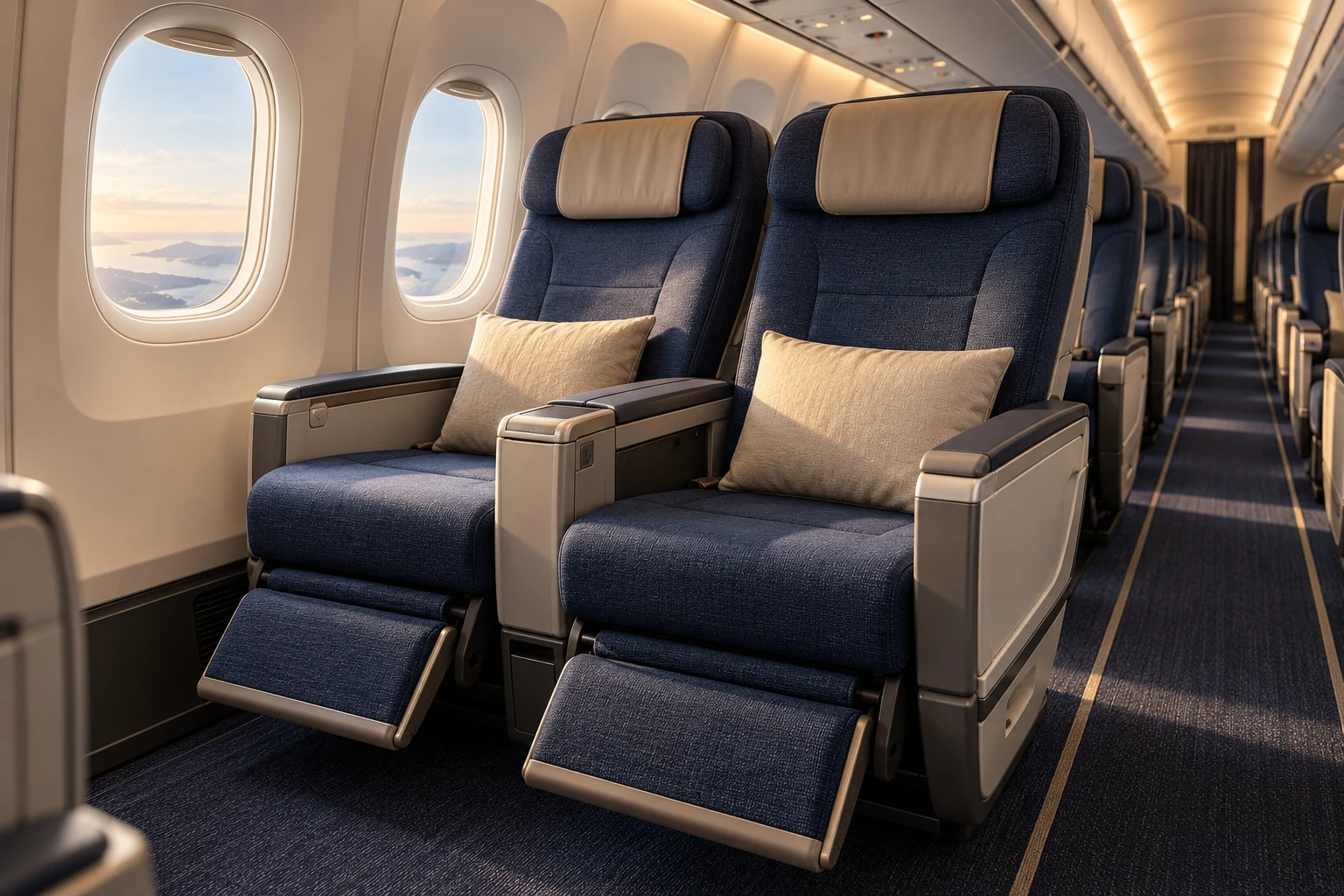
Is premium economy worth it on a long-haul flight?
Premium economy can be worth paying for when the extra space addresses a real comfort need and the price difference fits your budget. It is harder to justify when the upgrade costs more than you value the improvement, covers only a short segment or leaves you with a less convenient itinerary.
Check the actual airline and aircraft. Premium economy is not a standardized seat or service. The cabin can differ across an airline's fleet, and a product called extra-legroom economy may be a different proposition.
You do not need to justify comfort as a financial investment. You do need to know what comfort the fare buys and whether you can afford it without squeezing the rest of the trip.
Know which product you are buying
A dedicated premium economy cabin generally aims to provide more space and a different service level than standard economy. An extra-legroom economy seat may mainly increase the room in front of you while retaining the ordinary economy seat and service.
Names vary, so inspect the cabin description and seat map. Look for the width, pitch, recline and foot or leg support on the aircraft scheduled for your flight. Seat pitch describes spacing between rows, not a direct measurement of the space available to every person's knees.
British Airways describes World Traveller Plus as its premium economy cabin, with wider seats, more recline and additional legroom compared with its economy product. Treat this as an example of one airline's offer, then check your specific flight.
Do not assume premium economy provides a lie-flat bed. If lying flat is the reason you are considering an upgrade, compare the actual seat with the relevant business-class product rather than relying on the premium label.
Decide which part of the seat matters to you
More width can matter as much as extra legroom. Consider shoulder space, armrests and the room available when the person ahead reclines. A wider seat may feel more useful than a few extra inches of pitch, depending on your build and preferences.
Check whether armrests are fixed and whether the tray table or entertainment screen changes the usable space. Bulkhead seats can have different storage arrangements or leg positions from other rows. An appealing seat map icon cannot show every tradeoff.
If you have specific mobility or seating needs, ask the airline for the relevant measurements and assistance arrangements. Avoid assuming that a premium cabin automatically resolves an access requirement.
Recline and leg support may improve rest, but neither guarantees sleep. Noise, timing and your own ability to sleep upright still matter. Evaluate the upgrade as a more comfortable seat rather than a promise to arrive refreshed.
For a daytime flight, you might value the space for reading, eating or working. For an overnight flight, support and recline may matter more. The same seat can have different value on the two directions of a trip.
Calculate the complete upgrade cost
Compare the final economy fare you would actually buy with the final premium economy fare. Include the checked baggage and seat selection you need in both. Avoid comparing a bare economy price with a premium fare that includes services you would otherwise purchase.
The following figures are invented for one return journey. They illustrate the calculation rather than typical prices or current offers.
| Cost | Economy | Premium economy |
|---|---|---|
| Return fare | $700 | $1,050 |
| Required baggage | $80 | Included |
| Required seat selection | $40 | Included in this example |
| Comparable total | $820 | $1,050 |
The relevant difference is $230, rather than the $350 gap between the initial fares. If you would not buy baggage or seat selection in economy, your personal difference remains larger.
Do not assign retail value to every included benefit and call the upgrade free. A second bag you will not use and a meal you would not otherwise buy do not reduce your actual spending.
For a couple or family, multiply the final difference across all travelers. A manageable individual upgrade can become a major part of the vacation budget when everyone moves cabins.
Use flight duration as context, not a universal price rule
Dividing the extra cost by the hours in the upgraded cabin can help compare offers. It does not tell you what comfort should be worth. A short overnight flight might feel more demanding than a longer daytime flight with a convenient arrival.
Count only the segments receiving premium economy. If the ticket includes a domestic connection in standard economy, do not spread the upgrade price across those hours as though the improved seat applies throughout.
Compare both directions separately when possible. You might value the upgrade more on an overnight return than on a daytime outbound. Price a mixed-cabin itinerary to see whether that choice is available and worthwhile.
Consider the time after arrival too. An important appointment may make comfort more valuable to you, but an upgrade cannot guarantee rest or eliminate the effects of a long journey. Leave a sensible schedule margin where you can.
Check baggage, meals and airport benefits
Premium economy can include additional baggage, a different meal service or priority at certain airport stages. The exact benefits depend on the airline, route and fare. Read the current list for your booking.
Do not assume lounge access is included. Check eligibility separately, including whether access comes from the ticket, status or another product. A photograph of a lounge elsewhere on an airline's website is not a benefit confirmation.
Seat selection can also vary. Virgin Atlantic's seating guidance notes that certain preferred seats can carry an additional charge, including in Premium. Review the seats you want before assigning a value to included selection.
Meals may be an enjoyable improvement, but keep their value proportionate to your priorities. If the seat is the reason you are upgrading, confirm the seat first. A nicer plate cannot negotiate additional knee room on your behalf.
Check dietary requests and baggage needs through the airline's normal process. A higher cabin does not remove request deadlines or guarantee that every preference can be accommodated.
Avoid buying a worse journey for a better seat
Compare total travel time, departure airports and connections alongside the cabin. A premium economy itinerary with a lengthy stop may be less appealing than a convenient nonstop flight in economy.
Look for mixed-cabin warnings. A search result may emphasize premium economy while part of the itinerary uses another cabin. Open every segment and confirm the cabin shown for the long-haul flight you care about.
Check the operating airline and aircraft. A flight sold under one airline's code may be operated by a partner with a different cabin. Use the operating carrier's information to assess the seat.
Aircraft can change before departure. Review the booking again after a schedule notification and closer to travel. Keep the purchased cabin and seat details available if the replacement differs.
For a connection, ensure that the timing and airport process are still practical. The value of extra space on one flight can be diluted by an unnecessary overnight layover or a difficult airport transfer.
Compare the other ways to improve the journey
An extra-legroom economy seat may address your main concern at a lower cost. Check whether it also changes seat width, recline or storage. It may be a useful compromise if legroom is your priority and other cabin benefits matter less.
A better departure time or nonstop route may improve the experience more than a cabin upgrade. Compare these alternatives explicitly rather than assuming the next cabin is the only route to a more comfortable trip.
You might also prefer to spend the difference on a hotel before an early departure or a restful arrival night. That choice depends on the trip and your preferences, but it deserves a place beside the cabin comparison.
If the premium fare is unusually close to business class, inspect both products and their conditions. Do not assume the next cabin is affordable, and do not let a series of small-looking upgrades pull the total beyond your original budget.
Our guide to comparing airline value across the whole journey can help when cabin choice is only one of several differences between the available flights.
Treat upgrade offers as separate purchases
An upgrade offered after booking may have different conditions from buying a premium economy fare initially. Check what happens to baggage, seat selection, mileage earning and ticket flexibility. The original fare's restrictions may continue to matter.
If the offer uses bidding, read when a successful bid becomes binding and how payment works. Do not assume you can cancel an accepted upgrade because you later see another price.
For a points upgrade, compare the points, any cash payment and availability restrictions. Use your own reasonable value for points, based on alternatives you would actually book. Avoid treating them as costless simply because the payment screen shows fewer dollars.
Do not buy an unsuitable economy ticket relying on a future upgrade appearing. Price the ticket you can accept now. Any later offer should be a choice you can evaluate, rather than a rescue plan.
Keep comfort and ticket flexibility separate
A premium economy ticket can still have restrictive change or cancellation conditions. The better seat does not automatically make the fare refundable. Read those rules independently.
If your dates are uncertain, compare the cost of a suitable flexible fare in each cabin. You may prefer standard economy with useful conditions to a premium seat attached to a ticket you cannot readily change.
Our guide to the costs that remain on flexible tickets explains why a waived fee can still leave a fare difference. Use a specific possible change to test the terms rather than assuming a higher cabin solves uncertainty.
Check the seat you can actually reserve
Once the cabin looks worthwhile, inspect the available seats on your flight. A premium economy ticket and your preferred seat location are separate parts of the decision. If only middle seats remain, consider whether that changes the value for you.
For two travelers, look at whether you can sit together and what the available pairs cost. For a family, inspect the arrangement of the whole group. A cabin with fewer seats may offer fewer suitable combinations by the time you book.
Check row-specific details. A bulkhead can offer a different feeling of space, but the lack of a seat directly ahead can change storage and screen arrangements. A row near a galley or restroom may involve more movement around you.
Read the operating airline's current seat information and any notes attached to the selection. Treat independent seat photographs as supporting context, especially if they may show a different aircraft version. The fleet name alone may not identify the exact cabin installed.
If a particular measurement determines whether the seat works for you, ask the airline. Width at the armrests, available leg support and movable armrests can matter in different ways. A general promise of more comfort cannot replace the detail you need.
Consider what you would choose in ordinary economy as your comparison. If you would pay for an aisle or extra-legroom seat, use that total. If you would accept allocation, keep the lower baseline. This prevents the upgrade from appearing cheaper through extras you never intended to buy.
Finally, review the seat after any itinerary change. Aircraft substitutions can alter the cabin map and assignments. Keep the original confirmation and ask about the applicable options if the purchased product is no longer available.
You are choosing the best available arrangement for your needs at the time of booking. There is no single seat or upgrade percentage that works for everyone. A careful check of the actual options gives you a stronger basis for the decision than a generic ranking of airlines.
Before paying, ask whether you would still choose the upgrade if the smaller extras were removed from the description. If the seat and space justify the difference on their own, the decision is easier to explain. If most of the appeal comes from benefits you rarely use, compare an economy seat you like and keep the remaining money for the destination. Comfort matters, but its value belongs to the person taking the flight and the budget supporting that trip and your plans at the destination.
Your questions answered
Is premium economy the same as extra-legroom economy?
Not necessarily. A dedicated premium economy cabin can have a different seat and service, while extra-legroom economy may mainly change the space between rows. Check the operating airline's description and the aircraft for your flight.
Can you sleep flat in premium economy?
Do not assume so. Check the actual seat design and recline. If a flat sleeping surface is essential to your choice, compare cabins that explicitly provide it and assess the complete itinerary and cost.
Is premium economy worth it for a daytime flight?
It can be if you value the space for sitting, reading or working and the price difference is acceptable. Overnight sleep is only one reason to upgrade. Compare the improvement with the other ways you could spend that money.
Should I upgrade only the overnight direction?
That can be a useful compromise when the booking allows it. Price the complete mixed-cabin itinerary and confirm which segments receive the upgrade. Compare baggage and fare conditions too, because they may differ across the journey.