
Baggage & Extras | 9 minute read
Excess Baggage Charges: How to Avoid Paying More at the Airport
Extra pieces, excess weight and oversized bags can trigger different charges. Check the allowance you bought, measure the packed luggage and fix any mismatch before reaching the airport.
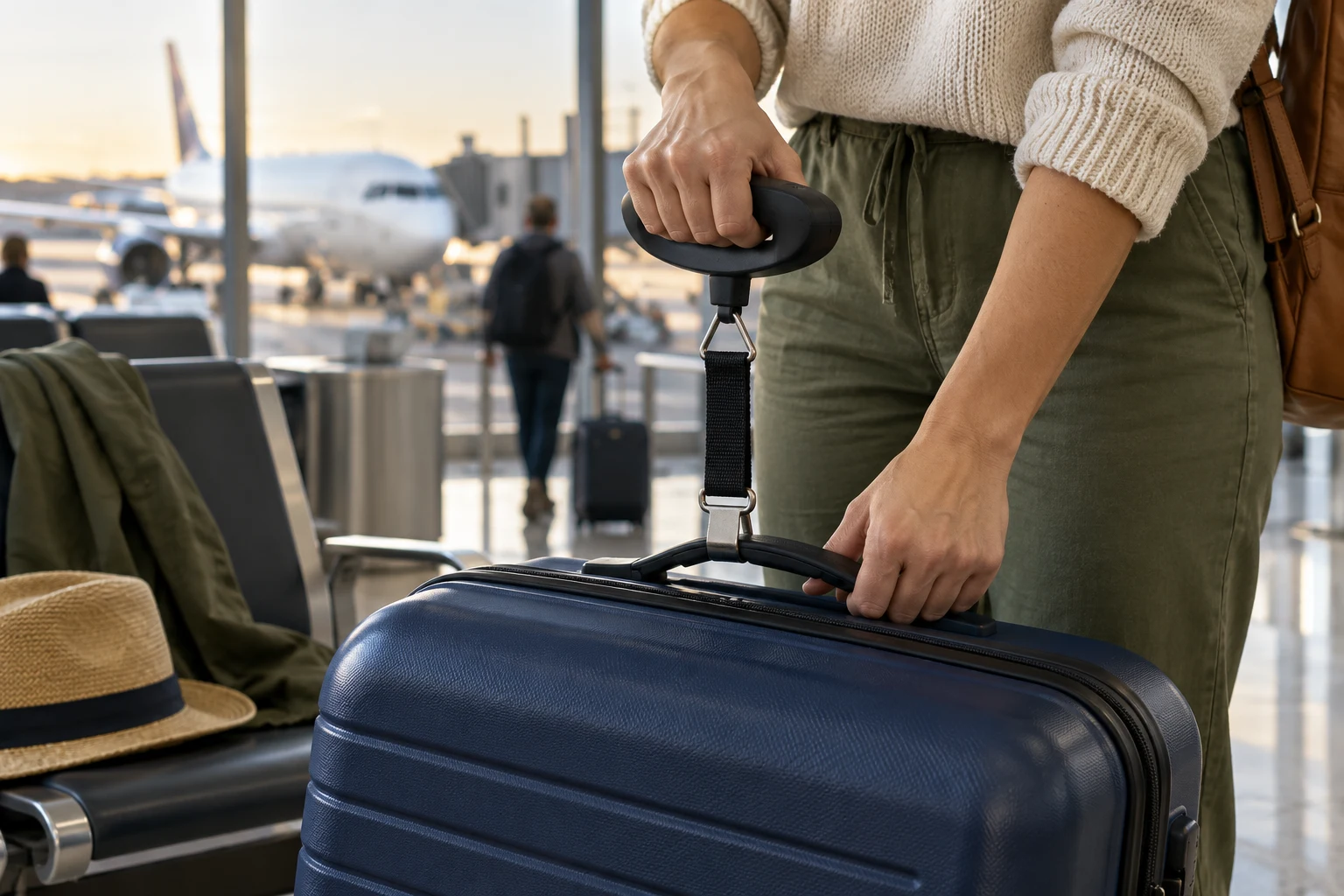
How to avoid excess baggage charges
Check the number, weight and dimensions of the bags included in your ticket, then measure your packed luggage against all three. If you need more allowance, compare permitted online additions before the airline's deadline. Paying for a bag does not remove its size or weight limits.
Excess baggage charges can apply to an extra piece, an overweight bag or an oversized item. More than one condition can apply to the same suitcase, depending on the airline's rules.
Separate the different kinds of excess
| Issue | Example | Possible solution to investigate |
|---|---|---|
| Too many pieces | Two suitcases on a one-bag allowance | Add a permitted extra piece |
| Too heavy | One bag above its purchased weight | Repack or buy an eligible weight upgrade |
| Too large | Dimensions exceed the standard limit | Check oversize acceptance and charges |
The examples describe categories, not promises that an airline will accept the item for a fee. There can be maximum handling limits beyond which the bag cannot travel as ordinary checked baggage.
Special equipment may have its own policy. A bicycle case or instrument should not be treated as a standard suitcase merely because its total weight seems acceptable.
Read the allowance attached to your ticket
Open the final booking confirmation and identify the allowance for each relevant flight. Check the fare family and operating airline if a partner is involved.
Distinguish a total weight allowance from a piece allowance. Under a piece system, each suitcase may have an individual limit. Under a weight system, the airline can still restrict the size and weight of any single item.
British Airways, for example, states on its baggage information page that its 23 kg allowance applies per bag and cannot be split across multiple bags. Check the rule for your ticket rather than applying another carrier's pooling arrangement.
If you are unsure whether baggage is included at all, our guide to checked-bag inclusions by fare explains where to look. An allowance of zero requires a different purchase from an overweight supplement on an included bag.
Weigh the complete packed bag
Include the suitcase itself, its straps and everything you plan to carry inside. A lightweight-looking bag can contain surprisingly heavy shoes, chargers and toiletries.
Use a luggage scale on a stable setup and repeat the measurement if the reading varies. Check the units before comparing it with the airline's limit. Pounds and kilograms are an expensive pair to confuse.
If using a household scale, recognize that it may be less precise for luggage. Leave a reasonable margin rather than packing exactly to the maximum according to one reading.
Weigh every bag separately. A group total below the combined allowance does not prove that each suitcase complies, particularly when pooling is restricted.
Check the return packing too. Souvenirs, gifts or equipment collected during the trip can change the weight. A small travel scale may help if you expect the contents to change significantly.
Measure the outside, including protruding parts
Read whether the airline gives separate dimension limits or a combined length-plus-width-plus-height limit. Use the method stated for the relevant baggage category.
Measure wheels, handles and packed pockets where required. The manufacturer's description may refer to the shell or a size category rather than the complete dimensions accepted by an airline.
For an expandable suitcase, check its size with the expansion zipper open if that is how you intend to travel. A bag accepted on an earlier trip may be larger this time without looking dramatically different.
If a soft bag bulges, measure at its widest points. Do not rely on being able to compress it after packing fragile items or rigid boxes inside.
For unusual shapes, ask the airline how it assesses the item. Photographs and accurate measurements can help support a useful answer before you reach the counter.
Repack within the rules
Remove items you do not need first. Then consider whether belongings can move to another bag that has spare permitted capacity. Keep the piece count and individual limits in view while doing this.
Check pooling rules before moving weight between travelers. Some airlines permit certain shared arrangements and others do not. The fact that everyone is on one booking does not establish a universal right to combine allowances.
Do not move prohibited cabin items into hand luggage simply to reduce the checked bag's weight. Security and dangerous-goods rules still apply to the new location.
Spare batteries and power banks require particular care. The FAA's lithium-battery guidance places them in cabin baggage and requires their removal when a carry-on is checked. Confirm the airline's additional limits.
If sharing bags, keep each traveler's essential documents and permitted medication accessible. Saving a baggage fee should not leave one person without necessary items if the group is separated.
Compare the available advance options
Open the airline's manage-booking page and compare an extra bag, a weight upgrade and any suitable fare change. The cheapest solution depends on the problem you need to fix.
A second bag may be cheaper than an overweight charge, but it also means obtaining and handling another suitcase. A weight upgrade may be simpler if the airline offers it and the bag stays within its maximum acceptance limit.
Check the purchase deadline and whether the amount applies per flight. If you need the allowance both ways, include both directions in the total.
Our guide to when to purchase baggage additions explains the difference between booking-stage, later online and airport purchases. Keep the receipt and confirm that the addition appears against the correct traveler.
If you booked through an agency, check whether you can add baggage directly with the airline. Compare any agency service charge and allow time for the addition to reach the reservation.
Compare solutions using the same packing requirement
Imagine a fictional airline sells a weight upgrade for $25, an additional bag for $40 and an airport overweight service for $70. These invented amounts illustrate the decision and are not current airline prices.
If the existing suitcase remains within the upgraded limit, the $25 option may solve the problem. If it exceeds the airline's maximum single-bag limit, paying for more weight may not make that suitcase acceptable.
If you need a second bag because the first is already full, the weight upgrade may be irrelevant. You need a product that permits another piece, plus a bag that meets the dimensions.
Compare practical costs too. Buying a new suitcase or paying for a larger airport transfer can reduce the saving from a cheaper baggage arrangement.
If a problem is identified at the airport
Ask staff which limit has been exceeded and what options are available. Confirm whether the charge relates to weight, size, an extra piece or more than one issue.
If repacking is permitted, move away from the active counter as directed and keep documents secure. Check the receiving bag's limits before transferring items, so you do not solve one problem by creating another.
If you pay a charge, request an itemized receipt and keep it with the booking. Where you believe the allowance was applied incorrectly, retain the ticket and relevant baggage purchase confirmation for a later query.
Allow staff to explain acceptance limits. Paying an excess charge is not a guarantee that an unusually heavy or large item can be carried on that flight.
Plan for the bag you will bring home
Leave some capacity for items acquired during travel. If you expect to shop, estimate the packing space and weight before departure rather than assuming the suitcase can expand without affecting its allowance.
Keep your luggage scale accessible if you use one, and check the return airline's limits independently. A different carrier or fare can mean that the bag which complied outbound needs a different arrangement for the journey home.
If you buy another suitcase abroad, check its full dimensions before paying. A bag sold locally as a cabin case may not match the airline you will use.
Compare shipping only after checking its complete cost, delivery timing and applicable customs requirements. It is a separate service with its own conditions, so a cheap initial quote may not be a realistic substitute for baggage.
Keep useful records if a fee appears incorrect
Start by asking staff to identify the allowance recorded for your booking. Show any baggage purchase confirmation and explain the specific discrepancy, such as a paid extra piece that is missing from the system.
If the issue is a measurement, ask how the bag was assessed and note the result. Keep the discussion factual and follow the airport team's instructions while the matter is reviewed.
Retain an itemized receipt if you pay, plus the booking confirmation and any written response. These documents give the airline a clearer basis for investigating than a later description of the total alone.
Use the airline's official complaint or refund route and state what you believe was applied incorrectly. A charge being inconvenient does not by itself establish that it was wrong, so connect the request to the allowance or policy relevant to your ticket.
Keep copies until the issue is resolved. If an agency sold the baggage, include its receipt and ask it to clarify how the service was added to the airline reservation.
Check whether the quoted fee is charged separately for each flight or direction. A solution that seems inexpensive for one departure can cost more across a connecting return journey, particularly when several airlines are involved.
Your questions answered
Will the airline ignore a small amount of excess weight?
Do not rely on that. Pack within the confirmed allowance and leave some measurement margin. Staff discretion on a previous trip does not change the conditions for the next one.
Can I pay for an overweight bag online?
Some airlines sell weight upgrades or additional allowance in advance. Check the exact product and deadline. It must address your bag's weight without exceeding the airline's maximum acceptance limits.
Is an extra bag the same as extra weight?
No. One permits another piece, while the other may increase the allowance for an existing piece or total weight. Read the product description before paying.
Can cabin baggage also attract excess charges?
Yes. An oversized, overweight or additional cabin bag may require checking and a charge. Measure the packed bag and confirm the cabin entitlement included in your fare.