
Seats & Onboard Comfort | 10 minute read
Can You Buy an Extra Seat on a Plane for More Space?
An additional seat can provide useful personal space, but booking it correctly matters as much as comparing the price.
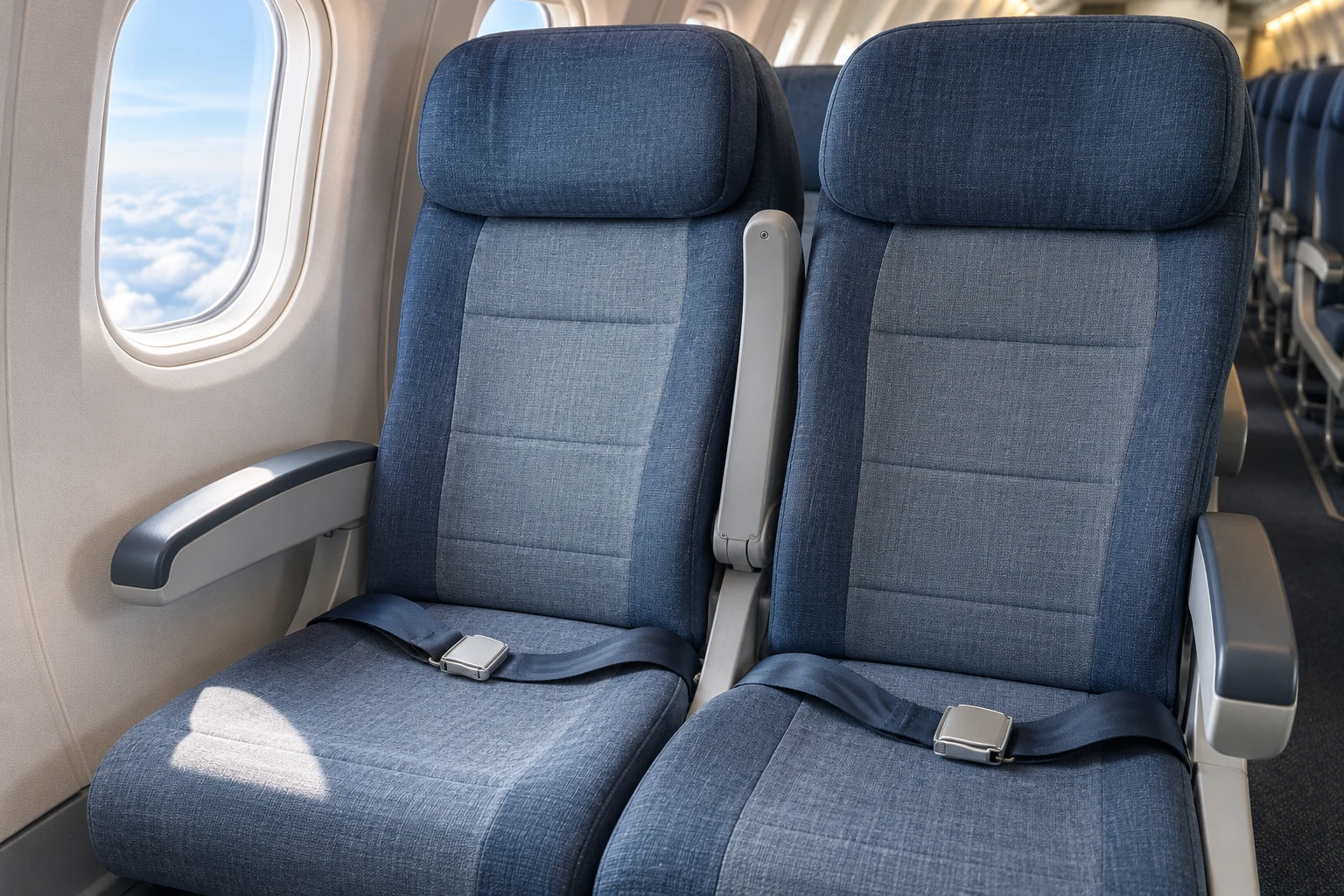
Yes, but follow the airline's extra-seat process
You can buy an extra seat on a plane with some airlines, subject to their rules and availability. It may be called an extra comfort seat or an additional seat for personal comfort. The booking method, eligible rows and price vary.
Contact the operating airline or follow its published instructions before buying. Do not create a second ordinary passenger booking and assume the system will understand that one person needs both seats.
Also check the physical benefit. Two adjacent seats do not necessarily create one uninterrupted wider space, especially where armrests are fixed or only partly movable. Confirm the arrangement on every flight before deciding whether it meets your needs.
Work out which kind of space you want
An extra seat beside you can be useful when you want more personal space across the row. It does not automatically increase the distance between your row and the one ahead.
If your main concern is knee room, compare an extra-legroom seat as a separate option. If it is width, look closely at the space between armrests and whether the shared armrest can move out of the way.
People have different reasons for wanting additional space, and there is no need to justify your preference to other passengers. Give the airline the practical information it needs to confirm a suitable arrangement. If you also need assistance, discuss that through its assistance process.
The guide to arranging airport and flight assistance can help with that separate conversation. Buying another seat should not be treated as a substitute for telling the airline about support you need.
Two airlines, two different booking methods
British Airways' seating guidance says extra comfort seats must be arranged through the airline or your travel agent, rather than booked online. It excludes bulkhead and exit-row positions and says this arrangement cannot be booked where the itinerary includes another operating airline.
BA also warns that armrests do not always raise completely. Some long-haul economy armrests move only partway, while seats in its premium cabins can have fixed divisions. Confirm the exact seat construction rather than assuming a second seat doubles usable width.
Ryanair publishes an online extra-comfort procedure: book two full-fare seats, with the traveler's own name on the first and the specified extra-seat naming format on the second. Its instructions use EXTRA as the first name and COMFORT SEAT as the surname, with the traveler's document details used when checking in both.
That naming method belongs to Ryanair's procedure. It is not a universal instruction for other airlines. Check the current page before entering details and ask for help if your booking does not fit the published example.
Check every operating carrier and flight
Start with the airline actually flying each segment, including the return. A ticket sold under one brand can contain flights operated by a partner with different extra-seat arrangements.
Ask whether the additional seat can be booked through the whole itinerary or whether any segment needs separate handling. If the airline cannot offer the arrangement across all flights, compare a simpler route before paying for a partial solution.
A connection introduces another aircraft and another pair of assigned seats. Verify both. An extra seat on the long flight does not establish that one is reserved on the feeder flight.
Where several airlines are involved, our explanation of codeshares and operating carriers helps you identify whose rules you need. Keep the operator names beside the flight numbers when discussing the booking with an agent.
Confirm adjacency and armrest movement
Ask for two seats next to each other in the same row, then verify the assignment on the booking confirmation. Two purchased seats in different rows do not provide the intended personal space.
Check whether the shared armrest raises, how far it moves and whether a tray table or other fixed structure remains between the seats. A seat map alone may not show that detail. Ask the airline for the specific aircraft configuration if necessary.
Do not assume you can use the extra seat to lie across the row or ignore crew instructions. It remains an airline seating arrangement with the operator's restraint and safety requirements. Ask about the intended use before booking if it is essential to your decision.
If you are traveling with a companion too, explain that the booking needs space for two people plus an additional seat. This avoids a conversation in which one person thinks you simply want two adjacent passenger seats.
Compare the practical alternatives
| Option | Potential benefit | What it does not establish |
|---|---|---|
| Additional adjacent seat | More personal space across the row | More pitch or a fully movable armrest |
| Extra-legroom economy seat | More space ahead where specified | A wider seat or empty neighboring seat |
| Premium economy | A different seat product where offered | Identical features across airlines or aircraft |
| Standard aisle seat | Convenient access to the aisle | Permission to occupy the aisle or another seat |
Check the actual product rather than assuming one category wins. A confirmed wider seat in another cabin may suit your needs better than two divided economy seats. Conversely, an extra economy seat might cost less while providing the kind of space you want.
Our guide to comparing premium economy with economy can help you assess that alternative without relying on the cabin name alone.
Ask for the complete extra-seat quote
Request the total price for the traveler and additional seat, including any applicable booking or selection charges. Ask what happens to the cost if you change or cancel the itinerary.
Do not assume the extra seat costs exactly the headline fare you first saw. The available fare, carrier rules and booking method can affect the quote. Likewise, do not calculate a discount from taxes or fees unless the airline confirms it.
Here is an invented comparison. Your ticket and extra seat together cost $900. A premium economy option costs $1,050 and provides a seat design that better meets your needs. The price difference is $150, but the decision depends on the confirmed space and the journey each option provides.
If the $900 option requires a long connection while the $1,050 option is nonstop, include that difference too. There is little value in comparing seat prices while quietly comparing different trips.
For a return journey, request a full return quote. You may choose additional space on both directions or only one, if the airline permits that arrangement and it suits your needs.
Do not assume every entitlement doubles
An additional seat is not automatically a second passenger's package of benefits. Ask specifically about baggage allowance, cabin baggage, meals and loyalty credit if any of those affect the value calculation.
Explain whether you want the extra seat solely for personal comfort or for another purpose, such as carrying a musical instrument. Those can involve different booking procedures and restrictions. A comfort-seat booking should not be repurposed without checking.
Keep the airline's answer with the quote. A vague assurance that you are buying another seat does not tell you which additional services are included.
If bags are important to the comparison, calculate them separately using the confirmed allowance. Our guide to comparing fares with baggage included helps keep that part of the calculation clear.
Check the records before departure
After payment, verify the traveler's name, all flight numbers and the extra-seat notation or confirmation the airline uses. Save the receipt and any instructions about checking in both seats.
If an agent arranged the booking, ask how the extra seat will appear in the airline's own system. You should know whom to contact if only the passenger's ordinary seat appears online.
Recheck after a schedule or aircraft change. Ask the airline to confirm that the extra seat remains attached to the traveler and that the two assignments are still adjacent in a suitable row.
At the airport, mention the arrangement if the boarding documents or seat allocation look incomplete. Sorting out an unclear booking before boarding gives staff more opportunity to investigate than discovering the issue once everyone is seated.
A useful script for requesting an extra seat
Start by saying that one passenger wants an additional adjacent seat for personal comfort. Give the itinerary, including the return and any connecting flights. If another passenger is traveling with you, explain that separately so the total number of people is clear.
Then ask which rows are eligible, how the booking should be made and how the extra seat will be identified at check-in. Ask about the shared armrest before discussing price if its movement determines whether the arrangement will work.
Request a written quote that identifies the complete journey and the additional seat. Keep any explanation of baggage or change conditions with it. This gives you something concrete to compare with another airline's offer.
If the agent cannot answer a seat-design question, ask whether it can be checked with the operating airline. An uncertain answer should remain uncertain in your comparison rather than becoming a promise through repetition.
Decide what you would accept after a change
Before travel, think about a workable alternative if the planned seat arrangement becomes unavailable. You might accept another suitable adjacent pair, consider a different cabin at an agreed price or ask about another flight.
The options actually offered will depend on the circumstances and applicable terms. The value of thinking ahead is knowing which requirement is essential when you speak to staff.
For example, if a movable armrest is the reason for buying the extra seat, two adjacent seats with a fixed divider may not be a satisfactory substitute. Explain that physical requirement clearly rather than describing the problem only as losing your original row.
Keep companions informed too, especially if changing flights would affect their arrangements. A shared plan makes it easier to discuss alternatives without making rushed assumptions.
Make sure the confirmation describes the arrangement you requested. Resolve discrepancies before departure rather than relying on an earlier conversation alone at boarding.
Your questions answered
Can I buy an extra seat by entering my name twice?
Do not assume that will work. Follow the operating airline's published extra-seat process or book through an agent who can arrange it correctly. Some carriers require special naming or booking handling.
Will an extra seat give me more legroom?
An adjacent seat provides space across the row, not automatically more distance to the row ahead. Compare the seat's pitch and the airline's extra-legroom options if that is your main concern.
Can I raise the armrest between the seats?
That depends on the aircraft and position. Some armrests are fixed or only move partway. Confirm the specific seat design before purchasing if an unobstructed space is essential.
Does the extra seat include another baggage allowance?
Do not assume so. Ask the airline to confirm the allowance attached to your specific extra-seat booking, along with any other benefits you are considering in the price comparison.
What happens if the airline changes the aircraft?
Check that both seats remain booked and adjacent, then contact the airline if the replacement arrangement does not meet the agreed requirements. Keep the original confirmation and ask about available alternatives or refunds.