
Traveller Needs | 10 minute read
Will Your Family Be Seated Together Without Paying Extra?
Some airlines arrange seats for young children beside or close to an adult without a separate seat fee. That may not keep the whole family in one row, so check the policy before buying seats.
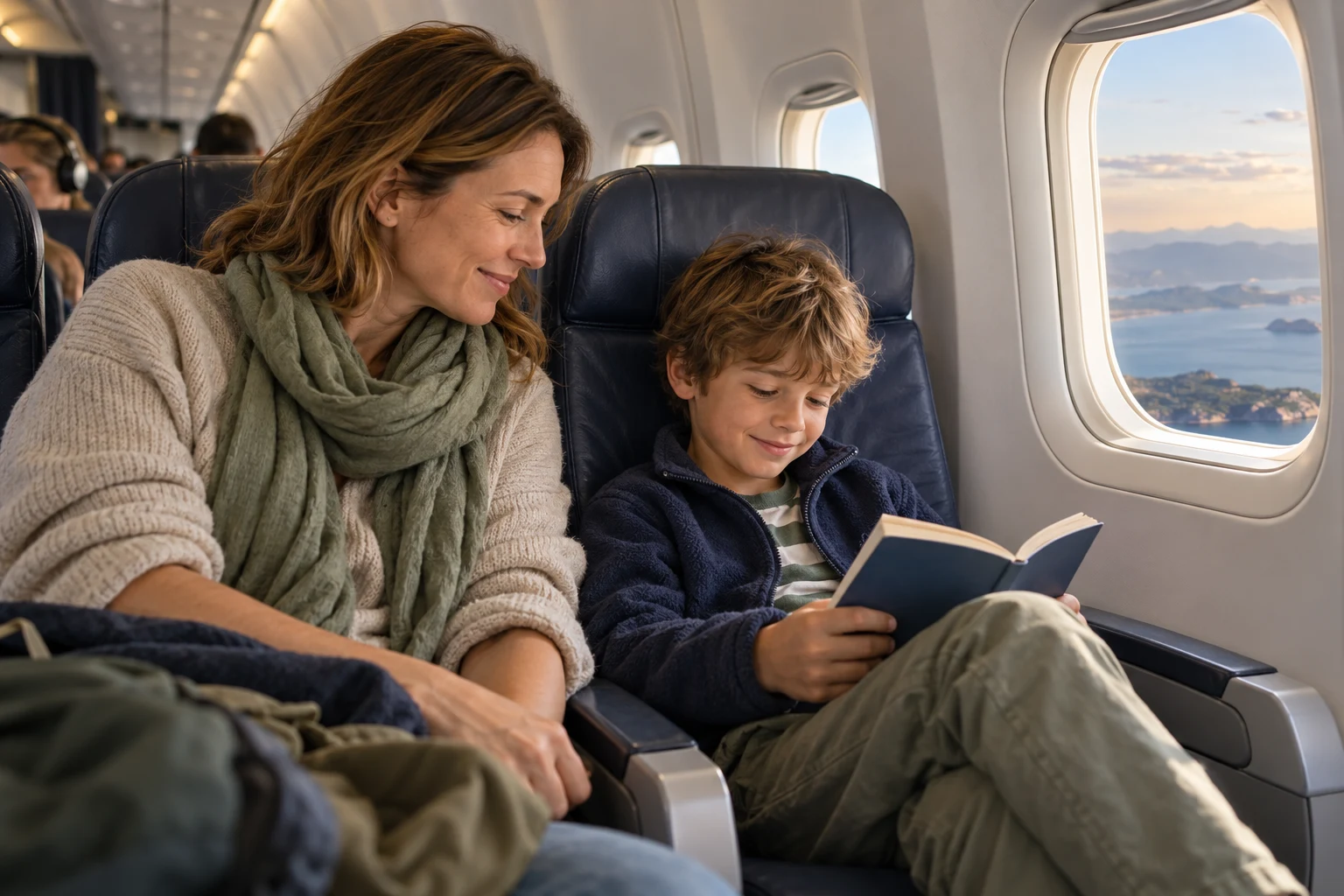
Can your family sit together without paying extra?
Your family may be seated together without paying for advance selection, but the answer depends on the airline, the children's ages and the booking conditions. A policy protecting a young child's seating with an adult may provide less than the exact arrangement your whole group prefers.
Read the operating airline's family seating policy before purchasing seats. Check whether it promises adjacency, seats close together or an effort to accommodate the group. Those phrases describe different commitments.
Define what together means for your family
For one adult and a young child, the priority may be adjacent seats. For two adults with several children, an acceptable arrangement might involve two nearby pairs. A family with teenagers may prefer one row but fall outside the airline's young-child provisions.
Separate the arrangement you need from the arrangement you would prefer. Explain specific care or assistance requirements to the airline rather than assuming a general family policy covers them automatically.
Aircraft layouts also matter. A cabin with two seats on each side cannot put a family of four in one continuous block. Premium cabins can have dividers or individual suites that change how easily an adult can supervise a child.
Before paying for particular seats, inspect the actual layout. A seat map is more useful than a generic cabin photograph when deciding whether the proposed arrangement works.
Selected family seating policies
The examples below were checked on November 1, 2026. They summarize selected airline wording and are not a universal legal guarantee. Open the linked policy for current conditions and check the operating carrier on each flight.
| Airline | Published approach | What to watch |
|---|---|---|
| British Airways | Children under 12 are seated with an accompanying adult. The airline aims to seat families together. | Family seating may involve adjacent rows or seats across the aisle. |
| easyJet | Its system tries to seat families together. Children under 12 are seated close to an adult on the booking. | Early check-in is recommended. Arrangements may need resolving at the airport. |
| Ryanair | Under its current random-allocation option, children aged 2-11 sit next to an accompanying adult on the same reservation free of charge. | Other adults and teens may be seated separately. Reserved selection is a separate choice. |
Use current policy wording rather than advice remembered from a previous trip. Airlines can change their family seating arrangements, and an old article or screenshot may describe a different process.
For US carriers, the Department of Transportation's family seating dashboard compares commitments for a child aged 13 or under and an accompanying adult. Its conditions include booking and seat-availability requirements. A missing commitment does not mean an airline will necessarily split a family, but it does mean you should inspect that carrier's own policy carefully.
Make the reservation support the seating request
Enter every child's date of birth or age accurately as requested. Do not book a child as an adult to bypass an awkward website flow, since that can prevent the airline from recognizing the family arrangement.
Keep accompanying adults and children on the same reservation where possible. If separate bookings are unavoidable, contact the airline and ask how they can be associated and what that does or does not guarantee.
Check the child's age on the travel date, including the return. A birthday during the trip may affect fare or seating requirements, especially for an infant turning two.
If booking through an agent, confirm that the passenger details and family relationship reach the operating airline. Save its booking reference so you can inspect the reservation directly where available.
For a group involving several households, identify which adult accompanies each young child. A shared reservation alone does not explain the care arrangement to staff.
Follow the airline's check-in instructions
Set a reminder for the relevant check-in window. Some airlines encourage early check-in when you have not purchased seats, while others allocate family seats through their own process.
Check every boarding pass once seats are issued. Look at the full arrangement rather than only confirming that each person has a seat number.
If the seats appear unsuitable, contact the airline through its official channel and explain the children's ages and booking reference. Ask what will happen next and whether the issue must be handled at the airport.
Keep the response with the travel documents. If told to speak to airport staff, arrive with enough time to do so before boarding begins.
Do not repeatedly change individual seats without checking the policy. Some guarantees have conditions about keeping the assigned arrangement or making choices for the whole reservation.
When paying for seats may still be useful
Advance selection can be worthwhile if you want the whole group in a particular row, want specific window or aisle positions or prefer certainty about the arrangement before check-in.
Read the fare's existing benefits first. Seat selection may already be included, or become available without a fee through an eligible membership. Check whether the entitlement covers everyone in the booking.
Our guide to deciding whether seat selection is worth paying for explains automatic allocation and free-selection windows. Paying for preference is a different decision from checking whether the airline provides suitable child-and-adult seating.
Calculate the charge across all travelers and segments. A modest price per seat can multiply quickly on a connecting return trip. Compare the total with an alternative fare or flight that meets your needs.
Before paying, confirm whether the chosen positions are suitable for the children's ages and any equipment you intend to use. Exit-row and other restricted seats may be unavailable to your party.
Treat infant seating as a separate booking question
Decide whether the infant will travel on an adult's lap or in a separately booked seat, subject to the airline's rules. The booking process and permitted restraint arrangements can differ.
Ask the airline about any child seat, bassinet or other approved equipment before relying on it. Availability and aircraft compatibility matter, and a request may not be a guarantee.
Check restrictions on the number of infants an adult can accompany and where infants can sit within a row. These are safety arrangements, so a paid seat selection cannot override them.
If a child turns two during the journey, contact the airline before booking. Confirm the requirements for flights after the birthday rather than assuming the outbound infant arrangement continues unchanged.
Keep the infant's ticket or booking details with the rest of the family documents. A missing passenger record is a different problem from an unassigned seat and should be resolved before departure.
Explain care and accessibility needs early
If a child or adult needs specific support, use the airline's assistance process and describe the practical seating requirement. Ask what documentation or notice is needed and how the arrangement will be recorded.
A generic promise to seat a child near an adult may not be enough for a particular care need. Explain why adjacency or another feature matters so the airline can assess suitable options.
Check connecting flights operated by partners separately. A request attached to the first airline's reservation should be confirmed for each relevant segment.
Keep the written response and recheck it after a schedule or aircraft change. If the assigned seats conflict with the agreed arrangement, raise the issue before travel where possible.
Review seats after a flight or aircraft change
A replacement aircraft may have a different layout, and a rebooking can assign new seats. Open the revised itinerary and check the family arrangement again.
If the group is moved onto separate bookings during disruption, make sure staff know which adults and children are traveling together. Provide the original reservation details and any assistance confirmation.
Ask about the remedy if a paid seat category is unavailable. Keep receipts and the replacement assignments, but distinguish the optional seat-fee question from the immediate need to arrange suitable family seating.
At the airport, speak to the airline before boarding where possible. Cabin crew can help with seating issues, but resolving them earlier gives staff more time and avoids relying on other passengers to volunteer.
Prepare for an acceptable split within the group
If the policy permits the family to sit in nearby pairs or rows, discuss that possibility in advance. Decide which adult will sit with each child and distribute necessary belongings accordingly.
Keep snacks, permitted medication and entertainment with the adult who will need them. A bag stored several rows away can make a routine request unnecessarily difficult.
Give older children clear instructions about where to meet after landing if they are seated separately. Make the plan suitable for their age and confidence rather than assuming everyone will leave the aircraft together.
If that arrangement would not work for your family, choose a booking option that better meets your needs or obtain a specific airline arrangement before purchase.
Keep the family seating information together
Save the booking reference, assigned seats and relevant airline response in one accessible place. If you need help at the airport, staff can understand the issue more quickly when the family arrangement is clear.
For several adults, share the itinerary so each person can identify the children's seats and the agreed plan. Avoid leaving all the useful information on one phone with a nearly empty battery.
If a particular seating arrangement has been confirmed because of an assistance need, keep that confirmation separate from ordinary seat-purchase receipts. The two documents explain different parts of the booking.
Check the boarding passes after any airport reissue. Seat numbers can change during disruption, and a previously agreed arrangement may need attention again.
Before boarding, explain the plan to children in a way suited to their age. Tell them who they will sit with and where their essential belongings are. A simple explanation can make an unfamiliar cabin feel easier to manage.
If the arrangement still needs resolving, tell the gate team before joining the boarding queue where possible. Give the specific ages and seat numbers rather than only asking whether the family can sit together.
Once staff provide a solution, check that every affected traveler has the updated information. This helps avoid one adult heading toward an old seat while another follows the new plan.
Keep the tone factual if you need to follow up afterward. Record what was assigned, what you requested and how the airline responded, with the relevant policy and receipts available.
Check the operating airline on codeshares, since the company selling the ticket may not provide the aircraft or seating.
Your questions answered
Does free family seating mean everyone gets the same row?
Not necessarily. A policy may cover a young child and an adult, allow nearby rows or exclude older children from its age threshold. Check the exact promise and aircraft layout.
Should I wait until boarding to ask for seats together?
Raise the issue as soon as you see an unsuitable assignment. Follow the airline's instructions and speak to airport staff before boarding where possible. Do not rely on voluntary seat swaps as the plan.
Can teenagers be seated separately from their parents?
They may fall outside the airline's young-child seating policy. Check the age definition and book suitable seats if a particular arrangement is important to your group.
What if the family is on separate reservations?
Ask the airline whether it can associate the bookings and what seating assistance applies. A linked note may not provide the same conditions as one reservation, so confirm the practical outcome.