
Traveller Needs | 12 minute read
Flying With a Baby: How to Choose the Right Flight
Flying with a baby is easier to plan when you compare the entire journey. Check seats, connections, equipment and arrival arrangements alongside the fare.
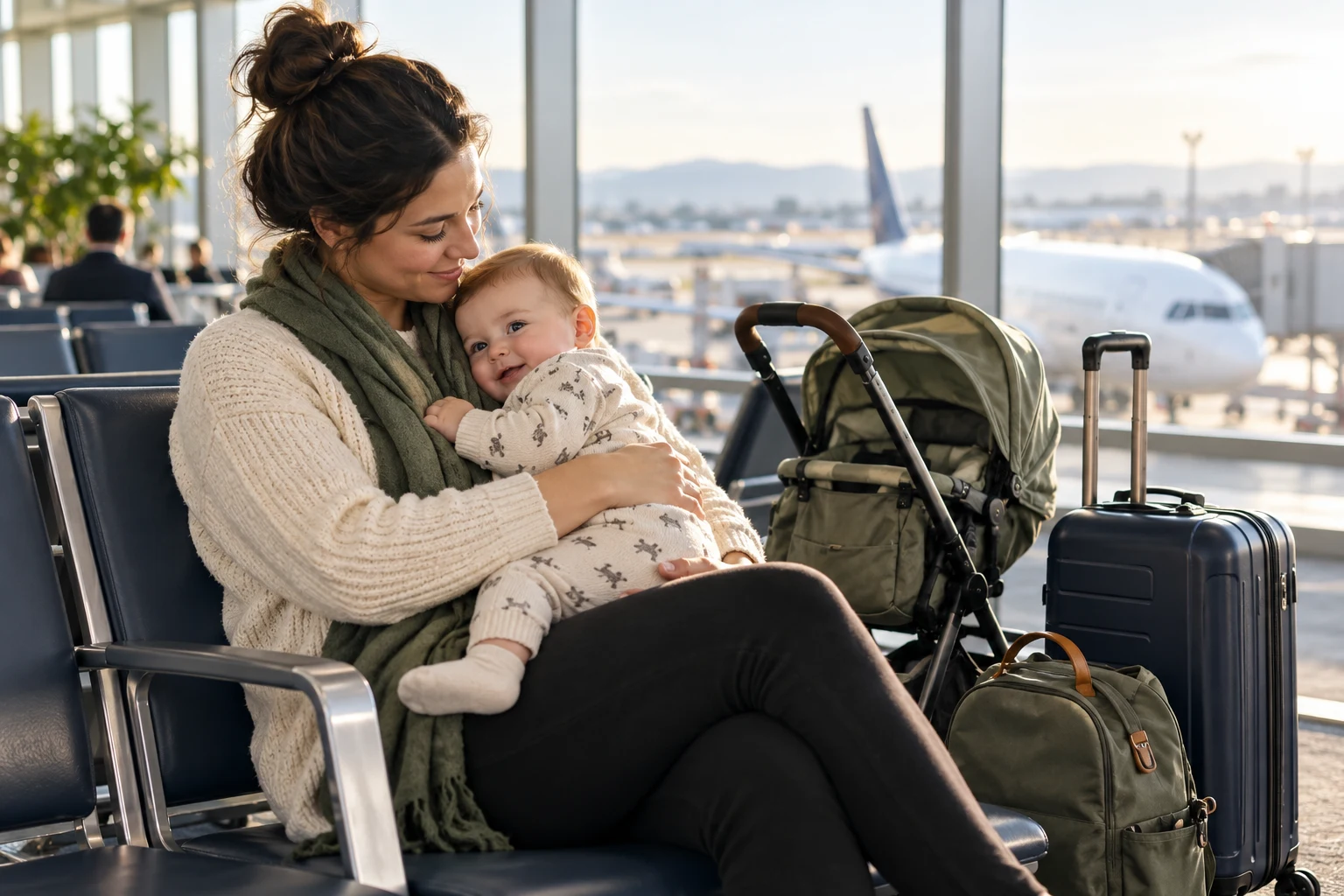
How to choose a flight when flying with a baby
When flying with a baby, compare the door-to-door journey before choosing the lowest fare. A workable departure time, suitable seating arrangement and manageable transfer can matter more than a small price difference.
Confirm the baby's age eligibility, travel documents and ticket type first. Check the operating airline's rules for a separate seat, approved restraints and any bassinet or carrycot request. These arrangements vary, so a general family-travel label is not enough.
Build the plan around the baby and adults who are actually traveling. There is no flight time that guarantees sleep, and no packing list that turns a connection into a straight line.
Write down the family's practical needs
List the essentials before searching: the travel dates, number of adults, baggage and equipment, and any arrival deadline. Add the arrangements you would prefer, such as a nonstop journey or a particular seat location.
Think about what one adult can carry and manage if traveling alone. A stroller, checked case and several cabin bags may all be permitted yet difficult to move together through the airport.
For a very young baby or any health concern, check the airline's minimum age and medical-clearance requirements and speak with the treating clinician. Airline acceptance and individual medical suitability are different questions.
Verify travel-document and entry requirements with official sources for the baby's nationality and route. Include transit countries and any consent documentation relevant to the circumstances. Leave enough time to obtain what is needed.
Compare the whole departure day
Work backward from the flight to the time you need to leave home. A departure that looks conveniently timed may require a very early airport journey. Include parking, equipment handover and the airline's recommended arrival time.
Use the baby's usual routine as useful context rather than a promise of what will happen in an unfamiliar cabin. A flight overlapping a normal sleep period may suit your family, but boarding and cabin activity can change the experience.
Compare the adults' rest and workload too. If a late flight follows a long day and another lengthy transfer, the cheaper option may be more demanding than expected.
For a short route, a simple daytime journey may be attractive. For a long route, an overnight flight can be practical when the arrival day is flexible. Choose the schedule you can manage even if the baby sleeps less than hoped.
Decide whether a connection earns its place
A nonstop flight removes a transfer and another boarding process. Where it is available, compare its full cost with the connecting option before deciding whether the extra fare is worthwhile.
A connection can offer a break from the cabin, but it also requires movement through another airport. Check terminal changes, arrival procedures and whether baggage must be collected.
Use the actual transfer process to judge the gap. A short published connection may leave little room for changing, feeding or an unexpected queue. A very long one may require facilities or accommodation you have not yet priced.
Our connecting-time guide explains the factors behind a workable transfer. Ask the airline about your specific itinerary if the arrangements are unclear.
Pay particular attention to separate tickets. A delay can create different responsibilities for reaching the next flight. Do not assume a search result sold together provides the same arrangements as every through-ticket journey.
Compare a separate seat with a lap-infant booking
A lap-infant fare and an infant's own seat are different products. Request the full price for the arrangement you intend to use, including any required booking assistance.
The FAA's child-safety guidance recommends an approved restraint in the child's own seat. Check the operating airline's acceptance and installation requirements for your specific device and flight.
Do not assume that a car seat accepted as checked baggage is approved for cabin use. Keep the manufacturer's instructions and required approval information available, and confirm dimensions and seating restrictions with the airline.
If you hope to use an empty adjacent seat without purchasing it, understand that availability is not guaranteed. A plan that depends on that seat should be priced as a purchased-seat arrangement.
The infant fare and extra-cost guide explains why babies do not always travel free and how age changes during the trip can affect the booking.
Treat a bassinet request as a specific arrangement
Check whether the aircraft and route offer a bassinet, carrycot or other infant facility. Ask about eligibility, dimensions or weight limits, the associated seat position and the request process.
British Airways' family seating guidance, for example, describes carrycot arrangements on long-haul services as subject to availability and aircraft type. Its published conditions also limit when the equipment can be used. Other airlines have their own rules.
A request is not always a guarantee. Find out what has been confirmed and what could change if the aircraft changes. Keep a workable plan for the flight if the requested facility is unavailable.
A bassinet does not replace the required restraint arrangements during phases when it cannot be used. Follow the crew's instructions and the operating airline's rules.
Check where the adults and children will sit
Review the seating arrangements for the actual party. An infant booking can restrict certain seats, while a purchased restraint may need a particular position. Confirm these details before paying for a seat selection that may not be usable.
If two adults travel with a baby, consider how you will share the practical tasks. Seats near one another may matter more than a particular view or row.
For additional children, read the family seating policy and ask how it applies to your booking. Avoid splitting reservations without understanding the implications for accompanying adults and seating.
Keep any confirmed arrangement in writing where possible. Recheck it after a schedule or aircraft change rather than assuming the original seat map remains current.
Plan the stroller and car seat handovers
Read the airline's baby-equipment policy for the fare and route. Check what can be carried, what must be registered and whether a protective bag changes how an item is handled.
Ask where you can use the stroller until handover and where it will be returned. The answer can differ by airport or aircraft. If it returns at baggage reclaim, plan how you will manage the baby and cabin bags before reaching it.
For a connection, confirm whether the equipment is transferred through or made available between flights. Do not assume that gate checking at the first airport means the stroller will be waiting during every layover.
At the destination, arrange suitable ground transport and any required child restraint. A car seat checked for the flight may be part of that plan, but confirm its suitability for the vehicle and applicable local requirements.
Pack for access and realistic carrying capacity
Check the infant's allowance separately from the adults' bags. A stroller allowance does not necessarily include an extra general cabin bag. Confirm the dimensions and weight of each item you intend to carry.
Keep essential supplies accessible within the permitted baggage. Organize them so a change or a needed item does not require emptying the entire bag in a narrow space.
Check the departure and transit airports' current security rules for baby food, milk and liquids. Procedures and screening requirements can vary, so use the relevant official airport or security authority guidance before packing.
Plan for a reasonable delay with the supplies the baby normally needs. This is about having a workable margin, not packing a second household into the overhead locker.
Review facilities along the route
Look at the departure airport's family information, including changing facilities and the route from check-in to the gate area. If a particular facility is important, check its location and operating information.
For a connection, identify what is available in the area you can actually access. A useful room in another terminal or outside security may not help during your transfer.
Ask the airline how family boarding works on the route, but keep the plan flexible. Boarding early can provide setup time, while the practical benefit depends on the equipment and party. Follow the instructions given for your flight.
If an adult or child also needs airport assistance, arrange it directly and describe the support required. Family travel and accessibility assistance are separate arrangements and should not be assumed to cover one another.
Make the first hours straightforward
Check the local arrival date and the time you are likely to reach the accommodation. Confirm check-in and luggage storage rather than assuming an early flight produces early room access.
Choose a transfer that fits the party and equipment. A small vehicle quote may not allow for the stroller and suitcases, and a public route with several changes may be awkward after a long flight.
Keep the first activity flexible. A simple arrival plan gives you room to respond to how the journey actually went. There is no obligation to make the first afternoon prove the value of the airfare.
For the return, check the checkout-to-airport gap and any place to store luggage. The final day deserves the same practical attention as the outward journey.
Compare two workable family journeys
Use a short worksheet rather than the headline fare alone. The following comparison points do not assume that one route type always wins.
| Question | What to record |
|---|---|
| How much will the booking cost? | Adults, infant ticket, bags and chosen seats |
| How long is the whole journey? | Home departure to accommodation arrival |
| What happens during a connection? | Terminals, baggage and equipment handovers |
| What seating is confirmed? | Purchased seat, restraint approval and requests |
| What happens after landing? | Transfer, room access and luggage arrangements |
If the cheaper flight adds another airport handover and an overnight wait, decide whether the remaining saving is meaningful. If both options are similarly practical, the price difference can reasonably carry more weight.
Do not assign a financial value to a bassinet or other request as though it were guaranteed when it is not. Keep confirmed features and preferences separate in the comparison.
Confirm the details before committing
Check the baby's name and date of birth, all flight dates and the operating airlines. Confirm the ticket type and any birthday during the trip.
Resolve essential seating or equipment questions before payment. Save the responses and the relevant conditions with the itinerary.
After booking, verify that the infant appears on every relevant flight. Review any subsequent schedule change against the transfer and accommodation plans. A clear record makes it easier to keep the family journey coordinated.
Assign the practical tasks before travel
When two adults travel together, agree who will manage documents, equipment and the main cabin bag at each handover. You can change the arrangement during the day, but a shared starting plan reduces the need to improvise in a queue.
If you travel alone, walk through the sequence mentally with the items you expect to carry. Consider how you will move from transport to check-in, manage the stroller handover and reach the seat. Adjust the baggage plan if it requires more hands than you have.
Keep booking references and confirmed instructions accessible without unpacking. A small organized document set can be more useful than several separate messages saved in different apps.
At the destination, make sure the person meeting you understands the equipment and vehicle needs. Share the full local arrival date, especially after an overnight flight.
Recheck the plan after a flight change
If the airline changes the schedule, review more than the new departure time. Check whether the airport journey, connection and accommodation arrival still work for the family.
An aircraft change can affect the seat map or a requested infant facility. Contact the airline about arrangements that matter to your booking and retain the updated confirmation.
If you make a voluntary change, ask whether the infant ticket and any purchased extras have also been updated. Separate equipment requests or ground transfers may need attention too. Keep the revised version of the itinerary clearly identified so companions do not follow an older plan.
Keep the final confirmed arrangements available to every adult traveling. If one person handles check-in while another manages the baby, both should be able to find the relevant booking details and equipment instructions without searching through the other person's phone.
Your questions answered
Is a night flight always better with a baby?
No. Consider the baby's usual routine, the adults' workload and the arrival plan, but do not assume sleep is guaranteed. Compare the complete day and choose a schedule you can manage if rest is limited.
Does requesting a bassinet guarantee one?
Not necessarily. Availability, aircraft and eligibility conditions apply. Ask what is confirmed, what remains a request and what happens after an aircraft change. Keep an alternative plan that follows the airline's restraint rules.
Can I take a stroller to the aircraft?
That depends on the airline, airport and equipment. Confirm the handover and return points before travel, including during connections. Gate checking does not automatically mean the stroller returns at the aircraft door.
Is a nonstop flight worth paying more for?
It can be if it removes a demanding transfer or substantially shortens the journey. Compare the full price and practical benefit. A well-planned connection can still be a reasonable choice when the saving matters.
Can I use any baby carrier during takeoff?
Do not assume so. Follow the operating airline's rules and crew instructions for each phase of flight. A carrier used while walking through the terminal is not automatically an approved onboard restraint.