
Seats & Onboard Comfort | 9 minute read
Preferred vs Standard Airline Seats: What Are You Paying For?
A preferred seat may buy a better location rather than a bigger seat. Check the airline's definition before paying the difference.
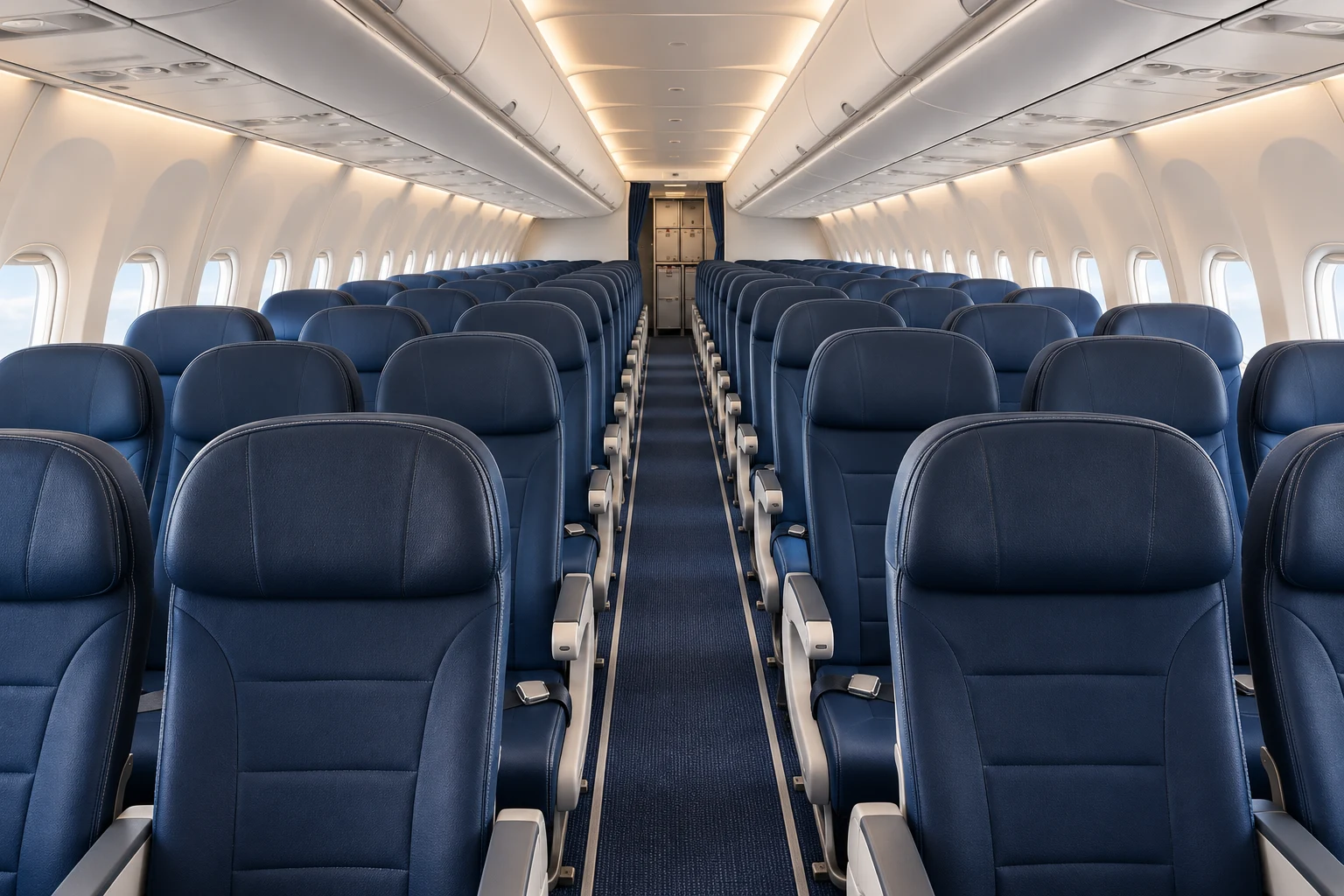
Preferred seats are an airline-defined category
Preferred seats are seats an airline identifies as more desirable and may charge extra to select. The benefit can be a position nearer the front, a window or aisle or access to selected rows. The name alone does not guarantee more legroom, greater width or a different cabin.
Standard seats usually form the airline's regular seating category, but selecting one in advance can still cost money. Compare the two options within the same fare and flight rather than assuming standard means free.
Before paying, ask what changes physically, where the seat is and which other benefits are explicitly included. If the answer is simply a few rows nearer the front, decide whether that location is worth the fee to you.
Why the same label can mean different things
Airlines do not use preferred seating as a universal specification. Southwest's assigned seating information describes Preferred seats as standard-legroom seats nearer the front. That is a location benefit, distinct from extra-legroom seating.
Delta's seating guidance includes selected front-of-cabin, bulkhead and exit-row positions within Preferred seating. Those positions can have different physical features and restrictions. It would therefore be misleading to say that every airline's preferred seat has exactly the same space as every standard seat.
Read the description next to the seat you are considering. If it does not state extra pitch or width, do not invent those benefits from a colored rectangle or a price premium.
The useful comparison is specific: this seat on this flight, bought with this fare. Airline terminology is a starting point for the investigation, not the result.
What to compare on the seat map
| Question | What would justify paying? | What needs checking? |
|---|---|---|
| Where is it? | A location you actively prefer | Distance from toilets, galleys and your companions |
| Is there more room? | A confirmed improvement in the dimension you need | Pitch, width, armrests and seat-specific notes |
| What does the fare include? | A benefit not already included | Eligibility through fare type or traveler status |
| What else comes with it? | Clearly listed services you would use | Whether baggage or boarding is actually included |
| What if the flight changes? | Terms you are comfortable accepting | Reassignment, transfer and refund conditions |
Use the legend as well as the map. The same shade may identify an entire price category while individual seats within it have different characteristics. A preferred middle seat near the front is still a middle seat.
For people who mainly want to avoid the middle, an ordinary aisle farther back may meet the need at a lower price. Write down your preferred position before the booking screen starts offering improvements to it.
Preferred seating versus extra legroom
Extra-legroom seats are sold around additional space between rows or a particular open area. Preferred seating may be sold around location. Some airline categories overlap, so check the actual measurements and restrictions instead of treating the names as mutually exclusive.
If knee room is the problem you are trying to solve, look for a stated pitch or clear description of the additional space. If shoulder room matters, extra distance ahead will not necessarily help. You need the width and armrest arrangement.
Exit-row positions also come with eligibility requirements. Paying more does not remove them. Bulkhead positions can have different storage arrangements or fixed fittings that affect how spacious the seat feels.
Our guide to deciding whether extra legroom is worth paying for helps you compare the physical benefit. Keep that question separate from how early you might leave the aircraft.
How much is a front-of-cabin position worth?
Sitting nearer the front can appeal if you dislike waiting behind a long cabin of passengers. However, a seat selection does not guarantee a particular exit door, parking stand or arrival process. Do not turn a likely convenience into a promised time saving.
If you have a connection, choose a workable itinerary first. A preferred seat cannot make an unrealistic connection reliable. Airport layout, arrival delays and boarding deadlines still matter, as our guide to allowing enough connection time explains.
For a short flight with no onward deadline, you may place little value on moving a few rows forward. On a longer journey, you might care more about avoiding a busy galley than about row number.
Ask yourself what you would do differently with the benefit. If you cannot identify a useful difference, keep the money for something more tangible. Lunch is at least unlikely to be reassigned to row 28.
Check what you already qualify for
Seat selection can depend on fare type, frequent-flyer status, booking channel and when you choose. Check your booking while signed into the relevant account so that eligible benefits have a chance to appear.
Do not pay for a bundled fare purely because it includes preferred seating without comparing its other terms. If the bundle also includes a bag you need, it could be useful. If you will use none of the additional services, buying a standard fare and a specific seat may cost less.
Some fares restrict which seats can be selected or when they become available. Read the rules before buying the ticket on the assumption that you can upgrade the position afterward.
The guide to paying for seat selection covers the broader decision, including whether choosing in advance solves a real need for your trip.
Calculate the price for the whole party
A fee that looks small beside a single seat can become substantial across several people and flights. Count each passenger and each segment where you intend to select a preferred position.
Consider an invented example. A standard seat costs $8 to select and a preferred seat costs $22 on one flight. The difference is $14. For two travelers selecting seats on both outward and return nonstop flights, the additional cost is $56.
If both options offer the same legroom and suitable adjacent seats, that $56 buys the location difference. You might value it, but it should not be described as paying for a larger seat.
Now suppose only one traveler needs a particular aisle position. Check whether you can select different categories for different passengers while keeping a suitable arrangement. You do not have to buy the most expensive available choice for everyone simply because the booking is shared.
Compare the complete flight price with another airline too. A slightly higher base fare with the seats you need included can cost less than a low fare after individual extras.
Keep the seat receipt and read the conditions
Before paying, check whether the selection fee can be refunded, transferred to another flight or credited if you cancel. These conditions may differ from the ticket's own change and refund terms.
If the airline changes aircraft, review the new assignment. The same row number may no longer offer the same location or features. Save the original confirmation so you can explain what category you purchased.
Contact the airline or agent if the replacement does not match the paid benefit. Ask about the available alternatives and the applicable refund process. Avoid assuming that a seat fee is automatically refunded alongside the airfare.
For a traveling party, review all assignments together. A satisfactory replacement for one person does not resolve a companion being moved away.
Your questions answered
Do preferred seats always have more legroom?
No. Some airlines use the label for standard-legroom seats in desirable locations, while others include selected rows with different features. Read the description of the exact seat rather than relying on the category name.
Are standard seats free to choose?
Not always. A standard seat can still carry an advance selection fee, depending on the airline and fare. Check what is included before comparing it with a preferred option.
Does a preferred seat include priority boarding?
Only if the airline explicitly includes that benefit in the product you are buying. A desirable seat location does not by itself establish a boarding entitlement or baggage allowance.
Is a preferred middle seat better than a standard aisle?
That depends on your priorities. If easy access matters more than sitting near the front, the standard aisle may suit you better. Compare actual positions and features, not just their labels.
Should I pay for preferred seats on every flight?
There is no need to apply one choice to the whole trip. Consider each flight's duration, available positions and additional cost, then pay where the benefit matters to you.