
Traveller Needs | 13 minute read
Which Airlines Allow Pets in the Cabin?
Compare airlines that allow pets in the cabin, then check the route, carrier size, animal documents and confirmed space before buying your flight.
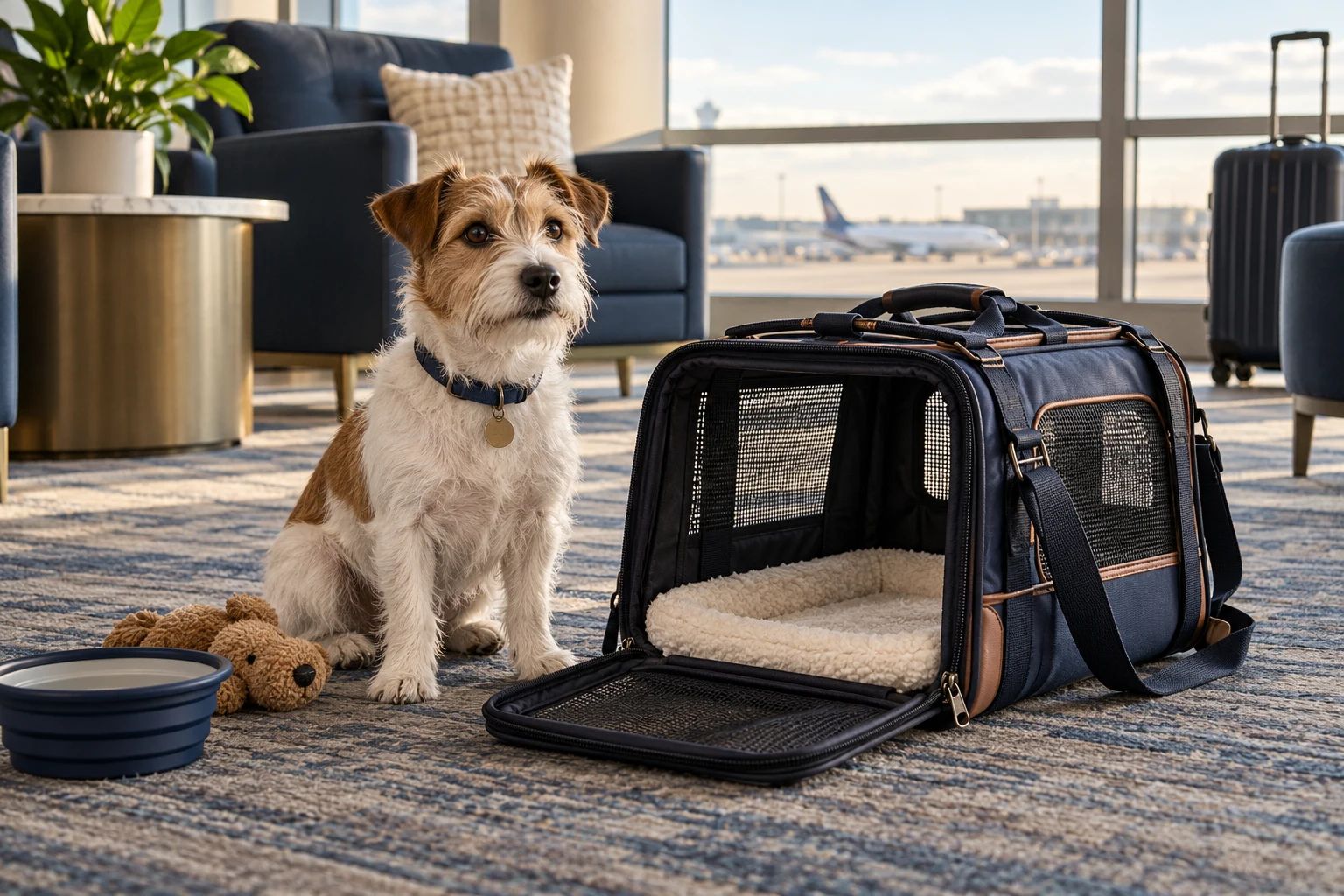
Which airlines allow pets in the cabin?
Airlines including Lufthansa, KLM and Air France accept eligible small cats or dogs in the cabin on permitted routes, subject to their conditions and available space. British Airways does not carry ordinary pets in the cabin.
The airline name is only the first filter. Your pet's size, carrier, destination, operating aircraft and travel class can determine whether cabin travel is available for the actual flight.
Check the outward and return arrangements before paying. In particular, ordinary pets arriving in Great Britain by air follow cargo requirements rather than a general cabin-pet arrangement.
A starting comparison of airline policies
| Airline | Ordinary cabin pets | Key starting limit |
|---|---|---|
| Lufthansa | Eligible small dogs and cats | 8 kg including the transport container |
| KLM | Eligible cat or dog | 8 kg including the carrier, with cabin restrictions |
| Air France | Eligible cats and dogs | 8 kg including the carrier |
| British Airways | No ordinary pets in the cabin | Separate pet transport arrangements |
This is a shortlist, not an exhaustive list or a guarantee of acceptance. The policies were checked on November 2, 2026. Confirm the requirements for your precise journey directly before booking.
Recognized assistance dogs are a separate category. Do not apply ordinary pet weight limits or booking procedures to an assistance dog without checking the relevant policy.
Lufthansa: check route acceptance as well as weight
Lufthansa's animal travel guidance permits eligible small dogs and cats weighing no more than 8 kg with their container in the cabin. It also describes route restrictions and the need for confirmed registration. Ask about every operating airline in the itinerary. A Lufthansa flight number does not mean Lufthansa operates each segment, and another carrier's acceptance rules may apply.
Read the detailed container and animal requirements before choosing a bag. Weight is only one condition. The animal must also be suitable for the permitted container and journey.
Check the registration deadline for the destination and booking method. Some routes have additional requirements, so use the current instructions rather than a generic deadline copied from another trip.
KLM: the travel class can change eligibility
KLM's pet reservation page allows an eligible cat or dog in Economy or European Business Class. Its published carrier limit is 46 x 28 x 24 cm, with a combined pet and carrier weight of 8 kg.
The carrier must fit under the seat and allow the animal to stand, turn and breathe comfortably. KLM does not permit cabin pets in Premium Comfort or intercontinental Business Class.
KLM also identifies restrictions on pets traveling to the UK as passenger baggage. Check the return route before treating an outward cabin booking as a complete solution. Confirm availability for the exact flight and follow the reservation process. A passenger seat being available does not establish that a pet place is available too.
Air France: check the current cabin conditions
Air France's pet travel guidance distinguishes cabin pets from animals transported in the hold. Its cabin weight threshold is 8 kg including the transport bag, subject to the other acceptance conditions.
The airline's pet travel checklist sets out the commitment to keep the animal inside its carrier during the onboard journey. Read the current bag, cabin and destination requirements for your flight.
If the booking combines Air France with another carrier, obtain confirmation for the whole route. A connection should not be purchased on the assumption that the first airline's approval extends automatically to the next aircraft.
British Airways uses separate pet arrangements
British Airways states that ordinary pets do not travel in its passenger cabin on any route. Its published arrangements involve specialist partners for pet transport.
BA has a separate policy for assistance dogs. It also states that emotional support dogs are not accepted in the cabin as assistance dogs under its published arrangement and can travel as pets.
If cabin travel is essential for your plans, check another eligible carrier and route rather than buying a BA passenger ticket in the hope of adding a pet later. If considering cargo transport, obtain the specialist provider's quote and requirements before committing.
Why flights into Great Britain need special attention
A UK government answer published in January 2026 confirms that pets entering Great Britain by air travel as manifest cargo. Recognized assistance dogs are the cabin exception on commercial aircraft.
Great Britain means England, Scotland and Wales. Do not assume the same guidance describes every Northern Ireland journey. Use the correct authority's rules for the destination.
The government's pet entry guide explains documents, health preparations and route requirements. It also links to separate Northern Ireland guidance. An airline that accepts a small dog on a flight leaving Britain may not offer the same arrangement for returning. Build the whole trip before buying the outward ticket.
Measure the carrier with the animal in mind
Read the dimensions and construction requirements for the operating airline. A product described by a retailer as airline approved does not establish compliance with every airline or aircraft.
Weigh the animal and carrier together, including the items that will remain inside. A pet just below the headline weight limit can exceed it once the bag is added.
Check the animal's room to move as well as the outer dimensions. A bag that fits under a seat can still be unsuitable for the animal using it. Ask the airline and your vet if you are uncertain.
Try the carrier at home well before travel. Follow professional advice about helping the animal become comfortable with it, and allow time to change the equipment if it does not work.
Confirm the pet place before relying on the fare
Contact the airline with the intended flight numbers, animal details and carrier measurements. Ask whether the pet can be accepted in the intended cabin on every segment. Establish how to coordinate the passenger booking and pet reservation. If a temporary hold or assisted booking process is offered, read its conditions and deadline carefully.
After booking, obtain confirmation that the pet request is accepted rather than merely submitted. Save the reference and any instructions with your own ticket.
If the pet place cannot be confirmed, resolve the situation within the passenger fare's available options. Do not assume that an unconfirmed request will be sorted out at check-in.
Check animal entry rules independently
Airline acceptance and government entry permission are separate requirements. Read official instructions for the departure country, transit points and destination, using the animal's species and travel history where relevant.
Ask your vet about the necessary preparations and their timing. Microchip records, vaccination requirements, health certificates or treatments may need to be completed in a particular sequence.
Use the current official rules rather than an old pet passport checklist from a previous holiday. Requirements can depend on where the animal is coming from and the type of document available. Check your own travel permissions too. Our guide to transit checks before booking connections explains the passenger side of a journey that may already involve substantial animal paperwork.
Keep the transfer practical for both of you
A connection adds another operating carrier, airport process or waiting period to assess. Confirm that the pet can remain with you throughout the planned transfer and that any required checks can be completed.
Ask what happens if the onward flight changes or the connection is missed. Identify who would help arrange an acceptable alternative with a pet place, rather than assuming any available passenger seat will solve the problem.
Our guide to planning connection time helps compare the journey. For pet travel, a modest fare saving may be less useful than a simpler route with confirmed acceptance.
Check airport rules about animals and the facilities available during the wait. Do not plan to open the carrier in a public area without understanding the local instructions and your animal's needs.
Compare the full cost of traveling with a pet
Request a quote for the pet service on each flight and in each direction. Ask whether the fee is charged per segment or journey and what happens if the itinerary changes. Add the carrier, veterinary preparations, required documents and suitable ground transport. Include pet-friendly accommodation if a connection requires an overnight stay.
Our guide to adding up the complete flight cost provides a useful framework. Keep the pet-related expenses visible so that two fares are compared on the same basis.
A higher passenger fare can still produce a lower workable total if it avoids an extra stop or difficult transport arrangement. Compare confirmed arrangements, not a cheap ticket paired with an assumed pet fee.
Ask your vet whether the journey suits your pet
Discuss the animal's health, age and ability to tolerate the planned journey with your vet. Give the expected flight duration and total travel time, including airport waits.
Ask about feeding, hydration and any prescribed medication for the specific animal. Do not use another owner's sedative recommendation as a plan for your pet.
The US Department of Transportation's pet travel guidance also emphasizes checking airline requirements and animal health arrangements. Use the relevant authorities for the countries involved in your trip. If the journey is unsuitable, consider whether a different route, another transport method or care at home would better meet the animal's needs. Cabin availability is one part of the decision, not the whole welfare assessment.
Recheck after a schedule or aircraft change
Read any itinerary-change notice carefully and contact the airline about the pet booking. Confirm that the accepted arrangement has carried over to the replacement flight.
A different travel class or operating carrier can introduce new restrictions. Keep the original pet confirmation available when discussing the alternative.
Review document timing if the dates move. A certificate or treatment arranged for the original schedule may need to be checked against the revised arrival time.
Before departure, confirm where to check in and how early to arrive with the animal. Leave enough time for the carrier and documents to be inspected without rushing.
What to include when requesting a pet place
Give the airline the animal's species, breed where relevant, age and combined weight with the carrier. Provide the carrier's external dimensions and construction, then list the flight numbers and travel class you want to book. This gives the agent enough detail to check the actual request.
Ask for the response to identify every accepted segment. If the itinerary includes two airlines, find out whether one can confirm the whole arrangement or whether separate approval is required. Keep track of any outstanding response before committing to the passenger fare.
Read the confirmation for conditions you still need to meet, such as documents presented at check-in. Acceptance of a reservation request does not remove those remaining tasks. Add them to a short preparation list with dates, especially when a vet appointment must take place within a specified period.
Compare two workable routes on one sheet
Imagine one route offers a lower passenger fare but adds a connection and requires a second pet reservation. Another is direct and more expensive. Record the confirmed pet fees, total travel time and transport needed at both ends before deciding.
Include the return on the same sheet. A cabin arrangement available outward may require a different solution home, particularly for arrival into Great Britain. Obtain a quote for that solution rather than leaving it as an estimated extra.
If you consider returning by another transport method, check the operator's animal policy and the relevant border requirements separately. Include any overnight stop and the practicality of reaching the departure point with the animal. A route is only comparable once the entire journey is workable. There may be no useful cabin option for the dates and destination you need. Recognizing that early leaves time to consider an appropriate alternative with your vet and a qualified transport provider, or to change the travel plan.
Prepare a small travel kit within the rules
Ask the airline what supplies may be carried and how the pet carrier affects your other cabin baggage allowance. Do not assume a pet booking automatically creates an extra allowance for a large bag of equipment.
Plan for the items your animal may need during the airport journey, following veterinary advice and airport rules. Keep required records accessible and protect paper documents from spills. Carry contact details for the airline's pet service and the relevant veterinary practice.
Check how security screening works for an animal at the departure airport. Follow staff instructions on the day and ask about the procedure in advance if you have concerns about safely handling the pet outside its carrier. The aim is to avoid improvising in a crowded queue.
Confirm transport after landing
Check that the taxi, rental arrangement or public transport you plan to use accepts the animal and carrier. If you are prebooking a vehicle, give the provider the relevant details and retain its confirmation. For a late arrival, establish what happens if the flight is delayed. A pet-friendly transfer that leaves before you clear the airport is not a complete arrival plan. Keep an alternative contact available where practical.
Confirm accommodation rules too, including any animal size limit, fee or check-in instruction. Airline acceptance does not settle whether the hotel will accept the same pet. Resolve those details before making the connected bookings nonrefundable.
For a rental car, ask about cleaning conditions and how the carrier can be secured appropriately. Choose a vehicle with enough usable room for the animal, its equipment and the passengers traveling with you.
Questions to ask before paying
- Does every operating airline accept this animal on this route?
- Is cabin pet space available on each flight?
- Does the carrier meet both size and welfare requirements?
- What is the combined animal and carrier weight?
- Which documents and preparations are required for every country?
- What are the complete fees and change conditions?
- Can the return journey be completed under the relevant entry rules?
Keep the answers together with the booking. A confirmed, workable plan is more useful than a general list of airlines described as pet friendly.
Your questions answered
Can I buy an extra seat for my pet?
Do not assume an extra passenger seat changes the airline's pet policy. Follow its rules for the carrier's location and the animal's acceptance. Ask the operating airline before buying any additional seat.
Does an 8 kg limit mean the animal alone can weigh 8 kg?
For the airline examples above, the limit includes the carrier. Weigh the complete arrangement and check the current conditions. Size and the animal's ability to fit comfortably also matter.
Are assistance dogs treated as ordinary cabin pets?
No. Recognized assistance dogs have separate eligibility, documentation and booking requirements. Read the airline's assistance-dog policy and the destination's rules rather than applying an ordinary pet allowance.