
Flight Prices & Value | 9 minute read
Are Extra-Legroom Seats Worth Paying For?
Extra knee room can improve a long flight, but the seat's location and restrictions matter. Check what the upgrade changes before paying for a label on the seat map.
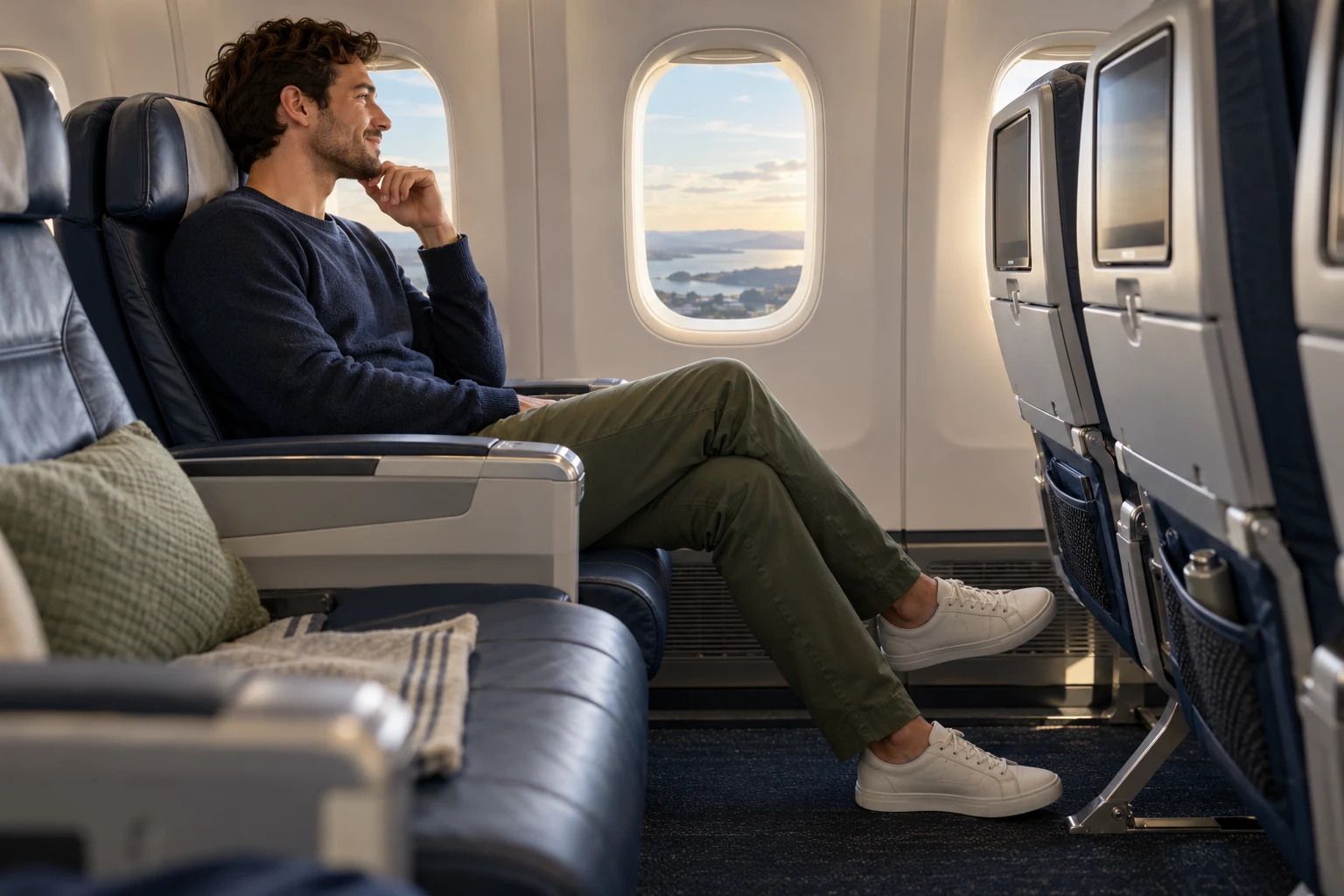
Are extra-legroom seats worth it?
Extra-legroom seats can be worth paying for when additional space would materially improve your comfort, particularly on a longer flight. Compare the fee with the actual seat features, eligibility restrictions and drawbacks of its location before deciding.
Extra legroom usually refers to more space around your legs within the same cabin. It does not automatically mean a wider seat, more recline or the service of a premium cabin.
Understand what the price buys
Airlines use different names for preferred seats, extra-space rows and premium cabins. Read the product description instead of assuming a higher seat-map price means a larger seat.
A preferred seat may simply be nearer the front. An extra-legroom seat may retain the same width and service as standard economy. Premium economy, where offered as a separate cabin, can be a different product with other features.
Check the exact aircraft configuration for your flight. An airline can operate several layouts under one aircraft type, and the same row number can have different characteristics.
Our guide to paid seat selection and free allocation explains the wider decision. First establish whether you need to pay for choice at all, then decide whether the extra-space category adds enough value.
Look beyond the headline pitch figure
Seat pitch measures the distance between a point on one seat and the same point on the seat in front. It can help compare layouts, but it is not a direct measurement of the clear space around your knees.
Seat shape, thickness and equipment underneath can affect usable room. A published pitch figure should be considered alongside the actual layout and any seat-specific notes.
If width is your main concern, check width explicitly. More distance from the seat ahead may not solve a narrow sitting area, and some positions have fixed armrests containing tray tables.
For a traveler with a specific physical or assistance need, contact the airline about suitable seating. A generic extra-legroom purchase may not provide the feature you require.
Read exit-row eligibility before selecting
Some extra-legroom seats are in emergency exit rows. Passengers seated there may need to assist in an emergency and meet the airline's eligibility requirements.
As checked on November 1, 2026, easyJet's restricted-seat rules require passengers to be at least 16 and willing and able to assist. They include additional restrictions concerning infants, physical limitations and equipment. Check the complete conditions for the operating airline.
Age thresholds and detailed requirements can vary. Do not apply one airline's policy to another, and do not assume that successfully paying online proves you are eligible on the day.
If your circumstances change before travel, contact the airline. Crew may need to move you to a suitable seat for safety reasons, regardless of the original purchase.
Families should check the restrictions before attempting to book an entire exit row. Our guide to seating families without unnecessary charges covers the separate question of keeping children with an accompanying adult.
Check bulkhead storage and layout
A bulkhead seat sits behind a partition rather than another passenger's seat. The space in front can feel open, but the partition may limit how far you can extend your feet.
There may be no under-seat storage directly ahead. You may need to place bags overhead for takeoff and landing, then retrieve permitted items when crew instructions allow.
Tray tables or screens may be stored in the armrest, which can affect the feel of the seat and whether the armrest moves. Check the specific seat description if that matters to your comfort.
Some bulkhead areas are near bassinets, galleys or lavatories. The location can bring more activity, lighting or noise. A larger space is only one part of the experience.
If you need regular access to an item, plan where it will go when floor storage is restricted. Keep the arrangement consistent with crew instructions rather than assuming the bag can stay beside your feet.
Inspect recline, windows and nearby activity
Some extra-space positions have limited recline or other layout compromises. Check the airline's seat notes and any current aircraft-specific information before paying.
A window seat may not align neatly with a window. If the view or a surface to lean against is important, inspect the layout rather than choosing solely by the letter.
Seats near lavatories can have people waiting nearby, while galley areas may remain active when you want to rest. Consider how those features fit a daytime flight versus an overnight one.
An aisle seat can provide easier access to stand up but also exposes you to passing passengers and service activity. Extra legroom does not remove those usual location tradeoffs.
For a short flight, a standard seat in a quieter location may suit you better than a more spacious row with features you dislike. Compare the complete seat rather than treating extra space as automatically superior.
Calculate the price for the flights that matter
Check whether the fee applies per passenger and per flight segment. A connecting return trip can involve several separate seat purchases.
Suppose a fictional extra-legroom seat costs $45 on a six-hour flight. That is $7.50 per scheduled flight hour. The same fee on a ninety-minute flight is $30 per hour. These invented figures provide a comparison method, not a recommendation or current airline price.
The hourly figure is only a prompt. Your comfort needs may make the shorter flight worth paying for too. Use it to notice where the purchase delivers the most value to you.
You can choose differently for each leg. Paying on an overnight long-haul flight and accepting standard seating on a short connection may fit the budget better than buying the upgrade everywhere.
Compare the charge with a fare or cabin upgrade if one is available. Check all inclusions and restrictions, since the more expensive product may offer different baggage or change conditions as well as a different seat.
Do not assume baggage or boarding benefits are included
Some seat products include additional benefits and others do not. Read the description for your exact fare and flight before counting a larger cabin bag or priority boarding as part of the value.
If a bundle includes something you already bought, check whether there is any adjustment or refund. Do not assume the system automatically removes a duplicate purchase.
Compare the bundle with the seat-only price and the extras you actually need. An attractive list of benefits can obscure a fairly small change to the journey.
Our guide to comparing hand luggage entitlements helps verify the baggage part. The physical seat and the bag allowance are separate details unless the product explicitly connects them.
Check what happens after an aircraft change
An airline can substitute aircraft or move passengers for operational reasons. Keep your seat purchase receipt and check the assignment after any itinerary update.
If the replacement does not provide the purchased category, ask about the applicable remedy. The airline's conditions determine whether a refund or another arrangement is available.
If you voluntarily change flights, inspect the separate rules for the seat purchase. A payment may transfer differently from the fare, and an equivalent seat may not be available.
At boarding, raise a mismatch with staff calmly and specifically. Explain what category you bought and show the confirmation. Do not move yourself into another row without permission.
Choose based on the discomfort you want to reduce
If your knees press against standard seats, extra space may have clear value. If your main concern is width, noise or sitting with a companion, investigate those features directly.
Check eligibility first, then compare the actual row and the complete price. Consider whether buying only on the longest leg meets your needs.
A useful purchase solves a real problem in your journey. The brightly colored seat on the map can wait while you read the details.
Compare a better standard seat with extra space
If you mainly want easier access to the aisle, a standard aisle seat may meet that need at a lower price. If you want to sleep against the cabin wall, a suitable standard window position may matter more than extra knee room.
For two travelers, compare whether paying for extra space would separate you. A pair of standard seats together may be preferable to one extra-legroom seat and one seat elsewhere, depending on the purpose of the journey.
Check the timing of the flight as well. A daytime service where you expect to read or work can create different preferences from an overnight flight where light and nearby activity matter more.
Look at the total trip budget before adding the seat. If the same money would secure a more suitable flight time or remove a difficult connection, compare those benefits alongside the comfort upgrade.
Keep assistance needs separate from optional comfort spending. If you require a particular arrangement, ask the airline to explain suitable options rather than buying the most expensive seat and hoping it solves the problem.
Once you have compared the alternatives, choose the feature that matters most and verify it on the final booking. This avoids paying for an appealing category name while overlooking the practical detail that motivated the purchase.
Save the seat description with the receipt if its features are important to the decision. If the aircraft changes, that record helps you explain what you bought and assess whether the replacement provides a comparable arrangement.
If the seat map does not explain a feature that matters to you, ask the airline before paying. A clear answer about storage or recline is more useful than guessing from a diagram.
Your questions answered
Are extra-legroom seats wider?
Not necessarily. They usually offer more space around the legs, while width may remain the same or be affected by fixed armrests. Check the specific seat dimensions and layout.
Can children sit in extra-legroom seats?
Some nonrestricted extra-space seats may be suitable, but exit-row seats have age and other eligibility rules. Check the operating airline's policy and the exact seat before booking.
Does extra legroom include more baggage?
Only if the product explicitly includes it. Seat position, boarding benefits and baggage allowance can be sold separately. Confirm the final booking summary.
Will I get a refund if my seat changes?
Check the airline's purchase conditions and the reason for the change. Keep the receipt and replacement details, then ask about the remedy if the purchased category cannot be provided.