
Seats & Onboard Comfort | 8 minute read
Aisle vs Window Seat: Which Is Better for Your Flight?
Choose an aisle or window seat around how you want to spend the flight. Access, sleep, views and the seat-selection price all deserve a place in the decision.
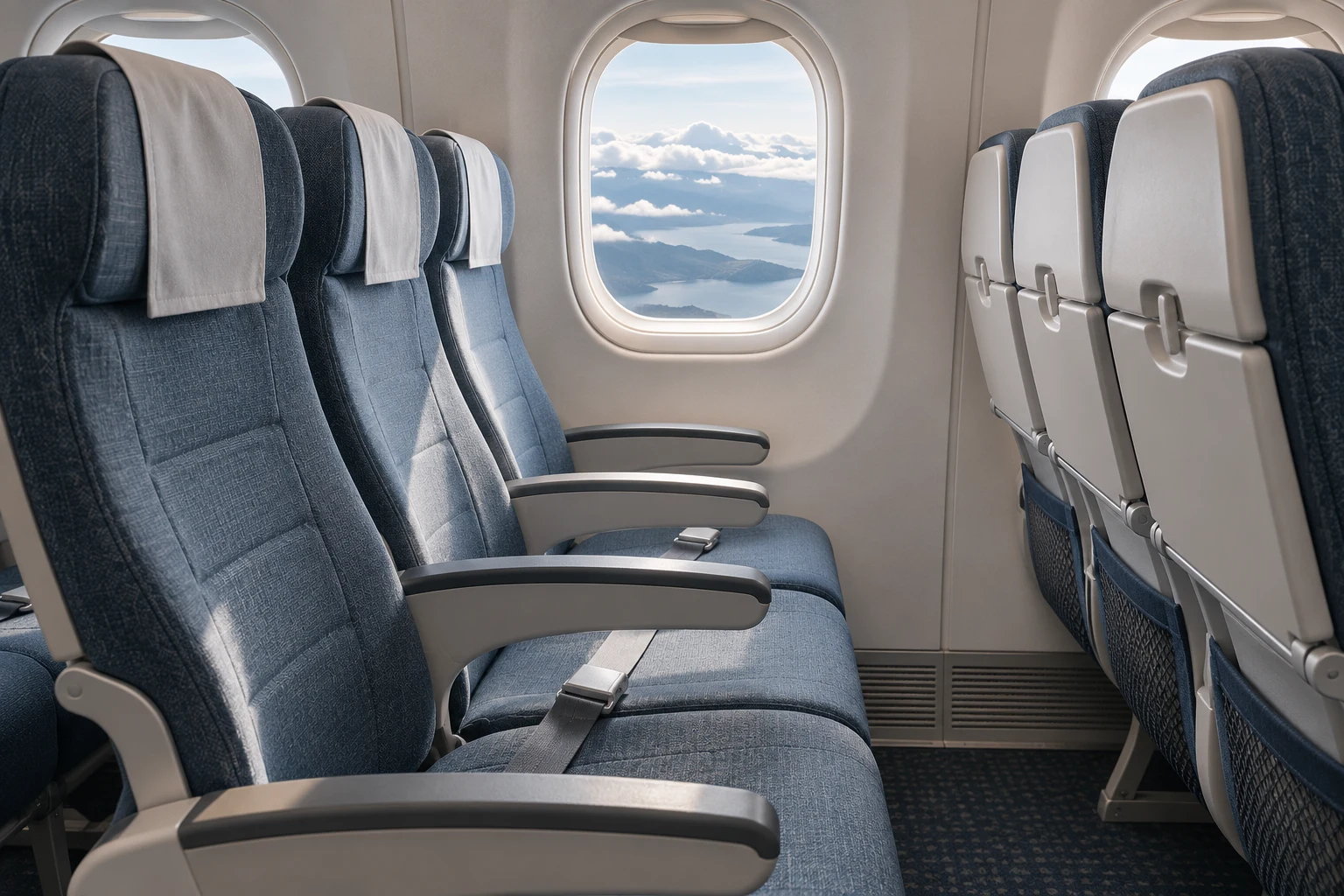
Is an aisle or window seat better?
Choose an aisle seat if easy access to the aisle matters most. Choose a window seat if you prefer looking outside and staying settled without other passengers passing you to leave the row.
Neither position is automatically more comfortable. The exact seat, aircraft layout and people traveling with you can matter as much as the letter on the boarding pass.
Before paying, decide what problem the seat choice solves. A strong preference on an overnight flight may justify a fee that feels unnecessary on a short daytime hop.
Compare the practical tradeoffs
| Priority | Aisle seat | Window seat |
|---|---|---|
| Leaving the row | Usually easier access | May require others to move |
| Staying settled | Seatmates may need to pass | No passenger beyond you at the window |
| Looking outside | Limited view across the row | Better opportunity, depending on alignment |
| Aisle activity | Closer to passing people and service | Farther from the aisle |
| Traveling together | Useful for pairs across an aisle | Useful beside a companion in the next seat |
These are typical considerations for a conventional row. Check the actual cabin layout, particularly when seats have different access arrangements.
When an aisle seat makes sense
An aisle seat suits travelers who expect to get up regularly or dislike asking seatmates to move. It can also make it easier to help a companion seated across the aisle.
The tradeoff is that passengers beside you may need to pass. If you settle in with a laptop, meal or headphones, be prepared to make room.
You are also closer to activity in the aisle. Keep belongings within your own space and avoid treating the walkway as an extension of the seat.
An aisle position does not necessarily offer more legroom. Compare the row's actual space if that is the reason you are considering paying extra.
Our guide to deciding whether extra-legroom seats are worthwhile separates the space question from the choice between aisle and window.
When a window seat makes sense
A window seat suits someone who likes watching departure and arrival or prefers a settled position beside the cabin wall. It can be appealing when you intend to rest for much of the flight.
You will usually need to pass the other seats in a conventional row to reach the aisle. Consider whether that inconvenience matters more than the view.
Check the specific seat if the window is a major reason for paying. Window alignment can vary, and a window-side position does not promise an unobstructed view.
Follow crew instructions about shades and cabin lighting. Choosing the window seat does not give you unrestricted control over the conditions for the entire flight.
If you like photographs, remember that weather, darkness and the flight's route also affect what you see. Buy the seat for a preference rather than a guaranteed postcard.
Choose around your plans for the flight
For an overnight journey, think about whether you value staying undisturbed in the row or being able to get up without waking someone. Different travelers will answer differently.
A window position may feel more enclosed and settled. An aisle position may feel less restrictive if you dislike being several seats from the walkway.
Do not expect either choice to guarantee sleep. Cabin activity, service timing and your own routine can matter more than the side of the row.
For a daytime flight, your priorities may change. Someone who chooses a window overnight might prefer an aisle when working or moving around more frequently.
Choose each direction separately if the travel pattern differs. There is no requirement to maintain a lifelong allegiance to one side of the tray table.
Make the choice as a party
Discuss preferences before paying for a group. Two people who both value aisle access may prefer seats across the aisle rather than a window and middle combination.
If one traveler wants the view and the other wants to sit beside them, check the row arrangement. A two-seat pair creates a different choice from a three-seat row.
For families, prioritize a suitable seating arrangement before optimizing individual preferences. Read the airline's family policy and confirm how children will be seated with accompanying adults.
Our guide to planning seats for a family flight explains why relying on an empty seat or an onboard swap is a weak substitute for checking the booking.
Do not assume selecting the outer seats will leave the middle empty. Book on the basis that every available seat may be occupied.
Check the actual seat map
Use the seat map attached to your booking and read any notes about the selected position. Look at nearby toilets, galleys and cabin partitions as well as the seat letter.
British Airways' seat-selection guidance points travelers to aircraft and cabin maps before choosing. Use the equivalent current information for your own airline.
A seat near a busy facility may be less appealing even when it is on your preferred side. Consider the surrounding row rather than choosing every aisle or window as interchangeable.
Check whether the aircraft shown is the one expected for your flight. Revisit the seat assignment after a booking change because the layout or position may differ.
Decide what the preference is worth
Compare the seat charge for the exact flight and fare. Some tickets or benefits include a choice, while others require a separate payment for the position you want.
Set a personal limit before browsing the map. This helps prevent a small preference turning into an expensive series of upgrades across several flights.
For an invented example, suppose choosing your preferred seat costs £18 each way. That is £36 return for one person or £72 for two people making the same purchase.
If the choice matters only on the overnight return, purchasing it for that direction alone may meet the need at a lower cost. These figures illustrate the calculation and are not current airline prices.
Our guide to when paying for seat selection makes sense helps compare the fee with the benefit you expect to receive.
Separate a preference from a specific seating need
If you need a particular arrangement for accessibility or another practical reason, contact the airline through its appropriate assistance process. A colored square on a seat map may not answer the relevant questions.
Explain the requirement clearly and ask what information the airline needs. Do not rely on a generic description of an aisle or window seat to establish suitability.
Check the complete itinerary if another airline operates part of it. Confirm the arrangements for each flight rather than assuming one request covers every operator.
Our guide to arranging assistance before a flight explains the planning steps to take alongside seat selection.
Make the final choice
- Decide whether easy access or a settled window position matters more.
- Check the exact row and surrounding cabin features.
- Coordinate with anyone traveling beside you.
- Compare the seat fee for each flight separately.
- Recheck the assignment after itinerary changes.
If neither option matters much, keep the money for something you value more. If one position makes a long flight noticeably easier for you, assess the fee as a deliberate comfort purchase.
Use flight length to set your spending priority
On a short journey, ask whether the difference will matter enough to justify the selection charge. You may spend much of the flight boarding, settling in and preparing to land.
On a longer journey, access and the ability to stay settled can become more important. Think about your own habits rather than copying another traveler's preferred seat.
If the itinerary has several legs, rank them before spending. You might choose a preferred position on the longest flight and accept the available allocation on a brief connection.
Check the total across the booking before paying. Several modest seat charges can become a meaningful addition when multiplied by passengers and directions.
Also distinguish preference from location. Paying more for an aisle at the front may bundle two choices when only aisle access matters to you.
A cheaper suitable position elsewhere can preserve the benefit while reducing the cost. Use the map to compare the options that meet your actual priority.
If you decide to wait for an assigned seat, accept that your preferred position may be unavailable. Check the fare conditions and available choices without assuming that a free later selection will offer the same range as advance booking.
Your questions answered
Does an aisle seat have more legroom?
Not automatically. Legroom depends on the specific seat and row. The aisle is a shared walkway and must remain clear.
Is a window seat always better for sleeping?
No. Some travelers prefer its settled position, while others value easier access to the aisle. Neither choice guarantees uninterrupted rest.
Will a window seat definitely have a good view?
No. Window alignment, the wing, weather and darkness can affect the view. Check the seat details if this is important to you.
Should a couple book the window and aisle to keep the middle empty?
Do not rely on that outcome. The middle seat can be allocated to another passenger, so choose an arrangement you can accept on a full flight.
Can I choose different seat types on the outward and return flights?
Yes, subject to availability and the airline's selection rules. Different flight lengths or times may justify different preferences.