
Baggage & Extras | 9 minute read
easyJet Cabin Bag Size: What Is Included in Your Fare?
Check easyJet's small and large cabin-bag limits, understand which allowance your booking includes and avoid paying for a bag that does not fit your trip.
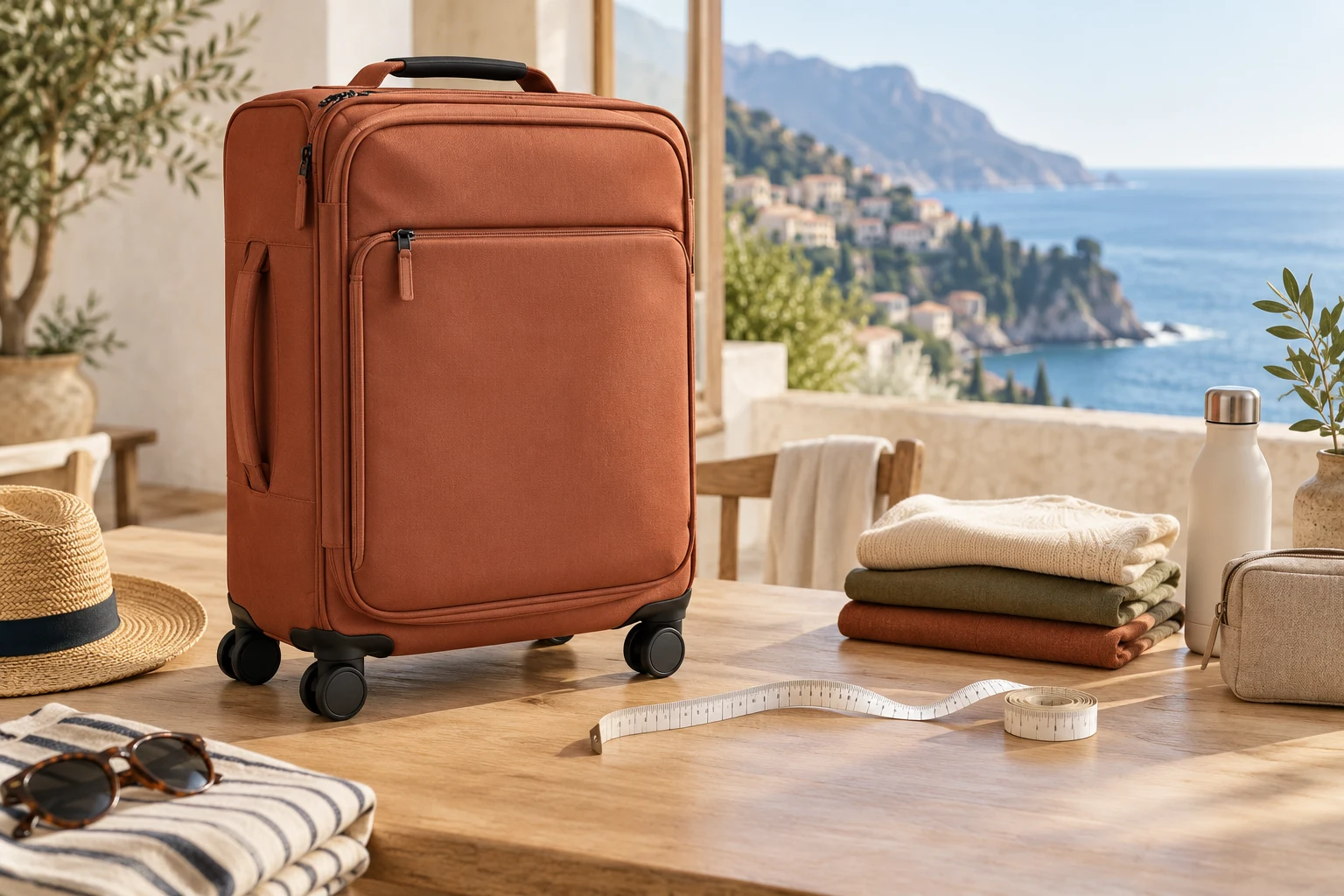
What cabin bag is included with easyJet?
easyJet includes one small under-seat cabin bag. At the November 2, 2026 review, its maximum dimensions were 45 x 36 x 20 cm, including handles and wheels, with a 15 kg weight limit. You must be able to lift and carry it yourself.
A larger cabin bag requires the appropriate booking or eligible benefit. Check the allowance shown for your flight rather than assuming a familiar seat choice or a previous journey provides the same entitlement.
Measure the packed bag before booking an upgrade. The name cabin suitcase on a shop label does not settle whether it fits your ticket.
Small and large cabin bags compared
| Bag | Maximum size | Weight | Where it goes |
|---|---|---|---|
| Small included bag | 45 x 36 x 20 cm | 15 kg | Under the seat |
| Large cabin bag with entitlement | 56 x 45 x 25 cm | 15 kg | Overhead locker |
easyJet's cabin-bag guidance confirms these limits and says the dimensions include handles and wheels. Check it again before departure because airline policies can change.
How to tell whether the larger bag is included
Read the baggage section of the actual booking. A purchased large cabin bag, an eligible fare or a membership benefit can provide an entitlement, with conditions that should be checked directly.
Do not infer the allowance solely from a seat near the front or an extra-legroom position. The booking needs to show the bag entitlement you intend to use.
If you hold easyJet Plus or book an Inclusive Plus fare, check the current reservation and space conditions. A membership benefit and a separately booked bag can involve different practical arrangements.
Keep the confirmation accessible before travel. It is more useful than remembering what a previous booking included.
Measure the bag as you will carry it
Close the bag with everything inside, then measure its outer height, width and depth. Include wheels, handles and filled pockets rather than measuring only the main fabric compartment.
For an expandable case, check it in the expanded position if that is how you intend to travel. Opening the extra zip can move the case beyond the permitted depth.
A soft backpack can be suitable, but overfilling can make it too bulky. Pack it so it fits the required space without relying on a last-minute argument about how much it might compress.
Our guide to personal items and cabin bags explains why size, piece count and entitlement need to be considered together.
The weight allowance is not a packing target
A bag within the size limit still needs to meet the weight and handling conditions. Weigh it packed rather than estimating from how heavy it feels.
Think about carrying it through the terminal, onto transport and to your accommodation. Using every permitted kilogram may make a short trip less convenient, particularly with stairs or several hotel changes.
If anyone needs assistance, contact the airline about the relevant arrangements before travel. Do not assume that buying a larger bag creates a lifting service.
Check the return flight too. Another airline may apply a lower weight limit or different dimensions to the same case.
A handbag or laptop bag still needs a place
Plan the number of separate pieces you intend to carry. A small handbag, laptop sleeve and backpack are physically separate items even if each is compact.
Check the airline's current exceptions for additional belongings rather than assuming every small item is exempt. Where necessary, leave enough room to place smaller items inside the permitted bag.
Keep travel documents and frequently used items easy to reach. A simple internal pouch can make security and boarding more manageable without adding another separate carry-on piece.
If you need two substantial bags, compare the appropriate large-bag option instead of trying to make the free allowance describe a different luggage plan.
When paying for a large cabin bag makes sense
A larger cabin bag can be useful for a longer break, extra clothing or a trip where you want to avoid checking luggage. Compare the actual price for both directions.
Check whether your existing case meets the larger dimensions before purchasing. Paying for an entitlement does not remove its size limit.
If you can travel comfortably with the small bag, decide whether the extra capacity is worth the cost. There is no need to buy it simply because the booking process presents it prominently.
Our guide to understanding easyJet baggage costs explains how to compare the quoted fee with hold luggage and other booking options.
A checked bag may suit the trip better
If the luggage is too large for the cabin or contains items requiring a different arrangement, compare a suitable hold allowance. Check the permitted contents through official guidance before packing.
Checked luggage changes the airport process. Allow time for bag drop before security and collection after arrival, then compare that with the convenience of keeping a compliant case with you.
Our guide to cabin versus checked luggage helps assess that tradeoff. A larger allowance is useful only when it matches what you need to take.
If a checked bag is already included in a package or fare, the small cabin bag may be enough for the travel day. Inspect the booking before buying another allowance.
Compare the options with your own prices
Suppose a larger cabin bag costs GBP 21 outward and GBP 27 on the return, totaling GBP 48. A suitable checked-bag option totals GBP 44. These are invented figures, not current easyJet charges.
The extra GBP 4 may be worthwhile if keeping the case with you is useful. If the checked bag offers capacity you need and the cabin case does not, the hold option may be the better purchase.
For two travelers, price only the bags each person requires. Shared packing can be practical, but check the airline's rules before assuming allowances can be combined.
Add any necessary seat reservations separately unless they are explicitly included. A baggage choice and a seating preference are different parts of the booking.
Resolve an oversized bag before departure
Check the packed dimensions at home, when repacking or changing the allowance is easier. Do not rely on another traveler's report that a similar bag was accepted.
If the bag is too large, compare reducing the contents, using a suitable bag or purchasing the appropriate allowance. Choose a solution that meets the rules for both flights.
After changing the booking, verify the correct passenger and direction. Save the updated confirmation and follow any instructions for refreshing the boarding pass.
Allow enough airport time for the luggage arrangement you have chosen. An online check-in does not remove the need to drop a checked case.
Leave room for the journey home
Think about gifts or purchases before filling the outward bag completely. Additional contents can affect both its weight and its depth.
If you expect to bring more home, compare adding the required return allowance in advance. Check the quote and conditions rather than assuming it will match the outward price.
For a mixed-airline itinerary, pack to the applicable limit on each flight. A bag that qualifies on easyJet does not automatically qualify elsewhere.
Keep the bag's measurements with your travel notes if you use it regularly. Recheck when it is packed differently, because the empty dimensions alone do not settle the question.
Choose a bag from measurements, not marketing
When buying luggage, start with the manufacturer's exterior dimensions and check whether they include projecting parts. A description such as cabin approved is incomplete without identifying the allowance it refers to.
A rigid case usually offers less scope to adjust its shape than a soft bag. A soft bag, however, can bulge beyond its listed dimensions when filled. Neither construction removes the need to measure the packed item.
Check the empty weight and return conditions before buying. A case that consumes too much of the allowance or cannot be returned after a size mismatch may be a poor purchase even if the sale price looks attractive.
A practical measuring routine before departure
- Pack everything you intend to take, including chargers and filled outer pockets.
- Close the bag without forcing the zip or leaving expansion panels open unexpectedly.
- Measure the widest outside points in all three dimensions, including wheels and handles.
- Weigh the complete bag and check the result against its applicable allowance.
- Count separate pieces and confirm that the booking permits each one.
If the bag fails a check, decide whether repacking, changing luggage or buying a suitable entitlement is the better solution. Compare the cost before choosing. An upgrade that still does not accommodate the case is not useful.
Repeat the routine before returning home. Laundry may pack differently from neatly folded clothes, and gifts can take more space than expected. Keep a little usable room rather than relying on everything compressing exactly as it did before departure.
Clearly photograph the manufacturer's label if it helps identify the exact model later, but keep your own packed measurements as the practical check. A luggage tag or product listing can describe the bag as supplied without accounting for what happens when you fill it. Reassess any new arrangement if you add a laptop sleeve, attach another pouch or use an expansion panel before leaving home for the airport.
Your questions answered
Does every easyJet fare include a small cabin bag?
The reviewed policy includes one small under-seat bag for each customer. Check the current dimensions and handling requirements, then confirm any additional allowance separately in your booking.
Does an extra-legroom seat automatically include a large bag?
Do not assume so. Check the bag entitlement shown for the actual reservation. Seat selection and a larger cabin bag are separate features unless the fare or benefit explicitly combines them.
Are wheels included in easyJet's dimensions?
Yes. The published cabin-bag dimensions include handles and wheels. Measure the outside of the packed bag, including any filled pockets, and check the weight as well as the size.