
Seats & Onboard Comfort | 9 minute read
Exit Row Seats: What to Check Before Paying Extra
Exit row seats can offer useful extra space, but eligibility, storage and seat fittings matter. Check the actual row before paying for the upgrade.
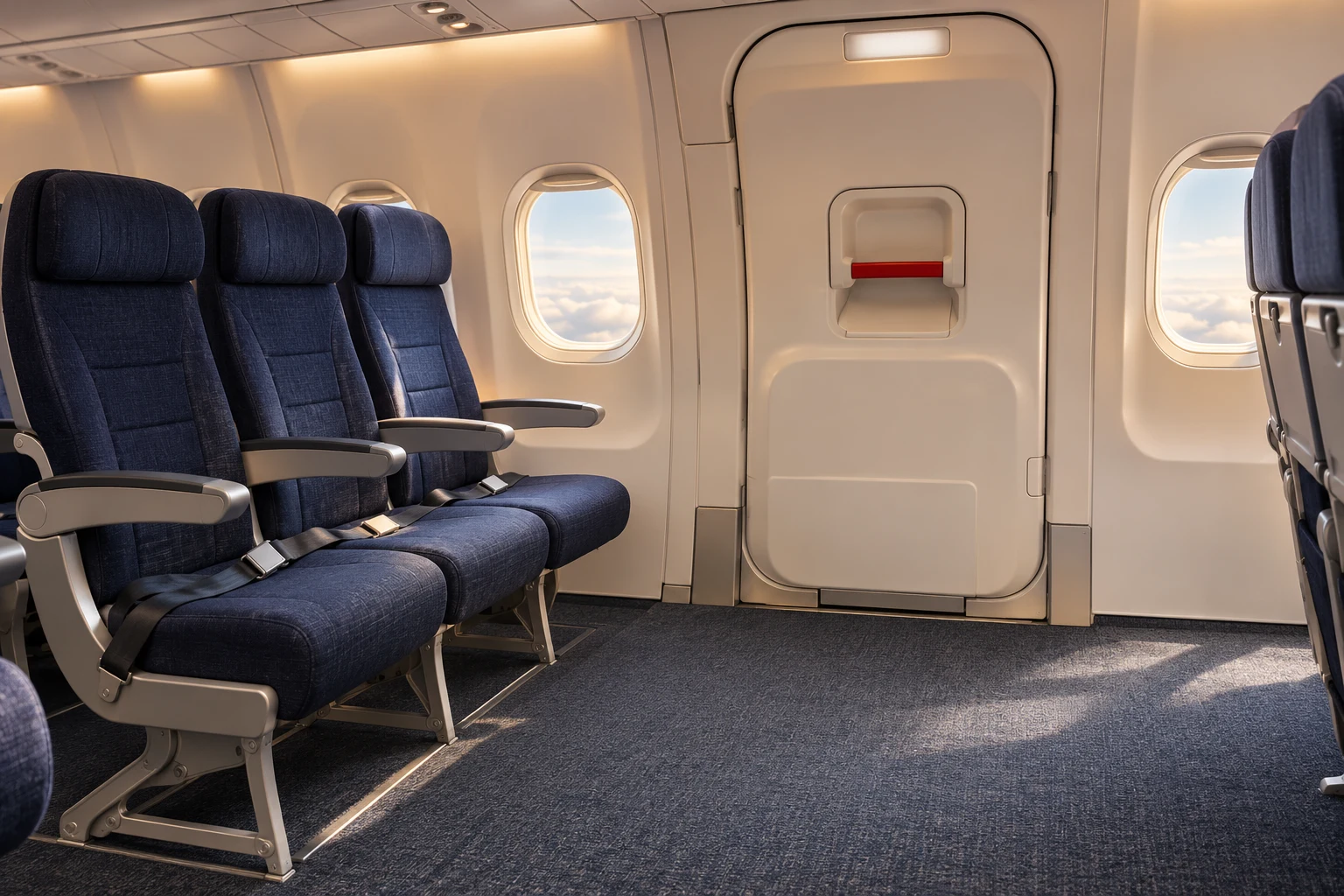
Are exit row seats worth paying for?
An exit row can be worth the charge if you meet the airline's requirements and the particular seat gives you space you will use. Check those two things before comparing the price.
The extra space comes with responsibilities. Passengers assigned to restricted exit seats must be willing and able to assist as required by the crew. Buying the seat does not override the eligibility assessment.
Also check recline, armrests and storage. An exit-row label alone does not establish that every part of the seat is more comfortable.
Read the airline's requirements first
Use the operating airline's current criteria for your flight. Age thresholds and other conditions should be checked directly rather than inferred from another carrier's policy.
For example, easyJet's restricted-seat guidance requires travelers to be at least 16, willing and able to operate an exit if instructed and able to understand and respond quickly without assistance. It lists further restrictions involving infants, required equipment and limitations that prevent moving quickly.
Read the full policy before choosing. If your circumstances are unclear, contact the airline and describe the requirement you need it to assess.
For a group, check every person who would sit in the restricted row. One eligible adult does not make the arrangement suitable for everyone traveling with them.
Reconsider if your circumstances change before departure. A recent injury or a changed need for equipment can make an earlier seat selection unsuitable.
The crew decides whether the seat is suitable
Listen to the briefing and answer the crew's questions honestly. If you do not want the responsibility associated with the seat, say so and ask about another position.
easyJet states that its crew will find a suitable alternative when a passenger does not meet the restricted-seat requirements on the travel day. Check your airline's seat-payment terms separately rather than assuming a particular refund outcome.
Do not choose an exit row with the intention of negotiating away a requirement once onboard. The useful comparison is between seats you can actually occupy.
If you have a specific seating need, discuss it through the appropriate assistance process. Our guide to arranging assistance before travel explains how to coordinate those requirements with the booking.
Look at the exact row and seat
Some exit positions offer a substantial gap ahead. Others have features that affect where you can place your feet, so look beyond the amount of empty floor visible on a seat map.
Check whether the airline identifies an obstruction or different seat shape. The window position may feel different from the aisle in the same row.
Distinguish knee clearance from the ability to extend your legs. A seat can improve one without offering the same benefit for the other.
Compare the actual seat with a standard row you would be willing to use. Measuring the upgrade against the least appealing seat available can make any extra charge look reasonable.
Our guide to weighing the value of extra legroom helps turn a general preference for space into a practical purchase decision.
What to check beside the seat price
| Check | Why it matters |
|---|---|
| Eligibility | You must meet the operator's requirements on the travel day |
| Usable space | Knee clearance and foot space can differ |
| Recline | The selected seat may have restrictions |
| Armrests and table | Fittings can affect usable width and movement |
| Storage | Belongings must be stowed as instructed |
| Price and conditions | Compare the complete charge and treatment of changes |
Use the seat map's notes and the airline's guidance together. A colored box is a starting point for the check, not the whole answer.
Check recline and armrests independently
Do not assume that paying for more space ahead also buys more recline. Ask whether the selected position has full, limited or no recline.
Look at where the tray table and entertainment screen are stored. In some designs, fittings use an armrest instead of the seatback ahead, which may affect how the seat feels.
If a movable armrest is important, confirm that specific feature. A general description of a roomy row does not answer the question.
Check the aircraft version as well as its model name. Airlines can use different layouts within a fleet, and an old seat review may describe another cabin.
For travelers considering a partition-facing alternative, our guide to the tradeoffs of bulkhead seats explains why that location needs its own assessment.
Keep the exit area clear
Follow the airline and crew's instructions for bags and other belongings in the row. The area around an exit is not spare luggage space.
Organize permitted essentials before boarding so you can stow your main bag efficiently. Avoid needing to unpack a large case once other passengers are trying to settle.
Ask where a personal item must go if the arrangement is unclear. Do not assume the underseat routine from a standard row applies to the position you selected.
If easy access to a bag matters throughout the flight, include that in your choice. The convenience of extra floor space may be less valuable if the storage arrangement does not suit your plans.
Consider the people traveling with you
An exit-row upgrade can split a party if only some travelers qualify or suitable adjacent seats are unavailable. Decide whether the extra space matters more than sitting together.
Parents should check the family seating arrangement before selecting restricted seats. Do not assume a child can sit nearby while an adult handles the responsibility for the whole row.
If you are traveling with someone who needs your help, explain the situation to the airline. Your ability to assist that person and the exit-row requirements need to be considered together.
For two eligible adults with different preferences, separate seats can still be a reasonable choice. Discuss it before paying rather than discovering the disagreement at check-in.
Calculate the cost across the itinerary
Check whether the fee applies per flight or direction, then add every segment you intend to upgrade. A small displayed charge can multiply across passengers and connections.
In an invented example, an exit row costs £28 on each of two flights. The return upgrade is £56 for one traveler or £112 for two.
If the outbound flight is short but the return is much longer, you might value the upgrade differently on each. Choose the seats around the journey instead of buying the same arrangement automatically.
Compare a suitable non-exit extra-legroom seat if one is offered. It may meet your comfort preference without the same eligibility conditions, although its own restrictions still need checking.
Our guide to deciding when to pay for seat selection helps assess the fee as part of the flight's complete cost.
Recheck after an aircraft or booking change
A new aircraft can change the seat map, exit locations or assignment. Review the revised booking rather than relying only on the original seat number.
Keep the seat receipt and the description of what you purchased. If the replacement does not provide the expected category, use the airline's current process to ask about available options.
Read any refund conditions before paying. Different reasons for moving seats can be treated differently, so avoid assuming every reassignment produces the same result.
If eligibility is uncertain on the day, raise it with staff promptly. A clear discussion before boarding is more useful than hoping the issue will not come up.
A sensible order for choosing an exit row
- Read the operating airline's eligibility requirements.
- Check the exact seat and aircraft version.
- Confirm space, fittings and storage arrangements.
- Compare suitable alternatives and the full charge.
- Review the assignment after itinerary changes.
Pay for a benefit you understand and a responsibility you can accept. Extra inches are useful, but they do not make every exit seat the right choice for every traveler.
Compare two eligible seats without assuming a winner
Imagine you have narrowed the choice to an exit-row window and a standard aisle. The exit position gives more room ahead, but you would still need to pass other passengers when getting up. The standard aisle offers easier access without the additional floor space.
For someone who stays seated comfortably but struggles with knee clearance, the exit position could be useful. For someone who mainly dislikes asking others to move, the aisle might address the actual problem more directly. Both decisions can be reasonable.
Now add a fixed armrest to the exit position. If your priority is freedom around your hips or shoulders, the larger gap ahead may no longer be the decisive feature. This is why reading a row's individual notes can change a purchase that initially looked obvious.
Make a short list of requirements in order of importance. Put eligibility first, then the physical feature you need, then location and price. That order prevents the fee or an attractive photograph from deciding the question before you have checked suitability.
If neither seat meets an essential requirement, ask about another row or flight. You do not have to choose between two unsuitable options merely because they are the first ones highlighted on the map.
Ask a question the airline can answer precisely
Instead of asking whether the exit row is good, give the flight number, date and seat number. Ask about the feature that matters, such as movable armrests or restricted recline.
If the response describes the whole cabin, clarify that you need the details for that position. Save the answer with the seat confirmation, while recognizing that a later aircraft change can require another check.
A sufficiently precise answer identifies the seat feature directly. If the airline cannot confirm it before purchase, decide whether you are comfortable paying while that particular benefit remains uncertain for your chosen flight.
Your questions answered
Can anyone pay for an exit row?
No. The airline's eligibility requirements still apply, and the crew assesses suitability. Read the current criteria before selecting the seat.
Do exit row seats always recline?
No universal rule applies to every seat. Check whether the exact position offers full, limited or no recline before paying.
Does more legroom mean a wider seat?
Not necessarily. Space ahead and usable width are different features. Armrests and table fittings can also affect comfort.
Can my family sit together in an exit row?
Only if the arrangement meets the airline's rules for everyone involved. Check age and other restrictions before choosing seats for children or accompanying adults.
What if I no longer meet the requirements on departure day?
Tell the airline or crew and ask for a suitable alternative. Consult the seat-payment conditions separately for any refund question.