
Seats & Onboard Comfort | 9 minute read
Bulkhead Seats: Are They a Better Choice for Your Trip?
Bulkhead seats can offer a useful front-row position, but the partition, storage and armrests deserve a closer look before you pay for one.
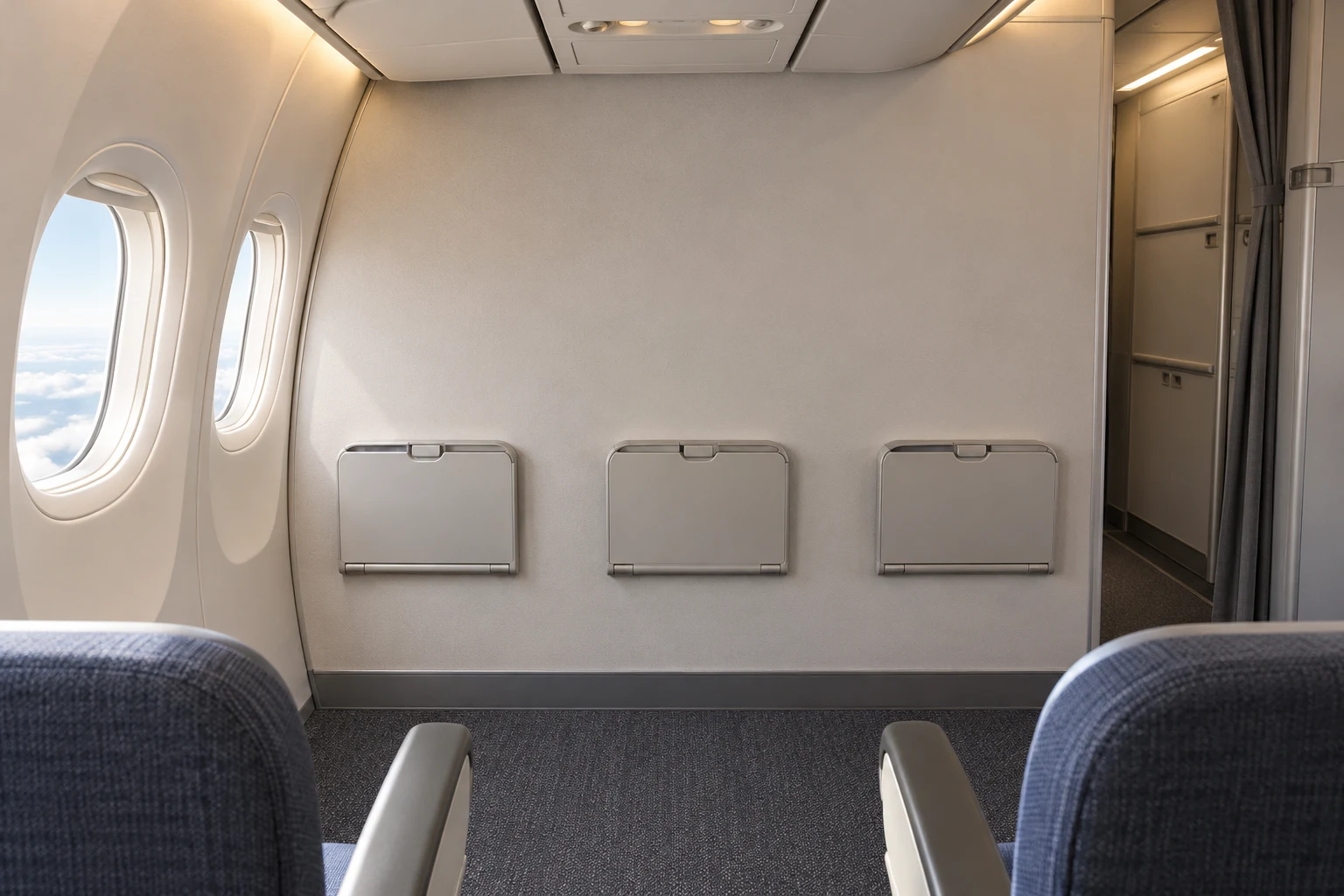
Are bulkhead seats a better choice?
A bulkhead seat can be a good choice if you like having a cabin partition in front of you instead of another passenger's seat. Whether it is worth paying for depends on the actual space, storage arrangements and surrounding cabin.
Do not assume every bulkhead offers more usable legroom. A wall can limit how far your feet extend, and seat fittings may affect comfort.
Check the exact aircraft and row before buying. The label describes a location, not a universal package of extra space and quiet.
What is a bulkhead seat?
A bulkhead is a partition separating areas of the aircraft. Seats directly behind it are commonly called bulkhead seats. The US Department of Transportation's seating guide uses that location-based definition.
The partition may separate cabins or stand beside another functional area. Its shape and the space in front of the seats vary with the aircraft layout.
A bulkhead is not automatically an emergency-exit row. If the seat is also associated with an exit, read the airline's eligibility and seating restrictions separately.
Nor does bulkhead necessarily mean the front of the entire aircraft. A cabin can have another first row farther back, so check the position on the full map.
Compare usable space rather than the label
The absence of a seat directly ahead can create a more open feeling around your knees. You also avoid having that particular seat recline toward you.
However, a solid partition can limit the space available for extending your feet. A regular row may allow feet beneath the seat ahead, depending on the layout and stored belongings.
Think about how you sit during a long flight. Someone who values knee clearance may assess the same row differently from someone who prefers stretching their legs forward.
Look for seat-specific measurements or ask the airline about the arrangement. A broad cabin pitch figure does not fully describe the usable space beside a partition.
Our guide to evaluating extra-legroom seats helps compare the actual comfort benefit with the upgrade price.
Advantages and tradeoffs to check
| Feature | Possible benefit | What to verify |
|---|---|---|
| Partition ahead | No seat immediately in front reclining toward you | Foot space and distance to the wall |
| Front of a cabin section | A position some travelers prefer | Nearby galleys, toilets and traffic |
| Seat fittings | A different tray or screen arrangement | Armrests and usable seat width |
| Floor area | Potentially open space ahead | Where personal belongings must be stowed |
| Family facilities | Possible bassinet location | Availability and separate reservation requirements |
Treat these as checks for the specific seat. They are not promises that every bulkhead has the same features.
Plan for access to your belongings
Where there is no seat ahead, you may not have the usual underseat storage position. Ask where your personal item must go and follow the crew's stowage instructions.
For a concrete airline example, Aer Lingus's baggage guidance directs passengers in row one and emergency-exit seats to store baggage in an overhead locker. Check the corresponding rule for your own seat.
Organize permitted essentials before boarding so you can stow the main bag efficiently. Keep the floor clear whenever required rather than assuming open space is available for luggage.
If frequent access to a bag matters to you, weigh that inconvenience against the bulkhead's benefits. A regular row with suitable underseat storage may be more practical.
Our guide to personal items and cabin baggage explains the bag categories, while the seat-specific instructions determine where they can be placed.
Check armrests, tray tables and screens
A bulkhead row may use a different tray-table or screen arrangement because there is no ordinary seatback ahead. Check how the equipment works in the seat you are considering.
Some designs place fittings in the armrest, which can affect whether it moves and how the seat feels. Do not assume the arrangement from a previous aircraft applies to this one.
British Airways' seating information, for example, identifies fixed armrests in the front row of World Traveller Plus. That is a cabin-specific detail, not a rule for every bulkhead.
If seat width or a movable armrest is important, ask about the exact row before paying. A seat sold for additional space in one direction may not meet your needs in another.
Also consider how you intend to use a laptop or other permitted device. The tray's position and available working space may matter more than the visual impression of an open row.
Look beyond the partition
Check the position of galleys and toilets on the cabin map. A seat near an active area may experience more passing people or service activity than you would prefer.
A partition does not guarantee a quiet flight. Consider the surrounding layout alongside your preference for having nobody seated immediately ahead.
If sleeping is your priority, compare other available rows too. The best choice may be a conventional seat in a location that better suits your preferences.
Choose aisle or window within the bulkhead row deliberately. A front-row location does not remove the usual tradeoff between aisle access and a window-side position.
Check whether the map shows any unusual shape or obstruction beside the seat. Ask for clarification if the available information is too vague to support an extra payment.
A bulkhead seat does not automatically reserve a bassinet
Some aircraft place bassinets at bulkheads. EASA's bassinet guidance explains that availability depends on the aircraft's provisions, including space and other limits.
If you need a bassinet, follow the airline's request process and check eligibility for your child. Selecting a nearby seat alone should not be treated as confirmation that one is reserved.
Ask how accompanying travelers will be seated and what happens if the aircraft changes. Keep the relevant request details with the booking.
For other passengers, remember that a bulkhead can be a family seating area. Choose it for its actual features rather than expecting a particular kind of neighbor.
Our guide to planning a flight with a baby covers the wider preparation alongside seats and onboard equipment.
Decide whether the seat fee is worthwhile
Compare the quoted bulkhead charge with other suitable seats in the same cabin. Read what is included rather than assuming a premium price means every comfort feature is improved.
For an invented example, suppose a bulkhead costs £45 each way and a suitable standard seat costs £15. The additional choice costs £60 return for one person.
Ask whether the particular benefits are worth that difference on your flight. If you mainly want aisle access, a cheaper aisle elsewhere may meet the need.
If the long overnight direction matters more than a short daytime leg, consider paying only where the benefit is greatest. These example figures are not current airline prices.
Read the seat-payment conditions before purchasing. Understand how the airline handles a changed assignment rather than assuming the selected number is guaranteed under every circumstance.
Check suitability for specific requirements
If you need a particular seating arrangement, use the airline's assistance process before choosing solely from the map. Explain the requirement and ask which available seat is suitable.
The word bulkhead does not establish accessibility, a movable armrest or compatibility with every approved travel device. Those details need a specific answer.
For an itinerary involving another carrier, confirm the arrangement on each flight. The same row number can describe a very different seat on another aircraft.
Our guide to requesting assistance before departure helps coordinate these questions with the rest of your journey.
Before you reserve a bulkhead
- Check the aircraft, cabin and exact row.
- Confirm usable leg space and armrest arrangements.
- Understand the storage instructions.
- Review nearby facilities and any bassinet requirements.
- Compare the price with other suitable seats.
Save the seat confirmation and revisit it after flight changes. If the assignment no longer meets a requirement you discussed, contact the airline before travel.
A bulkhead can be a worthwhile choice when its actual features match your priorities. Paying for the label without checking the details leaves too much of the decision to the cabin furniture.
Compare the bulkhead with two realistic alternatives
Choose a standard seat you would be willing to use and one other available comfort option. Compare those specific positions with the bulkhead rather than judging it against the least appealing seat on the map.
For each option, note the price, usable space and access to belongings. Add any feature that matters particularly to you, such as a movable armrest or distance from a galley.
If the bulkhead's main attraction is being near the front, check whether another nearby row offers a better combination of storage and cost. You may not need the partition directly ahead to meet that preference.
If the attraction is avoiding a reclining seat in front, consider how much that matters for this flight's length and timing. The value may differ between a brief daytime trip and an overnight journey.
Keep the comparison personal. A traveler who likes an enclosed position may choose differently from someone who prefers a more open view through the cabin.
When information about the exact seat is missing, ask the airline a specific question. Asking whether the seat is good is less useful than asking about the fitting or space that determines your decision.
Once you understand the tradeoffs, choose the option that meets the requirement at an acceptable price. That makes the purchase easier to assess than relying on a broad premium-seat description.
Ask whether the available description applies to the exact cabin version scheduled. Similar aircraft names can cover different layouts, so keep the flight and seat details together when making inquiries.
Your questions answered
Do all bulkhead seats have more legroom?
No. Check the exact row. Knee clearance and the ability to extend your feet are different aspects of usable space.
Is a bulkhead the same as an exit row?
No. A bulkhead describes a partition location. If a seat is also associated with an exit, separate eligibility and restrictions may apply.
Can I keep a bag at my feet?
Follow the airline and crew's instructions for that seat. A bulkhead may lack the usual underseat storage, requiring belongings to be placed elsewhere.
Does booking the bulkhead guarantee a bassinet?
No. Follow the airline's separate request process and confirm availability and eligibility. A seat selection alone is not enough.
Should I pay extra for a bulkhead on a short flight?
Compare the specific benefit with the price. If a standard seat meets your needs, the bulkhead label alone is not a reason to spend more.