
Seats & Onboard Comfort | 7 minute read
Seat Pitch Explained: How It Differs From Seat Width
Seat pitch describes the spacing between rows, while seat width describes a different part of your space. Use both measurements before paying for a more comfortable flight.
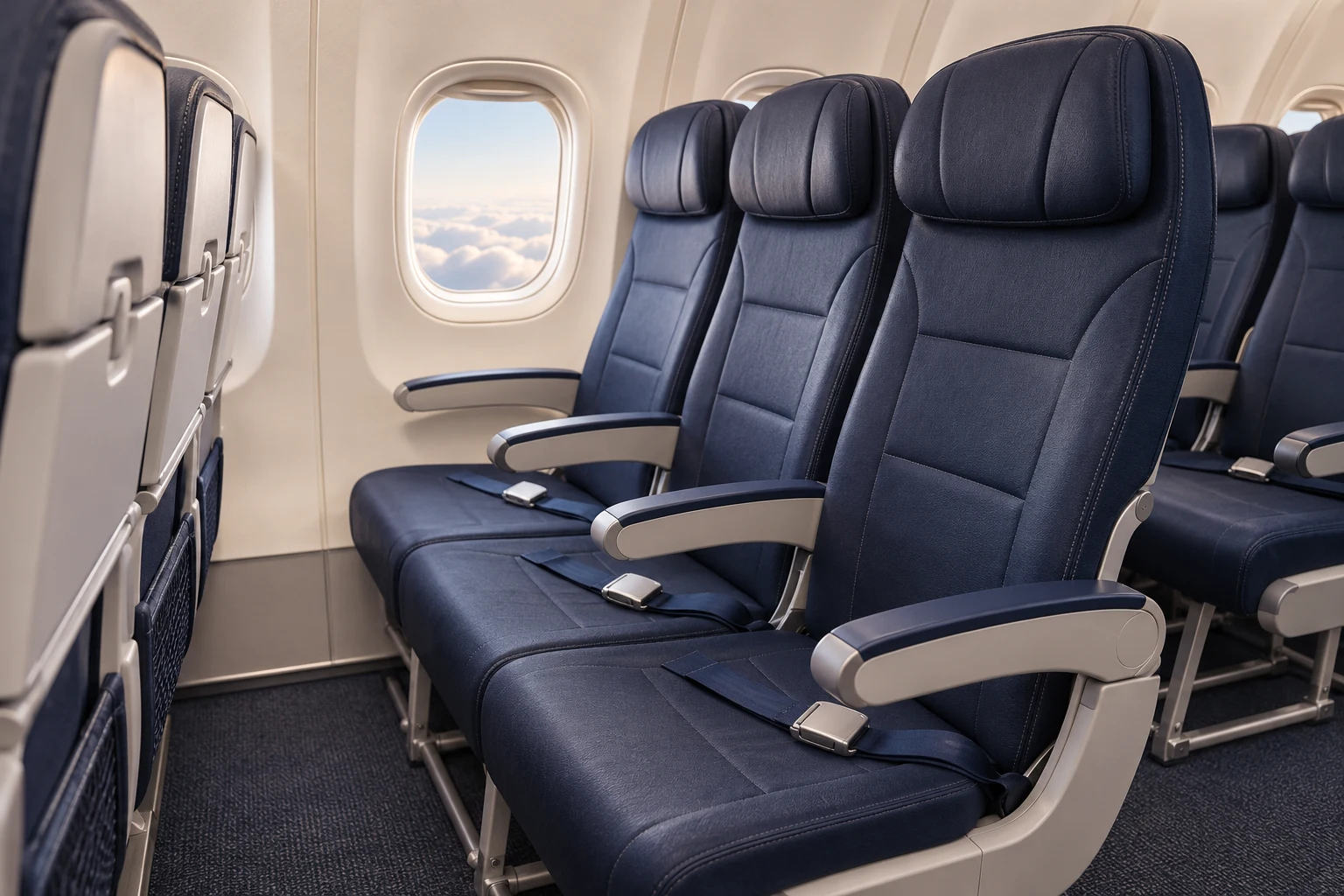
What is seat pitch?
Seat pitch is the distance from a point on one seat to the corresponding point on the seat in the next row. Airlines commonly express it in inches or centimeters.
Seat width measures across the seat, often between the armrests. Check the stated measurement method because a cushion width and a distance between armrests may describe different usable areas.
Pitch helps compare row spacing, but it is not a direct measurement of the empty space in front of your knees. Seat shape and fittings also affect comfort.
Pitch and width answer different questions
Use pitch when investigating how much space there is between rows. Use width when investigating the room across the seating position.
A seat can have generous pitch and feel narrow. Another can be wider while leaving less room ahead. Neither measurement should silently stand in for the other.
Think about the issue you want to solve. If your knees are the concern, row spacing and seatback design deserve attention. If armrests feel restrictive, width and fittings become more relevant.
The useful question is whether the particular seat meets your needs, rather than which number looks largest in a comparison.
How the numbers translate
| Example measurement | Approximate metric equivalent | What it describes |
|---|---|---|
| 30-inch pitch | 76.2cm | Spacing between corresponding row points |
| 32-inch pitch | 81.3cm | The same measurement with more row spacing |
| 34-inch pitch | 86.4cm | Another pitch example, not clear knee room |
| 18-inch width | 45.7cm | A width figure whose measurement method needs checking |
These are mathematical examples using 2.54cm per inch. They are not specifications for a particular airline.
A two-inch pitch difference is approximately 5.1cm. That does not mean every traveler gains exactly 5.1cm of clear knee space, because the seats being compared may have different shapes.
Why equal pitch can feel different
Seatback thickness changes the space between the passenger and the row ahead. Cushion shape and the position in which you sit also affect the result.
Recline can change the space around you during the flight. A published pitch figure does not describe every position the seatback ahead can occupy.
Look for equipment or supports beneath the seat in front. These can affect foot placement even when the spacing between rows is favorable.
Your own bag matters too. If it fills the permitted underseat area, the remaining space for your feet may be smaller than you expected.
Our guide to judging extra-legroom upgrades explains how to compare the benefit beyond the headline measurement.
Read the scope of an airline specification
Check whether the airline publishes a single figure, a range or an upper limit. Those descriptions should not be treated as interchangeable.
Air New Zealand's 787-9 V4 map, for example, lists an economy pitch range of 31 to 33 inches. Use the row information to narrow a broad cabin description.
Match the aircraft version to the flight you are considering. The same model can have different cabin configurations, and an older review may describe another version.
If a seat is sold as extra legroom, check the particular position and its conditions. A category name can be useful without supplying every measurement you need.
Why width needs a closer look
Ask where the width was measured. The space between armrests can matter more to your comfort than a broad description of the seat cushion.
Check whether an armrest moves and whether it contains a tray table or other fitting. Those details can affect the usable seating area.
If you are considering an extra seat, confirm how adjacent seats work together. Two tickets do not necessarily create one uninterrupted wide surface.
For any specific seating requirement, ask the airline about the exact row. A general cabin width range may not settle the practical question.
Bulkheads and exit rows need separate checks
A bulkhead position faces a partition, so conventional row-spacing comparisons may not capture the available foot space. The wall's shape and distance matter.
An exit row may offer additional space but comes with eligibility and stowage requirements. Check those before treating it as a straightforward comfort upgrade.
Neither position automatically has a wider seat or unrestricted recline. Inspect each feature independently.
Our guide to bulkhead seat advantages and limitations helps assess the partition-facing option using practical details.
Use the measurements in a price comparison
Compare seats on flights that suit your route and schedule. A generous specification is less helpful if the itinerary adds an awkward connection or substantial extra expense.
In an invented example, a suitable standard seat costs £300 with the fare, while another flight costs £270 plus a £45 seat purchase. The completed second option is £315.
If both meet your space requirements, the first saves £15. If the second offers a feature you particularly value, decide whether that feature is worth the difference.
Do not convert pitch into a universal comfort score. People value space, access and seat fittings differently, and the measurements cannot predict the entire experience.
A useful seat research sequence
- Identify the flight's operating airline and aircraft version.
- Read the current pitch and width information.
- Check the exact row for fittings or obstructions.
- Compare the seat price with other suitable options.
- Review the assignment after booking changes.
Keep the seat receipt if you pay for a particular category. Read the airline's conditions for substitutions and reassignment before purchasing.
Our guide to making seat-selection spending worthwhile helps connect the technical details with the decision at checkout.
Reading a specification without mixing the dimensions
Imagine a fictional seat listing shows 32-inch pitch and 18-inch width. The first figure describes row spacing along the aircraft. The second describes a side-to-side measurement. You cannot add them together to produce a meaningful comfort score.
Now compare another fictional seat with 34-inch pitch and the same stated width. It has two inches more row spacing under that measurement, but the width figure has not changed. Calling it a bigger seat without explaining the dimension could mislead someone whose priority is space between armrests.
If the second listing instead says up to 34 inches, the upper figure does not identify every row. Find the note for the available seat before assuming you will receive it. The difference between a fixed figure and a maximum is small in wording but significant at checkout.
Finally, check that both width figures use comparable definitions. If one measures the cushion and the other measures between armrests, ask for clarification before making a precise comparison.
Turn the measurement into a useful question
When contacting an airline, start with your flight date and intended seat. Explain whether you need information about knee clearance, foot space or the width between fixed fittings.
A general question about legroom may produce only the cabin's published pitch. A more precise question can reveal whether the chosen row has an obstruction or different equipment.
Keep any answer alongside the seat map you used. If the aircraft changes, you can ask whether the replacement still meets the same requirement rather than trying to reconstruct what mattered about the original position.
When comparing a measurement in inches with one in centimeters, convert them carefully before ranking the options. Small rounding differences should not be treated as meaningful comfort improvements, particularly when the underlying seat designs and measurement methods are not otherwise directly comparable.
Your questions answered
Does 32-inch pitch mean 32 inches of legroom?
No. It measures spacing between corresponding seat points, not the empty gap in front of your legs.
Is a wider seat always more comfortable?
Comfort depends on your needs and the complete design. Width can help, but pitch, fittings and the surrounding row also matter.
Can two seats with the same pitch feel different?
Yes. Seatback thickness, cushion shape and underseat features can change the usable space even when the published pitch matches.
Should I trust a photo to judge legroom?
Use it as supporting context. Camera angle can distort the apparent gap, so check published specifications and row notes too.
What should I do if the aircraft changes?
Review the new seat map and assignment. The previous row number and measurements may no longer describe the seat you will use.