
Seats & Onboard Comfort | 13 minute read
Which Airlines Have the Most Legroom in Economy?
Compare economy legroom by aircraft, cabin version and seat category. A generous airline average is less useful than the space on the flight you can actually book.
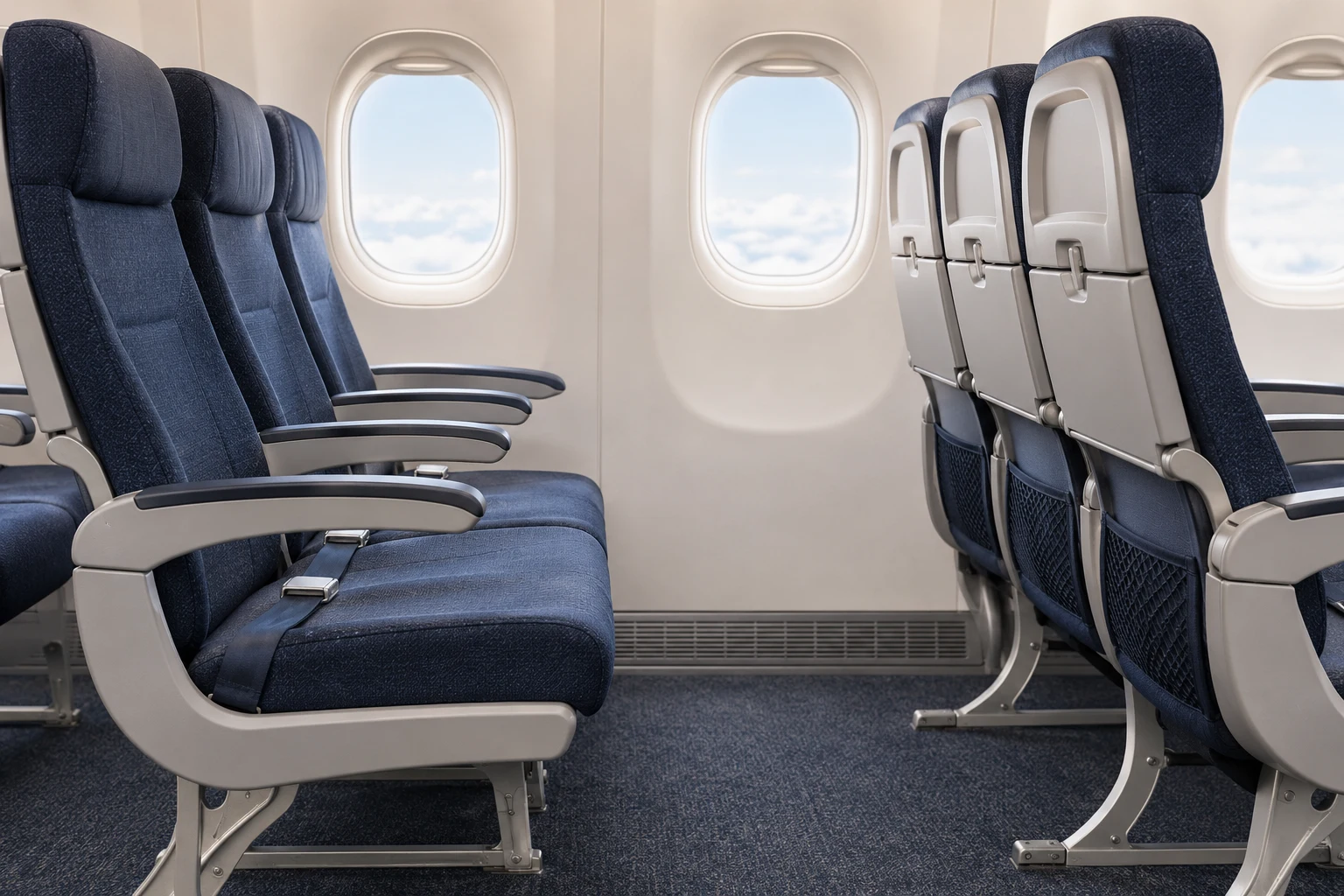
Which airlines offer more economy legroom?
JAL and ANA publish relatively generous pitch figures for some international economy products, making them useful airlines to investigate when their routes suit your trip. That does not mean every seat across either fleet has identical space.
For a practical comparison, shortlist flights first, identify the aircraft and cabin version, then compare standard economy with any paid extra-legroom option. The best purchase may be a roomier standard seat or a reasonably priced upgrade on another airline.
There is no single airline-wide number that guarantees how your knees and feet will fit. Seat design, width and obstructions also matter.
Use published measurements as evidence for a shortlist, then inspect the seat you intend to reserve.
Understand what the pitch figure tells you
Seat pitch measures the distance between corresponding points on consecutive rows. It helps compare spacing, but it is not the empty gap available in front of your knees.
A thicker seatback or different cushion shape can change the usable space even when two rows have the same pitch. Underseat equipment and your own bag can affect where your feet fit.
Width describes a different dimension. Someone who needs more room across the seat should compare that separately rather than assuming a longer pitch solves the problem.
Read whether a published figure is a minimum, a range or an upper limit. Up to 34 inches does not promise 34 inches at every seat.
When possible, use the airline's current aircraft page and the map attached to your booking together. A broad cabin description may omit row-specific differences.
Examples of published standard economy spacing
JAL's SKY WIDER information lists approximately 86cm pitch on the named SKY SUITE 777 and 767 products and approximately 84cm on SKY SUITE 787. These are product-specific figures, not a promise for every JAL flight.
ANA's international economy seat guide describes a 34-inch pitch for its listed 206-seat Boeing 787-9 configuration. Check the version assigned to your flight rather than relying on the aircraft family alone.
Air New Zealand's 787-9 V4 seat map gives an economy pitch range of 31 to 33 inches. The range itself is a useful reminder to inspect the individual position.
For a short-haul reference, Ryanair's seat information describes rows spaced 29 inches apart. Compare the relevant row and any extra-space option separately.
A comparison that keeps the product visible
| Published example | Stated pitch | Scope to check |
|---|---|---|
| JAL SKY WIDER | Approximately 84 or 86cm | Named aircraft and cabin product |
| ANA listed 206-seat 787-9 | 34 inches | Specific aircraft configuration |
| Air New Zealand 787-9 V4 economy | 31 to 33 inches | Individual row within that version |
| Ryanair published row spacing | 29 inches | Selected seat and any extra-space purchase |
This is a set of verified examples, not an exhaustive ranking of every airline. The flights serve different networks and may not be alternatives for your journey.
A useful shortlist contains options you could realistically take. A generous seat on an unsuitable route does not become good value merely because its measurement wins the table.
Keep paid extra-legroom products separate
Virgin Atlantic advertises Economy Delight with up to 34 inches of pitch. Air New Zealand describes Economy Stretch at 35 inches. These should be compared as the named products offered, rather than treated as every standard economy seat.
Check the additional price on your actual flight and whether the selection applies to all segments. A product name displayed during booking may cover only part of a connecting itinerary.
Read the other inclusions without giving every perk an automatic cash value. A benefit saves money only if it replaces something you would otherwise buy.
If you mainly want space, compare the extra-legroom seat with the next cabin as well. Occasionally the price gap may be small enough to justify examining both, but use the actual quote rather than assuming an upgrade bargain.
Our guide to assessing premium economy value explains why a separate cabin is a different purchase from extra legroom within economy.
Build the shortlist around the journey
Start with your departure airports, destination and acceptable dates. Identify flights that meet those requirements before spending time comparing cabin measurements.
A connection can make a roomier seat available, but it also adds travel time and another boarding process. Decide whether the comfort benefit is worth that tradeoff.
Look at the longest sector first when comparing a multi-leg trip. A small improvement on a short connection may matter less than the seat used for most of the journey.
Check the operating airline on every flight. A ticket sold by an airline with a spacious economy product may include a partner-operated segment with a different cabin.
Our guide to checking who operates a codeshare helps identify whose aircraft information applies to each leg.
Match the aircraft version carefully
An aircraft model name can cover several cabin layouts. The number of seats, cabin divisions and individual rows may differ between versions used by the same airline.
Compare the map shown for your flight with the airline's fleet information. Look for a matching cabin arrangement rather than selecting a review because its aircraft name looks familiar.
When an airline describes a new seat, check whether it is actually scheduled on your route and date. An announcement about a future refurbishment does not establish the cabin you will receive.
If the available information is unclear, ask the airline about the particular flight. Keep the answer appropriately conditional because aircraft substitutions can happen.
Recheck after a schedule change. A previously attractive seat number may refer to another position when the equipment changes.
Compare width alongside legroom
For some travelers, the distance between armrests is as important as the space ahead. Check how the airline measures width and whether the figure applies to the selected seat.
Fixed armrests, tray tables and other fittings can affect the usable area. A seat marketed for extra legroom may not be wider than a standard seat.
Look at the number of seats across the cabin, but avoid turning that alone into a width calculation. Aircraft types have different fuselage widths and airlines install different seats.
If a particular seating requirement matters, contact the airline rather than relying on a broad comfort score. Explain the feature you need confirmed.
A roomier row can be a good choice without solving every comfort issue. Compare the dimensions that relate to your own needs.
Check where your feet can actually go
Inspect any seat notes about equipment beneath the row ahead or an unusual floor layout. These details can affect the benefit of a favorable pitch figure.
A bulkhead may offer open space at knee level while limiting forward foot extension. An exit position can have its own fittings or eligibility conditions.
Do not assume all seats in an extra-legroom row provide identical usable space. A window-side position and an aisle position can differ in practical ways.
Our guide to evaluating bulkhead seats explains the storage and partition checks that belong beside the legroom comparison.
Consider where your permitted cabin bag will go. Filling the available underseat area can reduce the foot space you intended to gain.
Compare the fare after necessary extras
Add the bags and seat choices you need before ranking the flights by price. A cheap base fare with an expensive extra-space seat may cost more than a suitable inclusive option.
For a return journey, check each direction. Overnight timing, flight length and seat availability can make the same upgrade more valuable on one leg than the other.
For two travelers, calculate the party total. Decide whether both need the same upgrade or whether different preferences allow another arrangement.
Include airport transport when a different departure point is involved. A small airfare saving can disappear if the alternative requires a hotel or costly transfer.
Our guide to comparing the completed flight price helps keep those additions visible.
An invented comparison for a long flight
Suppose Airline A costs £620 return and the extra-legroom seat you want adds £90 each way. The completed flight-and-seat total is £800.
Airline B costs £750 with a standard seat whose verified layout meets your needs. Under those assumptions, B saves £50. These are invented prices, not current airline offers.
If B adds a connection and a £100 hotel night, the total becomes £850. You would then decide whether its seat and schedule justify paying £50 more than A.
If you only need A's extra-legroom seat on the overnight direction, its total becomes £710. The best comparison changes when the purchase matches your actual preference.
Write the seat category next to each total. Otherwise it is easy to forget that one figure includes the upgrade and another does not.
Decide how much the extra space matters
Flight duration can influence what you are willing to pay, but the decision remains personal. A frequent traveler may have a clear preference based on the seat arrangements they already know.
If you are uncertain, identify the specific problem you want to avoid. Knee contact, difficulty moving within the row and a narrow seat are different issues.
Ask whether the proposed upgrade addresses that issue. More space ahead does little for someone whose main concern is a fixed armrest.
Consider the rest of the journey as well. A slightly roomier seat may be less valuable than a nonstop flight or a departure time that avoids an exhausting airport transfer.
Set a spending limit before browsing upgrade offers. A clearer priority makes the decision easier when several attractive-looking seat categories appear.
Use reviews as supporting information
A recent review can help explain how a seat feels, but match it to the same airline, aircraft version and cabin. A glowing report from another configuration is weak evidence for your booking.
Look for specific observations about the row rather than a general claim that the airline is comfortable. Details about fittings or storage can be more useful than a score.
Keep personal preferences in mind. A reviewer who values a window and rarely gets up may assess a seat differently from someone who prefers aisle access.
Use current airline information to confirm the product being sold. If sources disagree, ask about the feature that determines your choice instead of selecting whichever description sounds best.
Do not treat a photograph as a reliable measuring device. Camera angle can make the same gap look spacious or cramped.
Understand what happens if the seat changes
Read the seat-purchase conditions before payment. Find out how the airline handles reassignment, a different seat category or an aircraft substitution.
Keep the receipt and booking details. If the replacement arrangement is unsuitable, contact the airline while there is time to discuss other available seats.
A paid seat choice should still be reviewed after itinerary changes. Check that it appears on the revised flights rather than assuming the original selection carried across.
If you have a specific assistance requirement, make that known through the airline's process. An ordinary seat purchase may not communicate the underlying need.
Choose with the actual seat in view
- Shortlist usable routes and dates.
- Identify the operator and aircraft configuration.
- Separate standard economy from paid extra-space products.
- Check pitch, width and row-specific limitations.
- Compare the complete fare and seat cost.
Use the published examples to guide your search, then confirm the seat you can reserve. A reputation for generous economy seating is helpful context, but your comfort depends on the particular journey you buy.
Build a comparison from the flights you can take
Start a small table with three realistic itineraries. For each, write the operating airline, aircraft version, standard pitch, available seat category and complete price. Leave a blank where the information is unconfirmed rather than filling it with an airline-wide average.
Then remove any option that fails a non-negotiable requirement, such as arriving in time for your plans or offering a suitable seat. This leaves a more useful comparison than a long ranking of airlines that do not serve your route.
Suppose the lowest-priced itinerary has generous spacing on its short feeder flight but a tighter seat on the overnight sector. A single average would disguise the part of the journey where you care most about room. Keep the sectors separate and weight your decision toward the experience you expect to notice.
For two travelers, check that the available seats work together. One excellent aisle beside an unavailable position does not solve a request to sit together. Add the actual selection charges for the pair, not the lowest advertised seat fee anywhere in the cabin.
If the measurements are similar, other differences can break the tie. A suitable aisle, a simpler route or a better departure time may offer more practical value than a small pitch advantage on paper.
Use your previous flights as a reference point
If you remember a seat that worked well, try to identify its airline, aircraft and row. That gives you a personal reference more meaningful than a stranger's comfort score.
Be specific about what worked. You may remember room for your knees, an unobstructed space for your feet or the ability to move without disturbing someone. Those are different features, and a new booking should be checked against the relevant one.
A previous flight is not a specification for every future flight with that airline. Cabins change, aircraft versions differ and your old seat may have belonged to an extra-space category. Use the memory to frame a question, then confirm the current details.
If you cannot establish the old measurement, avoid inventing one. Describe the practical requirement to the airline instead. An honest unknown is more useful than a confident number attached to the wrong seat.
Keep the comparison small enough to use. Three options with their actual prices and seat details are usually more helpful for a purchase decision than a lengthy list containing specifications you cannot match to your flights.
Your questions answered
Which airline has the most legroom on every flight?
There is no reliable universal answer across all routes and aircraft. Compare the specific cabin and seat category rather than assuming an airline-wide figure applies everywhere.
Is seat pitch the same as clear knee space?
No. Pitch measures spacing between corresponding points on rows. Seatback shape, cushion design and other features affect the space you can use.
Does an extra-legroom seat also have extra width?
Not necessarily. Check width and armrests separately. More space ahead does not automatically change the seat cushion or fittings.
Should I pay for extra legroom in both directions?
Compare each flight's length, timing and price. You may value the upgrade more on one direction than the other.
Can the aircraft change after I choose a seat?
Yes. Review the assignment after itinerary updates and read the airline's conditions for changed seating arrangements.